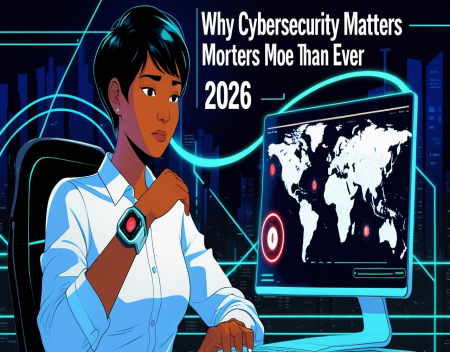
As we move deeper into a fully connected world, the importance of Cybersecurity has reached a level that can no longer be treated as optional or secondary. In 2026, digital systems are not just tools we use—they are the foundation of how we communicate, work, bank, shop, and even manage our homes. This growing dependence on technology has created unprecedented convenience, but it has also opened the door to new and increasingly sophisticated threats.
One of the main reasons cybersecurity matters more than ever is the sheer scale of digital integration. Nearly every device is now connected to the internet in some way. From smartphones and laptops to smart thermostats and security cameras, the number of potential entry points for cyberattacks has expanded dramatically. Each connected device represents a possible vulnerability, and as the number of devices grows, so does the attack surface available to malicious actors.
The rise of remote work and cloud-based systems has further increased the importance of security. Businesses of all sizes rely heavily on Cloud Computing to store data, run applications, and manage operations. While the cloud offers flexibility and scalability, it also introduces new risks. Data breaches, unauthorized access, and misconfigured systems can expose sensitive information, leading to financial loss and reputational damage. For small businesses in particular, a single security incident can be devastating.
Another major factor is the evolution of cyber threats themselves. Attackers are no longer limited to basic viruses or simple scams. Modern threats include ransomware attacks that lock critical systems until a payment is made, phishing schemes that convincingly mimic legitimate communications, and advanced persistent threats that infiltrate networks over long periods. These attacks are often highly targeted and can be difficult to detect. In some cases, attackers use automation and AI to scale their efforts, making them more efficient and harder to defend against.
Personal data has become one of the most valuable assets in the digital economy, and it is a primary target for cybercriminals. Information such as login credentials, financial details, and personal identifiers can be used for identity theft, fraud, and other malicious activities. As individuals share more of their lives online, the amount of data available for exploitation continues to grow. Protecting this data is not just a technical issue—it is a matter of personal safety and privacy.
The financial impact of cyber incidents is another reason why cybersecurity is critical. The cost of a data breach can include direct losses, legal fees, regulatory fines, and the expense of recovering systems. Beyond these immediate costs, there is also the long-term effect on trust. Customers are less likely to do business with organizations that have a history of security failures. In a competitive market, maintaining trust is essential, and cybersecurity plays a key role in that.
Governments and critical infrastructure are also increasingly at risk. Systems that control energy, transportation, and public services are now connected and, in some cases, vulnerable to cyberattacks. Disruptions to these systems can have widespread consequences, affecting entire communities or even nations. As a result, cybersecurity has become a matter of national security, not just individual or corporate concern.
Despite the growing risks, many people and organizations still underestimate the importance of basic security practices. Weak passwords, outdated software, and lack of awareness are common issues that can be easily exploited. Cybersecurity is not only about advanced technologies; it also involves simple habits such as using strong authentication, keeping systems updated, and being cautious with emails and links.
Education and awareness are key components of effective cybersecurity. As threats become more sophisticated, users need to understand how to recognize and respond to potential risks. This includes knowing how to identify phishing attempts, understanding the importance of data protection, and being aware of how personal information is shared online. Organizations must also invest in training and establish clear policies to ensure that security is a shared responsibility.
Looking ahead, cybersecurity will continue to evolve alongside technology. New developments in AI, the Internet of Things, and digital infrastructure will bring both opportunities and challenges. Security measures will need to adapt to these changes, incorporating more advanced detection systems and proactive defense strategies.
Ultimately, cybersecurity in 2026 is not just about protecting devices or data—it is about safeguarding the systems that modern life depends on. As our reliance on digital technology grows, so does the need to secure it. Ignoring cybersecurity is no longer an option. It is a fundamental requirement for individuals, businesses, and society as a whole.
Great experience with Computer Geek. They helped with my website needs and were professional, respon . . . [MORE].

Great, quick service when my laptop went into meltdown and also needed Windows 11 installed. Also ca . . . [MORE].
It was a great experience to working with you. thank you so much. . . . [MORE].
Thank you so much for great service and over all experience is good . highly recommended for all peo . . . [MORE].
We engaged The Computer Geeks in mid-2023 as they have a reputation for API integration within the T . . . [MORE].

The Rise of Automation in

Why Every Business Needs

ERP Systems for Small Bus