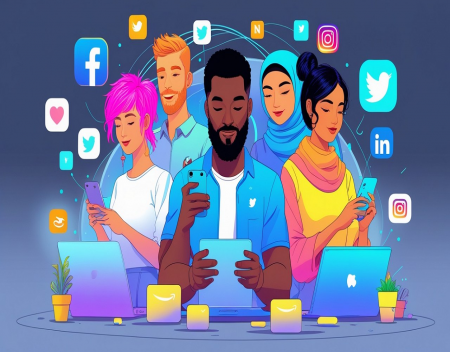
The internet was once imagined as a space of freedom, connection, and open exchange. It promised access to information, global communication, and new forms of creativity. While those promises have largely been fulfilled, they have come with an often-overlooked trade-off. In today’s digital economy, users are no longer just participants—they are products. Every click, scroll, and interaction feeds into a vast system designed to capture attention, extract data, and generate profit. This transformation is subtle, largely invisible, and deeply embedded in the platforms people use every day.
Services like Facebook, Instagram, and Google are often described as “free,” but this description is misleading. Users do not pay with money; they pay with data. Every action taken on these platforms—liking a post, searching for a topic, watching a video—creates a digital footprint. This information is collected, analyzed, and used to build detailed profiles that can predict behavior, preferences, and even emotional states. These profiles are then used to target advertisements with remarkable precision.
At the center of this system is the attention economy. Platforms compete not just for users, but for their time and focus. The longer someone stays engaged, the more data they generate and the more opportunities there are to show advertisements. This creates a powerful incentive to design features that are addictive. Infinite scrolling, personalized feeds, and notification systems are not accidental—they are carefully engineered to keep users coming back. Over time, this can shape habits in ways that are difficult to notice, as engagement becomes almost automatic.
The shift from user to product also changes the nature of online experience. Content is no longer just about expression or information; it is optimized for performance. Algorithms determine what users see based on what is most likely to keep them engaged. This often means prioritizing content that is emotionally charged, controversial, or highly stimulating. As a result, the information environment can become distorted. What appears popular or important may simply be what performs well within the system, rather than what is most accurate or meaningful.
Another layer of complexity comes from the opacity of these systems. Most users are not fully aware of how their data is collected or how it is used. Terms of service agreements are long and difficult to understand, and the processes behind data analysis are highly technical. This lack of transparency creates an imbalance of power. Companies have detailed knowledge about users, while users have very little insight into how decisions are made about them. This asymmetry makes it difficult for individuals to make informed choices about their online behavior.
The commercialization of personal data also raises questions about autonomy. If platforms can predict and influence behavior, to what extent are users making independent choices. Targeted advertising is designed to be persuasive, often tapping into subconscious preferences and vulnerabilities. While this can make ads more relevant, it can also blur the line between suggestion and manipulation. Over time, this influence can shape not only what people buy, but how they think, feel, and interact with the world.
There are also broader societal implications. The aggregation of user data at scale creates powerful tools for analysis and control. In some cases, this data can be used for beneficial purposes, such as improving services or identifying trends. However, it can also be used in ways that raise ethical concerns, such as influencing political opinions or reinforcing social divisions. The same systems that target products can also target ideas, making the line between commerce and influence increasingly thin.
Despite these concerns, the system persists because it offers real value. Users gain access to powerful tools, global communication, and vast amounts of information without direct financial cost. For many, this trade-off feels acceptable, or even beneficial. The challenge is that the true cost is not always visible. It accumulates over time, embedded in habits, preferences, and the structure of digital life itself.
Addressing this issue does not necessarily mean abandoning technology, but it does require greater awareness and accountability. Users can take steps to understand and manage their data, such as adjusting privacy settings or being more mindful of what they share. At the same time, there is a growing need for clearer regulations and standards that protect user rights and ensure transparency. Companies may also need to rethink their models, balancing profitability with responsibility.
Ultimately, the transformation from users to products reflects a deeper shift in how value is created online. Human attention and behavior have become central resources in the digital economy. Recognizing this reality is the first step toward navigating it more consciously.
The internet remains a powerful tool, capable of connection, creativity, and innovation. But as long as its underlying systems are built on the extraction and monetization of user data, the question will remain: who is truly in control—the user, or the system that turns them into a product.
Great experience with Computer Geek. They helped with my website needs and were professional, respon . . . [MORE].

Great, quick service when my laptop went into meltdown and also needed Windows 11 installed. Also ca . . . [MORE].
It was a great experience to working with you. thank you so much. . . . [MORE].
Thank you so much for great service and over all experience is good . highly recommended for all peo . . . [MORE].
We engaged The Computer Geeks in mid-2023 as they have a reputation for API integration within the T . . . [MORE].
The Evolution of Personal
The Hidden Cost of Free A

The Psychology of Notific