
Across the world, governments are increasingly turning to algorithms to help manage societies. Software now determines who qualifies for welfare benefits, how police resources are allocated, which neighborhoods receive inspections, and even which citizens are flagged as potential risks. What began as a promise of efficiency and objectivity is evolving into something far more consequential: algorithmic governance. As code begins to shape public policy and administrative decisions, a profound question emerges. What happens when lines of code start to replace the judgment of elected officials?
At its best, algorithmic governance offers compelling advantages. Governments face overwhelming complexity, limited budgets, and enormous data flows. Algorithms can process information at scales no human bureaucracy could manage. They can identify patterns in healthcare demand, predict infrastructure failures, optimize traffic systems, and reduce administrative delays. In theory, algorithmic systems remove human bias, corruption, and inconsistency, delivering fairer and more efficient governance. For overburdened public institutions, automation can feel like a lifeline.
However, the promise of neutrality is often an illusion. Algorithms do not exist in a vacuum. They are designed by humans, trained on historical data, and optimized according to specific goals. When these systems guide policy decisions, they embed values—sometimes unintentionally—into governance structures. If an algorithm prioritizes cost savings over human welfare, or efficiency over due process, those priorities become policy outcomes without ever being debated or voted on. In this way, governance quietly shifts from democratic deliberation to technical implementation.
One of the most troubling aspects of algorithmic governance is opacity. Many government algorithms are proprietary or too complex for meaningful public scrutiny. Citizens affected by automated decisions may not know how or why a determination was made. Appeals processes, if they exist at all, can be confusing or inaccessible. This undermines a core democratic principle: the right to understand and challenge decisions that affect one’s life. When accountability disappears into black-box systems, trust in public institutions erodes.
There is also the issue of legitimacy. Elected officials derive authority from public consent. Algorithms derive authority from perceived efficiency and expertise. When decisions are increasingly made by code, political accountability becomes diffuse. Officials may claim they are “following the system,” while system designers remain invisible. This creates a governance gap where no one is clearly responsible for harmful outcomes. Democracy relies not just on outcomes, but on processes that allow citizens to assign blame, demand change, and influence future decisions.
Bias presents another serious concern. Algorithms trained on historical data often reproduce existing inequalities. Predictive policing tools may disproportionately target marginalized communities because past policing patterns were already biased. Automated welfare systems can mistakenly deny aid to vulnerable populations, treating anomalies as fraud. When these outcomes are framed as objective or data-driven, they can become harder to challenge than human judgments, even when they are equally flawed. The authority of numbers can mask injustice.
Supporters of algorithmic governance argue that the solution is not less technology, but better technology. Transparent algorithms, ethical design standards, and robust oversight could mitigate many risks. Some propose that algorithms should act as advisors rather than decision-makers, supporting human officials rather than replacing them. In this model, code enhances governance without displacing democratic accountability. Others advocate for “algorithmic audits” and public access to system logic, ensuring that citizens can scrutinize and challenge automated power.
Yet even with safeguards, deeper philosophical questions remain. Governance is not just a technical problem; it is a moral and political one. Decisions about resource distribution, risk tolerance, and social priorities involve value judgments that cannot be fully reduced to optimization functions. When algorithms make these choices implicitly, politics becomes hidden rather than eliminated. The danger is not that machines will rule, but that power will shift away from public debate and into technical domains beyond democratic reach.
Algorithmic governance also risks changing how citizens relate to the state. When people are treated as data points rather than participants, civic engagement may decline. Individuals may feel governed by systems rather than represented by leaders. Over time, this could weaken democratic culture itself, replacing political responsibility with passive compliance. A society managed by algorithms may be efficient, but it may also be less human.
The question is not whether algorithms will play a role in governance—they already do—but how far that role should extend. Code can assist decision-making, expose inefficiencies, and support evidence-based policy. But when it begins to replace judgment, debate, and accountability, democracy itself is at risk. Algorithmic governance forces societies to confront a fundamental choice: will technology serve democratic values, or will democracy quietly adapt itself to the logic of machines? The answer will shape the future of political power in the digital age.
Great experience with Computer Geek. They helped with my website needs and were professional, respon . . . [MORE].

Great, quick service when my laptop went into meltdown and also needed Windows 11 installed. Also ca . . . [MORE].
It was a great experience to working with you. thank you so much. . . . [MORE].
Thank you so much for great service and over all experience is good . highly recommended for all peo . . . [MORE].
We engaged The Computer Geeks in mid-2023 as they have a reputation for API integration within the T . . . [MORE].
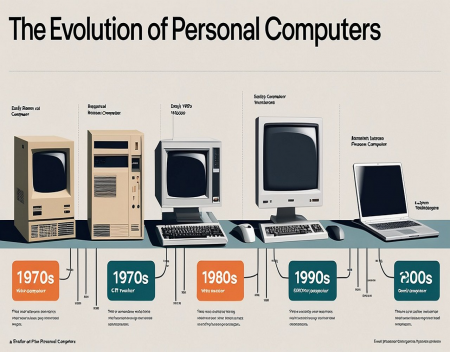
The Evolution of Personal

The Hidden Cost of Free A

The Psychology of Notific