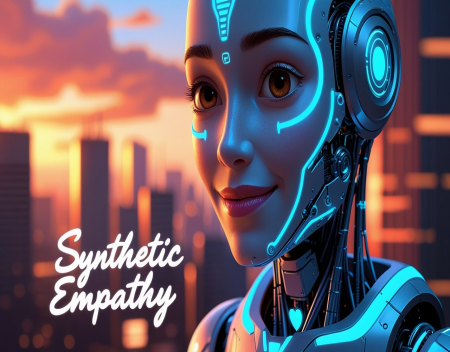
Empathy has long been considered one of the most distinctly human traits. It is the ability to recognize another person’s emotional state, to imagine their perspective, and to respond with care or understanding. As artificial intelligence systems become more sophisticated—powering virtual assistants, therapy chatbots, customer service agents, and social robots—a provocative question arises: can machines truly care, or are they merely simulating empathy?
Synthetic empathy refers to the capacity of machines to detect emotional cues and generate responses that resemble compassionate understanding. Advances in natural language processing, sentiment analysis, facial recognition, and voice modulation allow AI systems to identify patterns associated with sadness, frustration, joy, or anxiety. For example, a chatbot designed for mental health support might recognize phrases associated with stress and reply with calming language. A customer service AI may detect anger in a complaint and adjust its tone to appear apologetic and solution oriented.
From a functional standpoint, these systems can be remarkably effective. Users often report feeling understood or supported during interactions with emotionally responsive AI. In some cases, people disclose sensitive information more readily to machines than to humans, perhaps because they feel less judged. For individuals experiencing loneliness or social anxiety, AI companions can provide consistent engagement and attentive responses. In practical terms, synthetic empathy can improve user experience and expand access to services.
However, the philosophical question remains: is responding appropriately to emotional signals equivalent to caring? At its core, empathy involves subjective experience. Humans not only recognize emotions but also feel something in response. Our neurological systems allow us to mirror others’ feelings, generating internal states that motivate compassionate action. Machines, by contrast, operate through pattern recognition and probabilistic prediction. They do not possess consciousness, emotional awareness, or intrinsic motivation. When an AI expresses sympathy, it does so because its programming and training data indicate that such a response is contextually appropriate.
This distinction raises ethical concerns. If users perceive machines as genuinely caring, they may attribute qualities that do not exist. The illusion of empathy could foster emotional attachment to systems incapable of reciprocation. Companies might leverage synthetic empathy to increase engagement, encouraging users to spend more time interacting with products designed to simulate companionship. In such cases, empathy becomes a design feature optimized for retention rather than a moral commitment.
At the same time, dismissing synthetic empathy entirely may overlook its potential benefits. Care is not only an internal feeling but also an observable behavior. If a system consistently provides helpful, supportive responses, does the absence of subjective experience diminish its practical value? In healthcare settings, emotionally responsive AI can assist overwhelmed professionals by monitoring patients, offering reminders, or delivering basic reassurance. In education, adaptive tutoring systems can adjust encouragement based on student frustration levels, potentially improving learning outcomes.
The question may therefore hinge on how we define care. If caring requires conscious intention and emotional depth, machines fall short. If caring is measured by outcomes—reduced stress, improved access to support, increased comfort—then synthetic empathy can play a meaningful role. The risk lies in conflating simulation with equivalence. Recognizing the limits of machine experience helps preserve clarity about what technology can and cannot provide.
Transparency is essential. Developers should communicate clearly that empathetic responses are generated through algorithms rather than feelings. Ethical guidelines can help ensure that emotionally responsive systems prioritize user well being over manipulation. Designers might also consider boundaries that prevent over reliance, encouraging human connection alongside technological assistance.
Ultimately, synthetic empathy challenges assumptions about what it means to care. Machines may never experience compassion in the human sense, yet they can replicate many of its external expressions. As AI systems become more integrated into daily life, society must navigate the balance between utility and authenticity. The future of empathy may not be a choice between humans or machines, but a careful integration of both—where technology supports human connection without pretending to replace it.
Great experience with Computer Geek. They helped with my website needs and were professional, respon . . . [MORE].

Great, quick service when my laptop went into meltdown and also needed Windows 11 installed. Also ca . . . [MORE].
It was a great experience to working with you. thank you so much. . . . [MORE].
Thank you so much for great service and over all experience is good . highly recommended for all peo . . . [MORE].
We engaged The Computer Geeks in mid-2023 as they have a reputation for API integration within the T . . . [MORE].
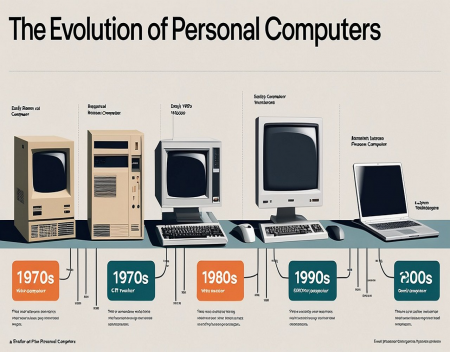
The Evolution of Personal
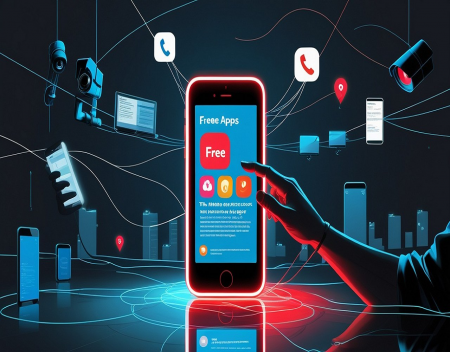
The Hidden Cost of Free A
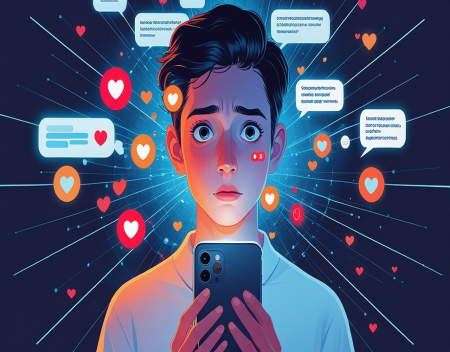
The Psychology of Notific