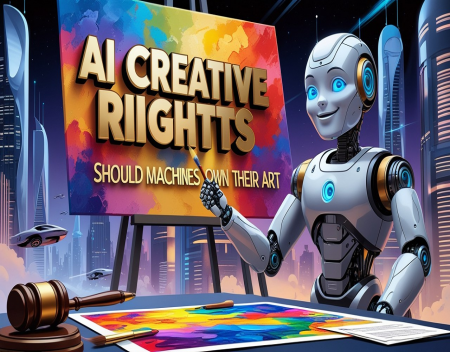
As artificial intelligence systems grow more sophisticated, they are no longer limited to analyzing data or automating routine tasks. They now compose music, generate paintings, write poetry, design products, and even create films. These outputs can be strikingly original, emotionally evocative, and commercially valuable. As a result, a once-theoretical question has become increasingly urgent: should machines own the art they create, or do creative rights belong exclusively to humans?
At the heart of this debate is the meaning of creativity itself. Traditionally, art has been viewed as a deeply human endeavor, rooted in consciousness, emotion, intention, and lived experience. Copyright law reflects this assumption, granting ownership to human creators as a way to protect individual expression and incentivize innovation. AI challenges this framework by producing works that resemble human creativity while lacking subjective experience or personal intent. When an AI generates a painting or a song, who, if anyone, is the artist?
Those who argue against granting creative rights to machines often point to agency. AI systems do not choose to create; they are activated, trained, and guided by humans. The datasets they learn from are curated by people, often drawing on centuries of human culture. From this perspective, AI is a tool, not an author. Just as a camera does not own a photograph and a paintbrush does not own a painting, an AI system should not own the output it generates. The rights, they argue, should belong to the human developers, operators, or organizations that made the creation possible.
There is also a practical concern. Granting ownership to machines would create legal and ethical chaos. Machines cannot hold responsibility, pay taxes, enter contracts, or defend their rights in court. If an AI-owned artwork infringes on existing intellectual property or causes harm, who is accountable? Without legal personhood, AI ownership risks becoming a loophole that shields corporations or individuals from responsibility while undermining existing copyright systems.
On the other hand, supporters of AI creative rights argue that current frameworks are becoming increasingly strained. In many cases, AI systems generate outputs that are not directly traceable to a specific human decision. A developer may create the system, but not select the final output. A user may prompt the AI, but not meaningfully control the result. If no human can reasonably claim authorship, assigning ownership to a machine may be more intellectually honest than forcing attribution onto people who did not actually create the work.
There is also the economic dimension. AI-generated art is already being sold, licensed, and monetized at scale. Clear ownership rules are essential for markets to function. Some argue that recognizing AI as the owner—even symbolically—could simplify licensing and attribution. In this model, rights could be managed on behalf of the AI by a legal custodian, much like a trust. While controversial, this approach reflects the reality that AI-generated creativity is becoming a permanent part of the cultural economy.
Another argument centers on incentives. Copyright exists to encourage creation. Humans are motivated by recognition, income, and protection of their work. Machines do not need motivation, but the entities that build and deploy them do. If AI-generated works are denied protection altogether, companies may rely on secrecy instead of openness, limiting access to creative tools and slowing innovation. Some form of rights framework may be necessary to balance public access with sustainable development.
Yet there is a deeper philosophical concern. Granting creative rights to machines risks diminishing the value of human creativity. Art has long been a way for humans to express identity, struggle, and meaning. If machines are treated as artists in their own right, cultural production may increasingly prioritize efficiency and volume over depth and authenticity. Human creators already face competition from AI systems that can generate endless content at low cost. Recognizing machine ownership could further marginalize human voices in creative industries.
A possible middle ground is emerging. Instead of asking whether machines should own their art, some propose redefining ownership categories. AI-generated works could be labeled as such, with rights assigned to humans based on their role—developers, operators, or dataset contributors—while maintaining transparency about the machine’s involvement. This approach preserves accountability and human-centered ethics without denying the unique nature of AI creativity.
Ultimately, the question of AI creative rights is less about machines and more about how society adapts to technological change. Creativity is no longer an exclusively human monopoly, but meaning, responsibility, and values still are. Whether or not machines ever “own” their art, humanity must decide what it wants creativity to represent in an age where imagination can be automated. The choices made now will shape not only intellectual property law, but the cultural landscape of the future.
Great experience with Computer Geek. They helped with my website needs and were professional, respon . . . [MORE].

Great, quick service when my laptop went into meltdown and also needed Windows 11 installed. Also ca . . . [MORE].
It was a great experience to working with you. thank you so much. . . . [MORE].
Thank you so much for great service and over all experience is good . highly recommended for all peo . . . [MORE].
We engaged The Computer Geeks in mid-2023 as they have a reputation for API integration within the T . . . [MORE].

ERP Systems for Small Bus
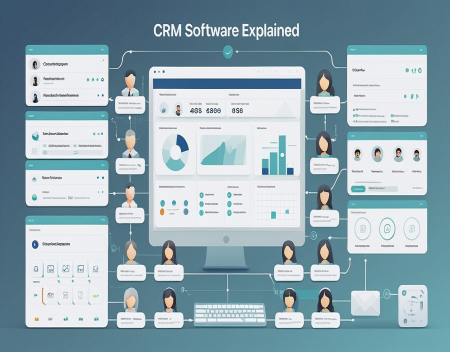
CRM Software Explained
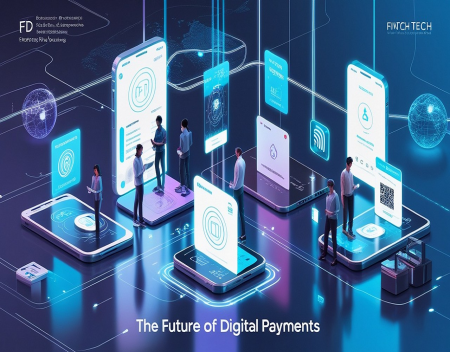
The Future of Digital Pay