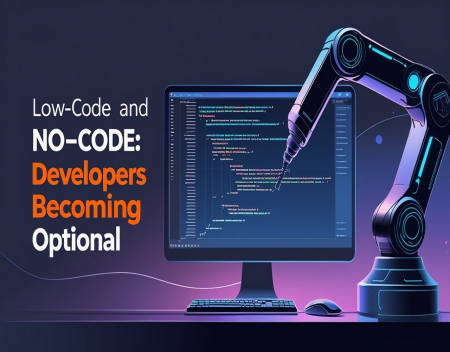
In recent years, a new wave of tools has emerged that promises to change how software is built. Known as low-code and no-code platforms, these systems allow users to create applications with minimal or no traditional programming. By using visual interfaces, drag-and-drop components, and prebuilt logic, they make it possible for non-developers to build functional software. At first glance, this raises a provocative question: are developers becoming optional.
Low-code and no-code platforms are closely tied to the broader evolution of Software Development. Traditionally, building software required a deep understanding of programming languages, frameworks, and system architecture. This created a barrier to entry that limited development to trained professionals. Today, these platforms aim to lower that barrier, enabling a wider range of people to participate in creating digital solutions.
One of the main advantages of low-code and no-code tools is speed. Applications that once took weeks or months to develop can now be built in a fraction of the time. Businesses can quickly prototype ideas, automate workflows, and respond to changing needs without waiting for full development cycles. This agility is particularly valuable for small businesses and teams with limited technical resources.
Accessibility is another key benefit. By removing the need for extensive coding knowledge, these platforms empower individuals from non-technical backgrounds to create their own solutions. This democratization of development can lead to increased innovation, as more people are able to bring their ideas to life. It also reduces the reliance on specialized developers for simpler tasks, allowing organizations to allocate technical resources more efficiently.
However, the rise of these tools does not mean that developers are becoming obsolete. In fact, their role is evolving rather than disappearing. While low-code and no-code platforms are effective for building straightforward applications, they have limitations. Complex systems, large-scale applications, and highly customized solutions still require traditional development skills. Developers are needed to design architectures, ensure performance, and handle integrations that go beyond the capabilities of visual tools.
Another important consideration is scalability. Applications built with low-code or no-code platforms may work well for small use cases, but they can encounter challenges as they grow. Performance issues, limited flexibility, and dependence on platform-specific features can become obstacles. Developers play a critical role in addressing these challenges, ensuring that systems can scale effectively and remain maintainable over time.
Security is also a concern. While many platforms include built-in protections, they may not cover all potential risks. Developers are trained to identify vulnerabilities, implement secure practices, and manage data responsibly. Without this expertise, applications may be exposed to security issues that could have serious consequences.
The integration of Artificial Intelligence is further shaping the landscape. AI-powered tools can assist with generating code, automating tasks, and improving workflows within low-code environments. This enhances the capabilities of these platforms, making them even more accessible. At the same time, it increases the need for oversight and expertise to ensure that automated processes are accurate and reliable.
From a business perspective, low-code and no-code platforms can reduce costs and accelerate development. Organizations can build internal tools, manage data, and automate processes without extensive investment in development teams. However, this does not eliminate the need for developers. Instead, it shifts their focus toward more strategic and complex work, such as system design, integration, and optimization.
There is also a cultural shift taking place. Collaboration between technical and non-technical teams is becoming more common, with low-code tools serving as a bridge between the two. This can improve communication and align development efforts more closely with business needs. Developers are no longer the sole creators of software but are increasingly acting as enablers and guides.
Looking ahead, the relationship between low-code platforms and traditional development is likely to become more integrated. Hybrid approaches will allow users to combine visual tools with custom code, providing both flexibility and efficiency. This will create a more versatile development environment where different skill levels can contribute effectively.
Ultimately, the question is not whether developers are becoming optional, but how their role is changing. Low-code and no-code platforms are expanding who can build software, but they are not replacing the need for expertise. Instead, they are redefining the boundaries of development, allowing developers to focus on higher-level challenges while enabling others to handle simpler tasks.
In the end, software development is becoming more inclusive and dynamic. Developers remain essential, but their work is evolving alongside the tools they use. Rather than being replaced, they are becoming even more important in guiding the future of how technology is created and maintained.
Great experience with Computer Geek. They helped with my website needs and were professional, respon . . . [MORE].

Great, quick service when my laptop went into meltdown and also needed Windows 11 installed. Also ca . . . [MORE].
It was a great experience to working with you. thank you so much. . . . [MORE].
Thank you so much for great service and over all experience is good . highly recommended for all peo . . . [MORE].
We engaged The Computer Geeks in mid-2023 as they have a reputation for API integration within the T . . . [MORE].

The Future of Digital Pay

How Technology Is Changin

What Comes After Silicon