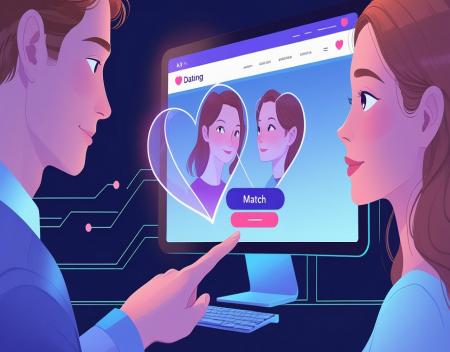
For centuries, human relationships have formed through chance, proximity, shared communities, and personal intuition. But in the digital age, the search for love has shifted dramatically. Online dating introduced the idea that software might help us find compatible partners. Now, with advanced artificial intelligence reshaping nearly every aspect of daily life, a new question emerges. Should AI be entrusted not just to connect people, but to choose who we date in the first place. As algorithms learn to read emotions, predict compatibility, and even anticipate long-term relationship outcomes, the future of romance becomes tightly interwoven with machines.
AI-powered dating systems already exist in early forms. Modern dating apps use machine learning to refine matches based on swipes, messages, and behavioral patterns. But these systems are shallow compared to what emerging AI tools could do. Next-generation algorithms could analyze vast amounts of personal data, from communication styles to biometric cues, to identify pairings that statistically promise emotional, psychological, and physical compatibility. In theory, such technology could revolutionize relationships by removing trial-and-error, reducing heartbreak, and helping people find partners they might otherwise overlook.
The promise is enticing. AIs can observe patterns humans often miss. They can detect emotional rhythms in text messages, identify communication styles, compare interests at scale, and even track linguistic markers associated with long-term compatibility. They can analyze how people describe themselves, how they respond to stress, and how they communicate affection. Some prototypes go further, integrating neural and biometric signals to predict attraction or attachment. In a world where many individuals struggle with loneliness or difficulty finding partners, AI might offer clarity and support.
However, the idea of letting algorithms choose romantic partners carries profound ethical, psychological, and social risks. One major concern is loss of autonomy. Romantic choice is deeply tied to identity, growth, and lived experience. Outsourcing this decision to an algorithm risks reducing love to a statistical equation. If an AI says a match is ideal, people may feel pressured to trust the machine over their own feelings. This could undermine authenticity, self-discovery, and the unpredictable magic that often defines human connection.
Data privacy is another serious issue. For AI to accurately predict compatibility, it would need enormous amounts of personal data. This includes messages, photos, browsing habits, location histories, and potentially even voice and physiological data. Who controls this data, how it is used, and whether it could be exploited poses significant concerns. The potential for manipulation is immense. If companies can influence romantic decisions, they may shape human relationships for profit rather than for genuine well-being.
Bias is equally problematic. AI systems learn from historical data, and society’s dating patterns are already affected by biases related to race, class, body type, age, and gender. If not carefully designed, AI could reinforce or amplify those biases, guiding people toward homogenized or exclusionary preferences. Instead of expanding romantic horizons, AI might tighten them, reducing diversity in relationships.
There is also the question of emotional dependence. If AI becomes a trusted romantic advisor, individuals might rely on it not just for finding partners, but for resolving conflicts or determining whether to stay in relationships. This raises philosophical concerns about what it means to love, trust, and relate to another person without machine mediation.
Despite these risks, a balanced future is possible. AI need not replace human choice. It can serve as a tool that supports decision-making rather than dictates it. Instead of choosing partners for us, AI might help reveal insights, highlight compatibility factors, or reduce the overwhelming nature of digital dating. The healthiest version of AI-powered romance respects human freedom while offering helpful guidance.
In the end, love is a profoundly human experience. Algorithms can analyze patterns, but they cannot feel longing, joy, heartbreak, or the spark of connection that arises unexpectedly. AI may shape the future of dating, but it should never control it. The decision of who we love must remain in our hands.
Great experience with Computer Geek. They helped with my website needs and were professional, respon . . . [MORE].

Great, quick service when my laptop went into meltdown and also needed Windows 11 installed. Also ca . . . [MORE].
It was a great experience to working with you. thank you so much. . . . [MORE].
Thank you so much for great service and over all experience is good . highly recommended for all peo . . . [MORE].
We engaged The Computer Geeks in mid-2023 as they have a reputation for API integration within the T . . . [MORE].
The Rise and Fall of Flas
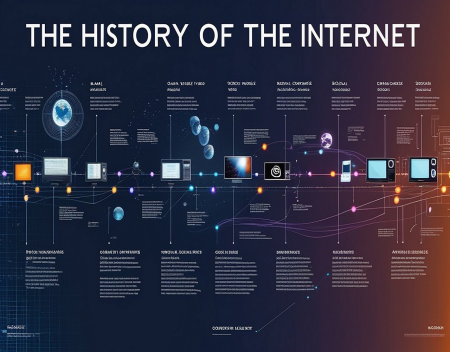
The History of the Intern
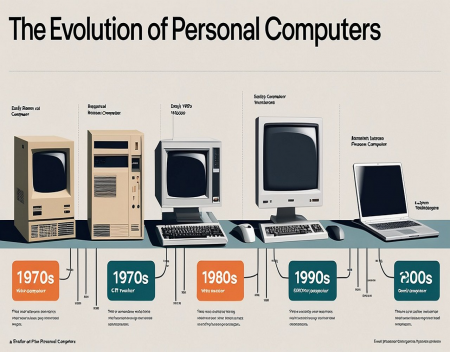
The Evolution of Personal