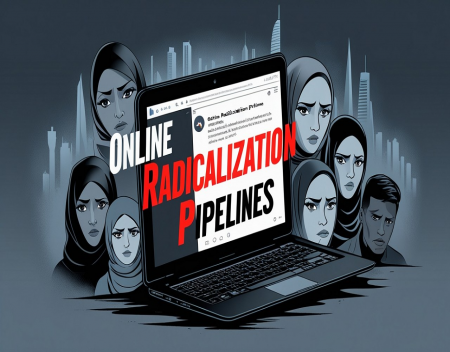
In the early days of the internet, digital spaces were often celebrated as arenas of open dialogue and democratized information. Over time, however, researchers, policymakers, and technology companies began to confront a darker reality: online environments can also serve as fertile ground for extremist ideologies. The concept of “radicalization pipelines” describes how individuals can be gradually exposed to increasingly extreme content through interconnected digital pathways. Understanding how extremism goes viral requires examining the technological, psychological, and social mechanisms that shape online experience.
Online radicalization rarely begins with overtly extremist material. Instead, it often starts with content that appears mainstream or only mildly controversial. A user might search for information about political grievances, cultural identity, or social frustrations. Algorithms, designed to maximize engagement, may recommend related videos, articles, or communities. Each step can lead to content that is slightly more provocative than the last. Over time, this incremental exposure can normalize extreme viewpoints, making them feel less fringe and more legitimate.
Recommendation systems play a significant role in this process. Platforms rely on algorithms to personalize content feeds based on user behavior. When individuals engage with emotionally charged material—especially content that evokes anger or fear—algorithms may interpret this as a signal of interest and respond by supplying similar content. This feedback loop can create echo chambers in which users encounter reinforcing narratives while alternative perspectives become less visible.
Extremist groups have adapted strategically to these dynamics. Rather than immediately promoting overtly radical ideology, they often use coded language, memes, or humor to attract broader audiences. These softer entry points make initial content seem less threatening and more culturally relatable. Online forums, gaming platforms, and social media channels can then function as recruitment spaces where more explicit messaging is introduced gradually. The transition from casual observer to active participant may occur incrementally, sometimes without conscious awareness.
Virality further accelerates radicalization pipelines. Content that triggers strong emotional reactions tends to spread quickly. Outrage, shock, and moral indignation drive sharing behavior. In polarized environments, controversial statements can attract both supporters and critics, amplifying visibility regardless of intent. Extremist narratives can thus gain widespread exposure even when most viewers reject them, simply because engagement metrics reward high interaction.
Psychological factors also contribute to susceptibility. Feelings of isolation, economic uncertainty, or social marginalization can make individuals more receptive to communities that offer identity and belonging. Online spaces provide accessible networks where like minded individuals reinforce shared grievances. The sense of camaraderie and purpose offered by extremist groups can be particularly appealing to those seeking meaning or validation.
Importantly, radicalization is not solely a product of technology. Offline influences—family dynamics, local politics, economic conditions—interact with digital experiences. However, online platforms amplify and accelerate processes that might otherwise unfold more slowly. The scale and speed of digital communication allow ideas to travel across borders instantly, connecting individuals who might never meet in physical spaces.
Efforts to address online radicalization involve multiple strategies. Platforms have implemented content moderation policies aimed at removing explicit extremist material. Artificial intelligence tools attempt to detect harmful content before it spreads widely. Yet moderation faces challenges: distinguishing between legitimate political expression and extremist propaganda is complex, and overbroad censorship can infringe on free speech principles.
Preventive approaches focus on counter messaging and digital literacy. Educational initiatives can help users recognize manipulative tactics, understand how algorithms shape exposure, and evaluate sources critically. Community based interventions may provide alternative spaces for dialogue and support, reducing the appeal of extremist networks. Researchers also emphasize the importance of transparency in platform design, allowing independent study of how recommendation systems influence content pathways.
Addressing radicalization pipelines requires acknowledging that engagement driven models can inadvertently privilege extreme content. Reforms that prioritize well being over pure attention metrics may reduce incentives for inflammatory material. At the same time, broader social efforts to reduce inequality, foster inclusion, and strengthen democratic institutions can mitigate the grievances that extremist narratives exploit.
Online radicalization pipelines illustrate how digital architecture intersects with human psychology. Extremism does not go viral in a vacuum; it spreads through systems designed to amplify engagement and through communities seeking identity and purpose. Recognizing these interconnected dynamics is essential for crafting responses that protect open discourse while limiting the pathways through which harmful ideologies proliferate.
Great experience with Computer Geek. They helped with my website needs and were professional, respon . . . [MORE].

Great, quick service when my laptop went into meltdown and also needed Windows 11 installed. Also ca . . . [MORE].
It was a great experience to working with you. thank you so much. . . . [MORE].
Thank you so much for great service and over all experience is good . highly recommended for all peo . . . [MORE].
We engaged The Computer Geeks in mid-2023 as they have a reputation for API integration within the T . . . [MORE].
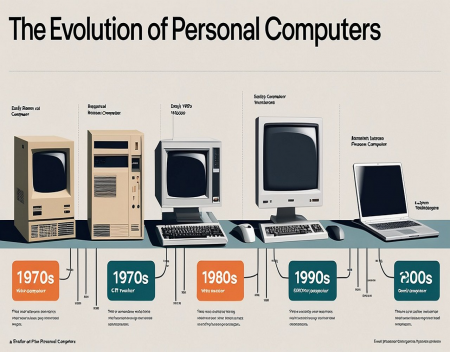
The Evolution of Personal

The Hidden Cost of Free A

The Psychology of Notific