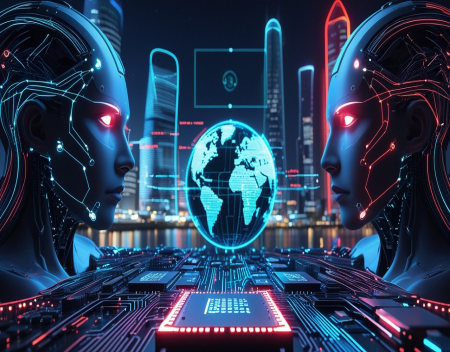
Cyberwarfare has evolved from relatively simple acts of digital disruption into a complex front where nations, corporations, and independent actors fight invisible battles across networks and devices. As artificial intelligence becomes more advanced and deeply integrated into security systems, infrastructure, and military platforms, the world is entering what many experts call Cyberwarfare 3.0. This new era is defined not by humans typing commands in dimly lit rooms, but by autonomous systems that learn, adapt, and execute attacks at machine speed. At the core of this transformation lies a startling possibility. The next global conflict may not be fought between human operators, but between opposing AIs acting as both attacker and defender across a digital battlefield.
In previous stages of cyber conflict, humans controlled every aspect of an attack. Cyberwarfare 1.0 was dominated by manual hacking, malware, and direct intrusions that required extensive planning and human oversight. Cyberwarfare 2.0 introduced automation. Worms could spread automatically, phishing campaigns scaled globally, and botnets multiplied with minimal effort. But even with these advancements, human decision-making still determined the goals and parameters of an attack. Cyberwarfare 3.0 changes that dynamic entirely by introducing AI capable of making its own decisions based on real-time data. This shift means defense systems and offensive programs can adapt instantly, identify weaknesses without human assistance, and change tactics faster than any human could ever keep up with.
One of the defining features of AI-on-AI cyber conflict is the speed at which it develops. A machine learning algorithm can scan millions of lines of code in seconds, identify new vulnerabilities, and exploit them before a human even knows they exist. Defensive AIs respond by patching, rerouting, or isolating compromised systems automatically. What emerges is a dynamic battlefield where attacks and counterattacks happen continually. Human operators become observers rather than participants, attempting to interpret the actions of systems they only partially understand. This creates not only strategic challenges but moral and legal dilemmas. When an autonomous system launches a cyber counterstrike that disables power grids or healthcare systems in another country, who is responsible. The programmer, the military commander, or the machine itself.
Another major concern in Cyberwarfare 3.0 is escalation. Traditional warfare includes checks, protocols, and human judgment to prevent accidental conflict. When AI systems operate independently, especially when programmed to respond aggressively to perceived threats, the risk of unintended escalation becomes far greater. Two AIs locked in mutual defense loops could trigger broader international tensions. If one misinterprets routine network traffic as hostile, the response might be immediate and disruptive. The fear is not just that AI could escalate existing conflicts but that it could inadvertently start one.
Despite the risks, nations continue investing heavily in autonomous cyber capabilities. They offer clear advantages, including faster defense times, better detection of sophisticated intrusions, and increased resilience across large digital infrastructures. In a world where hospitals, transportation, energy, and financial systems are all connected, AI may be the only tool capable of protecting them from equally advanced threats. The challenge lies in ensuring that these tools are controlled, accountable, and aligned with human values. Without international rules and oversight, Cyberwarfare 3.0 could push the world into a dangerous technological arms race where machines compete for dominance while humans struggle to keep pace.
Cyberwarfare 3.0 presents an unsettling future, one where AIs may make decisions that once required human judgment, ethics, and strategy. The digital battlefield is becoming more autonomous, more unpredictable, and more powerful. Whether this leads to greater security or greater danger depends entirely on the choices humanity makes today.
Great experience with Computer Geek. They helped with my website needs and were professional, respon . . . [MORE].

Great, quick service when my laptop went into meltdown and also needed Windows 11 installed. Also ca . . . [MORE].
It was a great experience to working with you. thank you so much. . . . [MORE].
Thank you so much for great service and over all experience is good . highly recommended for all peo . . . [MORE].
We engaged The Computer Geeks in mid-2023 as they have a reputation for API integration within the T . . . [MORE].

E-Waste: The Growing Glob

Why Electronics Have Shor

The Future of Smart Homes