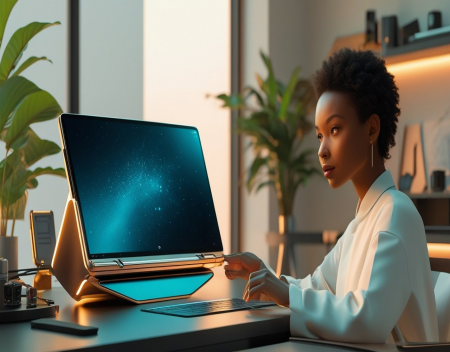
For decades, the laptop has been the centerpiece of personal computing. Portable, powerful, and versatile, it has served as the primary tool for work, communication, and creativity. But as technology continues to evolve, the dominance of the laptop is being challenged. New devices, interfaces, and computing models are emerging, pointing toward a future where personal computing extends far beyond a traditional screen and keyboard. This shift is being driven by advances in Artificial Intelligence, connectivity, and hardware design.
One of the most significant trends is the move toward ambient computing. Instead of interacting with a single device, users are beginning to engage with a network of connected systems that operate seamlessly in the background. Smart speakers, wearable devices, and connected home systems are all part of this ecosystem. Rather than opening a laptop to perform a task, users can issue a voice command, receive information instantly, or have actions carried out automatically. Computing becomes less about sitting down at a device and more about interacting with an environment.
Wearable technology is also playing a major role in reshaping personal computing. Devices such as smartwatches and augmented reality glasses are bringing computing closer to the body. These tools allow users to access information, communicate, and perform tasks without needing to carry a traditional computer. As hardware becomes more compact and efficient, wearables are expected to become more capable, potentially replacing some of the functions currently handled by laptops.
Augmented and virtual reality represent another major frontier. AR and VR systems can create immersive environments where users interact with digital content in three-dimensional space. Instead of working within the constraints of a flat screen, users can manipulate objects, view multiple displays, and collaborate in virtual spaces. This has implications not only for entertainment but also for productivity, education, and remote work. The concept of a “workspace” may evolve from a physical desk to a customizable digital environment.
Cloud computing is also contributing to this transformation. With more processing power and storage available remotely, devices no longer need to handle every task locally. This allows for lighter, more flexible hardware that relies on cloud-based systems for heavy workloads. As connectivity improves, particularly with faster and more reliable networks, the distinction between local and remote computing continues to blur. Users can access their data and applications from virtually any device, reducing the need for a single, central machine.
Artificial intelligence is further changing how users interact with technology. Instead of manually navigating software, users can rely on intelligent systems to assist with tasks, anticipate needs, and provide recommendations. This reduces the reliance on traditional interfaces and makes computing more intuitive. For example, rather than opening multiple applications to complete a task, an AI system can coordinate actions across different services, streamlining the process.
Another emerging trend is the use of modular and flexible devices. Concepts such as foldable screens, detachable components, and hybrid devices are redefining what a personal computer looks like. These innovations aim to combine the portability of smartphones with the functionality of larger systems. As designs continue to evolve, the line between different types of devices—phones, tablets, and laptops—may become less distinct.
Despite these advancements, laptops are unlikely to disappear entirely. They remain highly effective for tasks that require precision, such as programming, detailed design work, and extensive typing. However, their role may shift from being the primary computing device to one of several tools within a broader ecosystem. Users may rely on different devices for different tasks, choosing the most appropriate interface for each situation.
There are also challenges to consider. New computing models must address issues such as privacy, security, and accessibility. As devices become more integrated into daily life, protecting user data becomes increasingly important. Additionally, ensuring that new technologies are accessible to a wide range of users is essential for widespread adoption.
The transition beyond the laptop also involves a cultural shift. People are accustomed to certain ways of interacting with technology, and changing those habits takes time. Adoption will depend not only on technological capability but also on user comfort and trust. Interfaces must be intuitive and reliable, providing clear benefits over existing solutions.
Looking ahead, the future of personal computing is likely to be more distributed, flexible, and integrated into everyday life. Instead of relying on a single device, users will interact with a network of tools that adapt to their needs. Computing will become less visible, operating in the background while still providing powerful capabilities.
In the end, the evolution of personal computing is not about replacing the laptop, but about expanding what computing can be. As new technologies continue to develop, the way we interact with digital systems will become more natural, more immersive, and more connected to the world around us. The laptop may remain part of the picture, but it will no longer define it.
Great experience with Computer Geek. They helped with my website needs and were professional, respon . . . [MORE].

Great, quick service when my laptop went into meltdown and also needed Windows 11 installed. Also ca . . . [MORE].
It was a great experience to working with you. thank you so much. . . . [MORE].
Thank you so much for great service and over all experience is good . highly recommended for all peo . . . [MORE].
We engaged The Computer Geeks in mid-2023 as they have a reputation for API integration within the T . . . [MORE].
The Browser Wars Revisite
The Rise and Fall of Flas
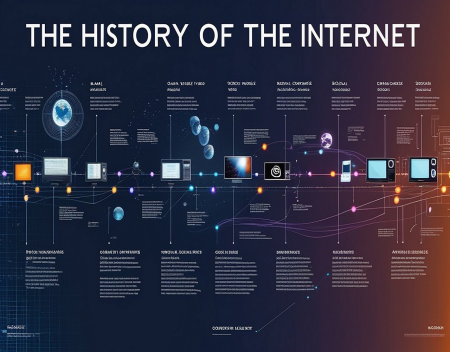
The History of the Intern