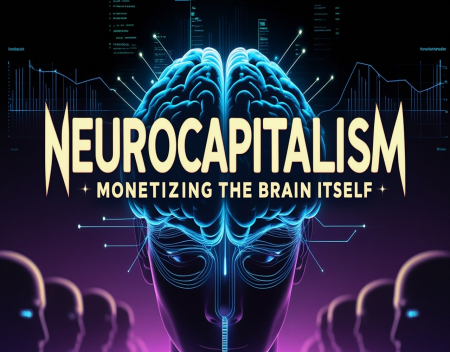
In the evolution of modern economies, value has progressively shifted from physical labor to information, and from information to attention. Today, a new frontier is emerging—one that reaches deeper than behavior or data. Neurocapitalism represents a growing trend in which the human brain itself becomes a direct site of economic activity. Through advances in neuroscience, artificial intelligence, and brain computer interfaces, the signals, patterns, and processes of the mind are increasingly being measured, analyzed, and potentially monetized. This transformation raises profound questions about privacy, autonomy, and what it means to own one’s own thoughts.
At its core, neurocapitalism is built on the idea that brain activity can be translated into usable data. Technologies such as electroencephalography devices, neural implants, and advanced biometric sensors are capable of detecting electrical signals associated with attention, emotion, and cognitive states. While many of these tools were originally developed for medical or research purposes, they are now expanding into consumer markets. Devices that claim to measure focus, optimize productivity, or enhance mental performance are becoming more accessible, bringing the monitoring of brain activity into everyday life.
This shift represents a significant step beyond earlier forms of data collection. In the era of surveillance capitalism, companies tracked behavior—what people clicked, searched, or purchased. Neurocapitalism moves closer to the source of those behaviors by attempting to measure the mental states that precede them. Instead of inferring preferences from actions, systems can potentially detect attention, interest, or emotional response directly from neural signals. This creates new possibilities for personalization, but also new forms of influence.
One of the most immediate applications of neurotechnology lies in performance optimization. Some companies are exploring tools that monitor brain activity to improve focus in workplaces, training environments, or educational settings. For example, a system might detect when a user’s attention is drifting and provide prompts to refocus. In theory, this could enhance productivity and learning efficiency. However, it also introduces the possibility of continuous cognitive monitoring, where mental states become part of performance evaluation.
Advertising is another area where neurocapitalism may have significant impact. Traditional advertising relies on predicting consumer behavior based on past actions. With access to neural data, companies could potentially assess real time emotional reactions to products, messages, or content. This could lead to highly refined marketing strategies that are tailored not just to what people do, but to how they feel at a neurological level. The ability to measure subconscious responses raises concerns about manipulation, as individuals may be influenced in ways they do not fully perceive.
The commercialization of neural data also raises critical questions about ownership. Brain activity is arguably the most personal form of information, reflecting thoughts, emotions, and cognitive processes. If devices collect this data, who controls it? In many current digital systems, user data is stored and managed by companies that provide the service. Applying this model to neural data could result in individuals having limited control over information that originates directly from their own minds.
Privacy concerns extend beyond data storage to the potential misuse of neural information. If brain data can reveal patterns of attention, stress, or emotional vulnerability, it could be used in ways that disadvantage individuals. For example, employers or insurers might seek access to such data to assess performance or risk. Without strong safeguards, the monetization of brain activity could lead to new forms of inequality and discrimination.
There is also a philosophical dimension to neurocapitalism. The human mind has long been considered a private domain, a space where thoughts can exist without external observation. As technology advances, this boundary may become less clear. The idea that mental states can be measured, analyzed, and potentially influenced by external systems challenges traditional notions of autonomy and inner freedom.
Despite these concerns, neurotechnology also holds significant promise. In medical contexts, brain monitoring and stimulation can help treat neurological conditions, restore lost functions, and improve quality of life. Brain computer interfaces may enable new forms of communication for individuals with disabilities, allowing them to interact with the world in ways that were previously impossible. These applications demonstrate the potential for neurotechnology to enhance human capability when used responsibly.
The challenge lies in ensuring that the development of neurocapitalism is guided by ethical principles that prioritize human dignity and autonomy. Clear regulations around data ownership, consent, and transparency will be essential. Individuals should have the right to understand how their neural data is collected and used, as well as the ability to control access to it.
Ultimately, neurocapitalism represents a turning point in the relationship between humans and technology. As economic systems begin to engage directly with the brain, the stakes become deeply personal. The question is no longer just how technology interacts with behavior, but how it interacts with thought itself.
In this emerging landscape, the most valuable resource may not be data or attention, but the integrity of the human mind. Preserving that integrity while exploring the possibilities of neurotechnology will be one of the defining challenges of the coming era.
Great experience with Computer Geek. They helped with my website needs and were professional, respon . . . [MORE].

Great, quick service when my laptop went into meltdown and also needed Windows 11 installed. Also ca . . . [MORE].
It was a great experience to working with you. thank you so much. . . . [MORE].
Thank you so much for great service and over all experience is good . highly recommended for all peo . . . [MORE].
We engaged The Computer Geeks in mid-2023 as they have a reputation for API integration within the T . . . [MORE].
The Evolution of Personal
The Hidden Cost of Free A

The Psychology of Notific