
For much of human history, knowledge has been one of civilization’s most valuable and contested resources. Libraries, universities, and public institutions were built on the belief that information should be preserved, studied, and shared for the advancement of society. The printing press democratized access to books, and later the internet seemed to promise a new era in which knowledge would become universally accessible. Yet as artificial intelligence and advanced data systems grow more powerful, a different dynamic is beginning to emerge. Increasingly, the world’s most valuable knowledge is being stored, processed, and controlled within private technological infrastructures.
The rise of intelligent systems depends heavily on enormous datasets and advanced computational resources. Modern AI models are trained on vast collections of text, images, video, and other forms of information gathered from across the digital landscape. These systems learn patterns from the data and then generate insights, predictions, or responses that appear intelligent to human users. However, the process of building such systems requires immense investments in computing power, specialized hardware, and highly skilled researchers. As a result, the organizations capable of developing these technologies are typically large corporations or well funded research institutions.
This concentration of resources has created a situation in which knowledge production is increasingly tied to private ownership. In earlier eras, academic research was often funded by public institutions and published in ways that allowed broad access. Today, some of the most advanced discoveries in artificial intelligence occur within corporate laboratories. These companies may publish selected findings, but much of the underlying technology, training data, and algorithmic architecture remains proprietary.
The shift toward privatized knowledge is also visible in the infrastructure of the internet itself. Digital platforms collect enormous volumes of user data through search queries, social media interactions, online purchases, and location tracking. This data becomes the foundation for machine learning models that power recommendation systems, language processing tools, and predictive analytics. Because the data is gathered within privately owned platforms, it often remains inaccessible to the wider public or to independent researchers.
In practical terms, this means that the most detailed insights about human behavior, culture, and communication may be stored inside corporate databases rather than public archives. Algorithms trained on these datasets can generate valuable predictions about consumer habits, social trends, and economic activity. Companies can use these insights to refine products, target advertisements, or shape digital experiences in ways that reinforce their competitive advantage.
The privatization of knowledge raises important questions about power and access. When knowledge is concentrated within a small number of institutions, those institutions gain significant influence over how information is used and distributed. Decisions about which technologies are developed, which research questions are pursued, and which tools become available to the public may be shaped by commercial priorities rather than collective societal needs.
Education is another area affected by this shift. Intelligent tutoring systems, language models, and automated research tools have the potential to transform learning. However, many of these technologies are built and maintained by private companies operating subscription based platforms. If access to advanced knowledge tools depends on the ability to pay, educational inequality could widen as wealthier institutions and individuals gain access to superior resources.
There are also implications for scientific progress. Open collaboration has historically been a cornerstone of many scientific breakthroughs. Researchers build upon each other’s findings, share datasets, and test competing theories. When crucial datasets or algorithms are restricted by proprietary controls, independent verification becomes more difficult. The pace and direction of research may then depend on the priorities of a limited number of organizations rather than the broader scientific community.
At the same time, it is important to recognize that private investment has played a major role in advancing technological innovation. Developing cutting edge AI systems requires massive financial commitments that governments or universities alone may struggle to provide. Corporate research laboratories often attract leading experts and build infrastructure capable of supporting ambitious experiments. In many cases, breakthroughs achieved in these environments eventually influence public technologies and services used around the world.
The challenge, therefore, is not simply whether private organizations should participate in knowledge creation, but how to maintain a balance between proprietary innovation and public access. Some advocates propose expanding open data initiatives that allow researchers to share large datasets while protecting privacy. Others suggest stronger public funding for independent research institutions to ensure that key areas of knowledge remain accessible beyond corporate boundaries.
Digital libraries, open source software communities, and collaborative research networks demonstrate that alternative models are possible. These initiatives show how knowledge can be created collectively and distributed widely, even in an era dominated by powerful technological systems.
The age of intelligent systems is transforming the way knowledge is generated, stored, and applied. As artificial intelligence continues to reshape industries and institutions, societies will need to decide how the benefits of these technologies are shared. Whether knowledge remains a broadly accessible public resource or becomes increasingly concentrated within private infrastructures may become one of the defining questions of the digital era.
Great experience with Computer Geek. They helped with my website needs and were professional, respon . . . [MORE].

Great, quick service when my laptop went into meltdown and also needed Windows 11 installed. Also ca . . . [MORE].
It was a great experience to working with you. thank you so much. . . . [MORE].
Thank you so much for great service and over all experience is good . highly recommended for all peo . . . [MORE].
We engaged The Computer Geeks in mid-2023 as they have a reputation for API integration within the T . . . [MORE].

The Rise and Fall of Flas
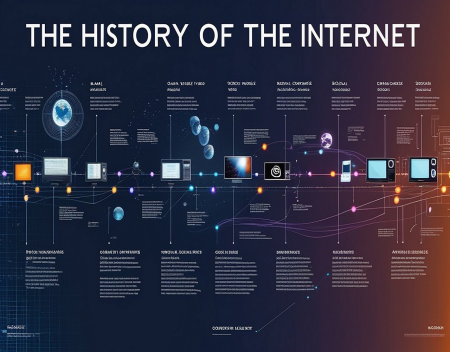
The History of the Intern
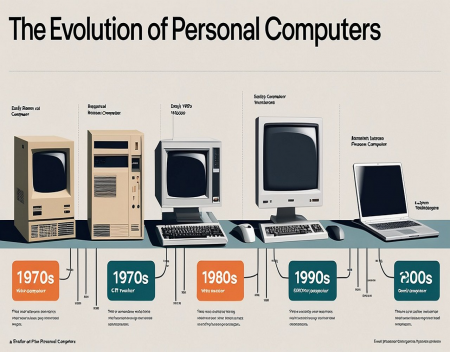
The Evolution of Personal