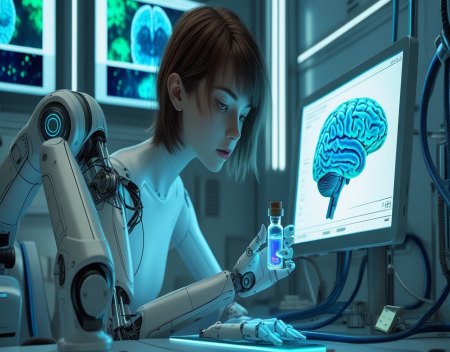
Memory has always been central to human identity. It shapes how individuals understand themselves, relate to others, and navigate the world. From ancient oral traditions to handwritten journals, people have long developed ways to preserve and transmit information beyond the limits of the human mind. Today, however, digital technology has transformed this process in unprecedented ways. With smartphones, cloud storage, and artificial intelligence systems, vast amounts of personal and collective memory are now stored outside the brain. This shift raises an important question: what happens when memory is no longer internal, but externalized and managed by machines?
The outsourcing of memory is not entirely new. Writing itself was once considered a revolutionary tool that allowed people to record information rather than rely solely on recall. Libraries and archives extended this capability, preserving knowledge across generations. What distinguishes the current era is the scale, speed, and intimacy of external memory systems. Modern devices can store thousands of photos, messages, documents, and recordings, capturing not just facts but the details of everyday life.
Smartphones have become central to this transformation. They function as personal memory hubs, storing contacts, schedules, conversations, and experiences. Instead of remembering phone numbers, people rely on contact lists. Instead of recalling directions, they use navigation apps. Instead of retaining information, they often search for it instantly online. This convenience allows individuals to offload cognitive tasks, freeing mental resources for other activities.
Artificial intelligence further amplifies this shift. Search engines can retrieve information within seconds, often anticipating what users are looking for. Digital assistants can remind individuals of appointments, suggest actions based on past behavior, and even summarize large volumes of information. Photo recognition systems can organize images by faces, locations, or events, effectively indexing personal memories in ways that would be difficult for the human brain alone.
While these tools provide undeniable benefits, they also influence how memory functions. When information is easily accessible externally, individuals may be less motivated to encode it internally. Psychologists have described this phenomenon as a form of cognitive offloading, where the brain relies on external systems to store and retrieve information. Over time, this may alter patterns of attention and recall, emphasizing access over retention.
One consequence of this shift is a change in how people experience knowledge. Instead of remembering detailed information, individuals often remember how to find it. This can be efficient, but it may also lead to a more fragmented understanding of complex subjects. Deep knowledge often requires sustained engagement and internalization, processes that may be reduced when information is constantly outsourced.
There are also implications for personal identity. Memories are not simply records of events; they are shaped by interpretation, emotion, and context. The act of remembering involves reconstruction, allowing individuals to make sense of their experiences. When memories are stored externally as photos, videos, or data points, they may appear more fixed and objective. However, this external record may not capture the subjective meaning of an experience. Overreliance on digital archives could shift how individuals relate to their own past, emphasizing documentation over reflection.
Privacy and control represent another critical concern. External memory systems are often managed by private companies that store data on remote servers. Personal memories, including messages, images, and behavioral patterns, may be subject to terms of service agreements that users rarely read in detail. This raises questions about who ultimately controls access to these memories and how they might be used. Data breaches, platform shutdowns, or policy changes could affect the availability and security of personal archives.
Despite these challenges, external memory systems also offer significant advantages. They allow individuals to preserve moments that might otherwise be forgotten, maintain connections across distances, and access information quickly. For people with cognitive impairments or memory related conditions, digital tools can provide essential support, enhancing independence and quality of life.
The key issue is not whether memory should be externalized, but how it is integrated into human cognition. Rather than replacing internal memory, external systems can complement it. The goal should be to use technology in ways that support understanding, reflection, and meaningful engagement, rather than simply storing information.
This may require more intentional use of digital tools. Instead of relying entirely on devices for recall, individuals can balance external storage with active learning and reflection. Practices such as summarizing information, engaging in discussion, and revisiting experiences without digital prompts can help maintain cognitive depth.
Ultimately, the outsourcing of memory reflects a broader transformation in how humans interact with technology. As machines become more capable of storing and retrieving information, the role of human memory is evolving. The challenge is to ensure that this evolution enhances rather than diminishes the richness of human experience.
Memory is not only about what is remembered, but how it is understood. External systems can preserve information, but the meaning of that information remains a human responsibility. In a world where memory is increasingly external, the ability to interpret, connect, and reflect may become more important than ever.
Great experience with Computer Geek. They helped with my website needs and were professional, respon . . . [MORE].

Great, quick service when my laptop went into meltdown and also needed Windows 11 installed. Also ca . . . [MORE].
It was a great experience to working with you. thank you so much. . . . [MORE].
Thank you so much for great service and over all experience is good . highly recommended for all peo . . . [MORE].
We engaged The Computer Geeks in mid-2023 as they have a reputation for API integration within the T . . . [MORE].

The Rise and Fall of Flas
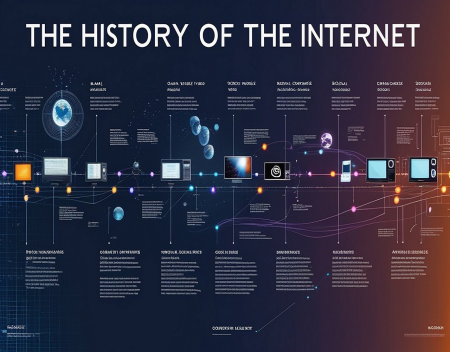
The History of the Intern
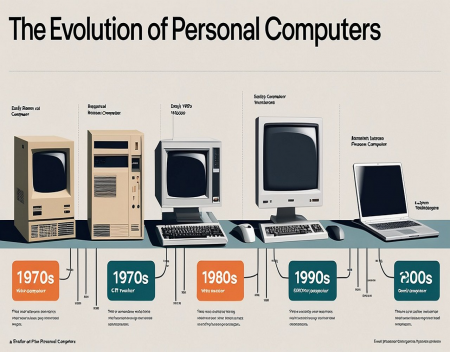
The Evolution of Personal