In the modern world, conflict is no longer confined to physical battlefields or visible political struggles. A quieter, more subtle form of competition is unfolding every day—one that takes place within the human mind. This is the quiet war for perception, a continuous effort by institutions, platforms, and systems to shape how individuals see, interpret, and understand reality. Unlike traditional conflicts, this war is not announced, and its participants are often unaware they are involved. Yet its influence reaches into nearly every aspect of daily life.
At the center of this shift is the unprecedented flow of information. Digital technology has made it possible for individuals to access news, opinions, and content from across the globe instantly. While this abundance of information can empower, it also creates an environment where perception is constantly being influenced by competing narratives. Algorithms curate what people see, selecting content based on engagement patterns rather than objective importance. Over time, these curated experiences can shape not only what individuals know, but how they think.
Social media platforms play a significant role in this dynamic. Designed to maximize engagement, these systems prioritize content that captures attention and provokes emotional responses. Posts that generate strong reactions—whether excitement, anger, or fear—are more likely to be amplified. As a result, users are often exposed to information that reinforces existing beliefs or intensifies emotional responses. This can create feedback loops in which perception becomes increasingly shaped by selective exposure.
The quiet war for perception is not limited to social media. Advertising, entertainment, and even everyday digital interactions contribute to the shaping of perspective. Targeted advertising uses behavioral data to present messages tailored to individual preferences and vulnerabilities. Streaming platforms recommend content based on viewing history, gradually influencing tastes and cultural exposure. News aggregation systems highlight certain stories while downplaying others, subtly guiding public attention.
One of the most powerful aspects of this phenomenon is its invisibility. Unlike overt propaganda, modern influence often operates through personalization. Individuals are not shown the same information; instead, each person experiences a customized version of reality based on their data profile. This fragmentation makes it difficult to recognize the extent of influence, as there is no single shared narrative against which to compare experiences.
The consequences of this quiet war extend beyond individual perception. At a societal level, the fragmentation of information can lead to the erosion of shared understanding. When people are exposed to different sets of facts, interpretations, and priorities, reaching consensus becomes more challenging. Public discourse can become polarized, not necessarily because individuals are unwilling to engage, but because they are operating within different informational environments.
Psychologically, constant exposure to curated content can also affect how individuals process information. The speed and volume of digital communication encourage quick reactions rather than deep reflection. Over time, this can reduce the capacity for critical thinking, making it easier for persuasive or emotionally charged content to shape perception. The line between information and influence becomes increasingly blurred.
However, it is important to recognize that the quiet war for perception is not inherently malicious. Many of the systems involved were designed to improve user experience, provide relevant information, and enhance convenience. Personalized recommendations can help people discover content they enjoy. Targeted communication can make services more efficient. The challenge arises when these systems operate without sufficient transparency or awareness.
Addressing this issue requires a shift in how individuals and institutions approach information. On a personal level, developing media literacy and critical thinking skills is essential. Questioning sources, seeking diverse perspectives, and taking time to reflect can help counterbalance the effects of constant digital influence. Awareness itself becomes a form of resistance, allowing individuals to recognize when their perception may be shaped by external forces.
At the institutional level, there is growing discussion about the responsibility of technology companies to design systems that prioritize well being alongside engagement. Greater transparency in how algorithms function, as well as tools that allow users to customize their information environments, could help restore a sense of control.
Ultimately, the quiet war for perception reflects a deeper transformation in the relationship between humans and information. In a world where reality is increasingly mediated by digital systems, perception itself becomes a contested space. The challenge is not to eliminate influence—an impossible task—but to navigate it consciously.
In this environment, the most valuable skill may be the ability to pause, question, and think independently. The battle for perception may be quiet, but its outcomes shape how individuals understand the world, make decisions, and define truth itself.
Great experience with Computer Geek. They helped with my website needs and were professional, respon . . . [MORE].

Great, quick service when my laptop went into meltdown and also needed Windows 11 installed. Also ca . . . [MORE].
It was a great experience to working with you. thank you so much. . . . [MORE].
Thank you so much for great service and over all experience is good . highly recommended for all peo . . . [MORE].
We engaged The Computer Geeks in mid-2023 as they have a reputation for API integration within the T . . . [MORE].
The Browser Wars Revisite

The Rise and Fall of Flas
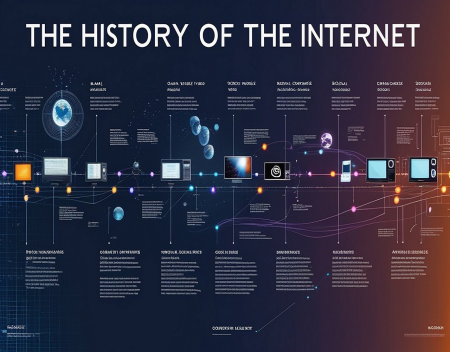
The History of the Intern