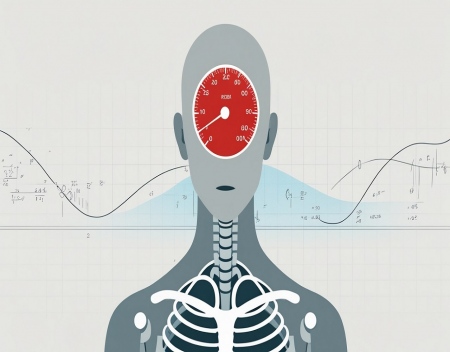
In an age defined by data, measurement has become a dominant way of understanding the world. From steps walked and hours slept to productivity scores, engagement rates, and emotional analytics, modern life is increasingly filtered through numbers. This shift has given rise to what can be called the quantified human, an individual whose behaviors, health, relationships, and even sense of self are tracked, recorded, and evaluated through digital metrics. While this transformation promises insight and optimization, it also raises a deeper question. In translating human experience into data, are we gaining clarity, or are we slowly reducing life to what can be measured?
The appeal of quantification is easy to understand. Numbers offer a sense of control in a complex world. A wearable device that tracks heart rate or sleep cycles provides tangible feedback that feels objective and actionable. Productivity apps promise to help people manage time more effectively. Mood tracking tools suggest patterns that might otherwise go unnoticed. In many cases, these technologies deliver real benefits, especially in areas like preventive health and personal awareness. Measurement can illuminate habits, encourage positive change, and help individuals make informed decisions.
Yet the act of measuring is never neutral. What gets tracked shapes what gets valued. When physical activity is reduced to step counts, other forms of movement may be overlooked. When productivity is measured in tasks completed or hours logged, creativity, reflection, and emotional labor become harder to justify. Over time, people may begin to prioritize what is measurable over what is meaningful, adjusting their behavior not to live better, but to score higher within a system of metrics.
This shift subtly alters how individuals relate to themselves. Instead of experiencing life directly, many people now experience it through dashboards and summaries. A morning run is evaluated not by how it felt, but by pace, distance, and calorie burn. Sleep is judged by charts rather than by how rested one feels. Even social interactions are increasingly quantified through likes, views, and response times. The self becomes an ongoing project of optimization, constantly compared to benchmarks and averages.
Psychologically, this can create a sense of pressure and self-surveillance. When every action produces data, rest can feel unproductive and deviation can feel like failure. The internal compass that once guided decisions through intuition and emotion is gradually replaced by external metrics. Instead of asking what feels right, people ask what the data suggests. This can erode trust in subjective experience, even though many aspects of human life resist quantification altogether.
The quantified human also exists within broader systems that extend beyond personal choice. Employers track performance metrics. Insurance models increasingly rely on behavioral data. Educational institutions evaluate progress through analytics. In these contexts, metrics do not merely inform individuals. They influence access, opportunity, and judgment. A person’s data trail can shape how they are categorized, rewarded, or penalized, often without full transparency or consent.
One of the most significant risks of this trend is the illusion of objectivity. Numbers feel impartial, yet they are produced by systems designed by humans with specific assumptions and priorities. Metrics simplify reality, filtering out context, nuance, and contradiction. When these simplified representations are treated as complete truths, they can reinforce narrow definitions of success, health, or worth. Those who do not fit neatly into measurable categories may find themselves misunderstood or marginalized.
At the same time, it would be misleading to frame quantification as purely negative. Humans have always used tools to understand themselves, from diaries to medical records. What distinguishes the current moment is scale, automation, and persistence. Data is collected continuously, often passively, and stored indefinitely. This transforms measurement from an occasional aid into a constant presence, shaping behavior even when individuals are not consciously engaging with it.
The challenge, then, is not whether to measure, but how to relate to measurement. Metrics can be valuable guides without becoming masters. They can inform without defining. Reclaiming balance requires recognizing that numbers are representations, not realities. They capture patterns, not meaning. A fulfilling life cannot be fully expressed through charts or scores, because its most important elements connection, purpose, curiosity, and love are experienced, not calculated.
Ultimately, the question of the quantified human is a philosophical one. It asks what kind of beings we believe ourselves to be. If humans are treated primarily as data-producing entities, then life becomes a system to optimize rather than a story to live. If, instead, metrics are used as tools within a richer understanding of human complexity, they can coexist with intuition, creativity, and imperfection.
As technology continues to expand its capacity to measure, the responsibility shifts to individuals and societies to decide where measurement ends and meaning begins. The future of the quantified human will depend not on how much data we can collect, but on whether we remember that the most significant aspects of life cannot be reduced to metrics at all.
Great experience with Computer Geek. They helped with my website needs and were professional, respon . . . [MORE].

Great, quick service when my laptop went into meltdown and also needed Windows 11 installed. Also ca . . . [MORE].
It was a great experience to working with you. thank you so much. . . . [MORE].
Thank you so much for great service and over all experience is good . highly recommended for all peo . . . [MORE].
We engaged The Computer Geeks in mid-2023 as they have a reputation for API integration within the T . . . [MORE].

The Rise of Automation in

Why Every Business Needs

ERP Systems for Small Bus