
In the early days of the internet, digital technology was often described as a liberating force. It promised open communication, access to information, and new forms of global collaboration. Over time, however, a different economic model began to emerge beneath the surface of this optimism. Today, much of the digital economy is driven by what scholars have called surveillance capitalism, a system in which companies collect vast quantities of personal data and transform it into predictive insights that can be monetized. Within this framework, the everyday activities of billions of people become raw material for analysis, prediction, and influence.
Surveillance capitalism operates on a simple principle: human behavior can be tracked, measured, and converted into valuable data. Every time someone searches for information, watches a video, scrolls through a social feed, or navigates a digital map, they generate signals about their preferences, habits, and interests. These signals are captured through a complex network of tracking technologies, including cookies, mobile device identifiers, app permissions, and location services. Once collected, the data is aggregated and analyzed using sophisticated machine learning systems designed to detect patterns.
The true value of this data lies not in describing what people have already done, but in predicting what they are likely to do next. By analyzing past behavior, companies can build models that forecast future actions with surprising accuracy. These predictions are then used to shape targeted advertising, personalized recommendations, and algorithmically curated experiences. In many cases, the goal is not merely to anticipate behavior but to subtly guide it.
This system has created a powerful economic engine. Digital platforms often offer services that appear free to users, such as email, social networking, navigation tools, and video streaming. In exchange, users provide data through their interactions with the platform. Advertisers pay to access predictive insights derived from that data, allowing them to target individuals with highly specific messages. The more precisely a platform can predict behavior, the more valuable its advertising services become.
The architecture that supports surveillance capitalism is both technical and structural. At the technical level, algorithms process massive datasets to identify correlations and trends. At the structural level, platform design encourages users to remain engaged for as long as possible, generating more data in the process. Features such as infinite scrolling, autoplay videos, and personalized notifications are not simply convenience tools; they are mechanisms that extend attention and increase the volume of behavioral information captured.
Over time, this architecture can shape how individuals interact with information and with each other. Algorithms determine which posts appear in social feeds, which news articles rise to prominence, and which products are recommended for purchase. Because these systems optimize for engagement, they often amplify content that triggers strong emotional reactions. As a result, the architecture of digital platforms can subtly influence what people see, think about, and respond to.
Critics argue that this influence represents a new form of power. Traditional markets operated by selling goods or services directly to consumers. Surveillance capitalism, by contrast, profits from the continuous monitoring of behavior. Individuals are not only customers; they are also sources of data that feed predictive models. This dual role complicates traditional ideas of consent and ownership. While users voluntarily interact with digital platforms, they may not fully understand the extent to which their behavior is being analyzed and monetized.
Privacy concerns are central to debates about surveillance capitalism. Large scale data collection raises questions about how personal information is stored, shared, and protected. Data breaches, unauthorized tracking, and opaque terms of service agreements have contributed to growing public awareness of the risks involved. Governments and regulatory bodies in several regions have begun implementing data protection laws aimed at giving individuals more control over their personal information.
However, the issue extends beyond privacy alone. Surveillance capitalism also shapes the distribution of knowledge and influence within society. Companies that control large data ecosystems gain insights into human behavior that few other institutions possess. These insights can be used to optimize advertising campaigns, guide product development, or influence public discourse. As a result, the architecture of digital platforms becomes intertwined with economic and cultural power.
Some technologists and policymakers are exploring alternative models that might reduce dependence on surveillance driven revenue. Subscription services, decentralized networks, and stronger data ownership rights have all been proposed as ways to rebalance the digital economy. Whether these approaches can compete with the scale and profitability of existing systems remains uncertain.
Ultimately, surveillance capitalism represents a defining feature of the modern digital landscape. It transforms everyday interactions into data streams and organizes them within an architecture designed to predict and influence behavior. The challenge facing society is not simply to reject or accept this system, but to understand its mechanisms and consequences. Only by recognizing how surveillance and profit intersect can individuals and institutions begin to shape a digital environment that balances innovation with accountability.
Great experience with Computer Geek. They helped with my website needs and were professional, respon . . . [MORE].

Great, quick service when my laptop went into meltdown and also needed Windows 11 installed. Also ca . . . [MORE].
It was a great experience to working with you. thank you so much. . . . [MORE].
Thank you so much for great service and over all experience is good . highly recommended for all peo . . . [MORE].
We engaged The Computer Geeks in mid-2023 as they have a reputation for API integration within the T . . . [MORE].

The Rise and Fall of Flas
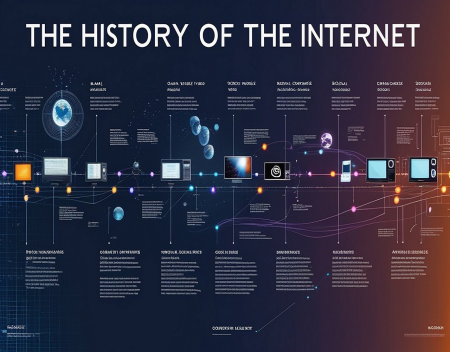
The History of the Intern
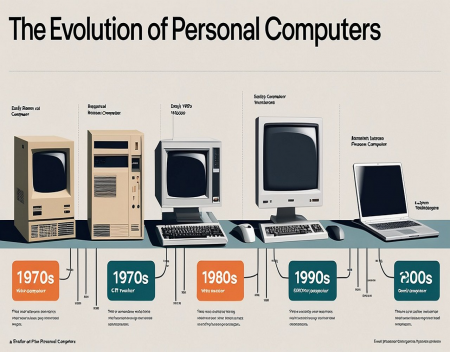
The Evolution of Personal