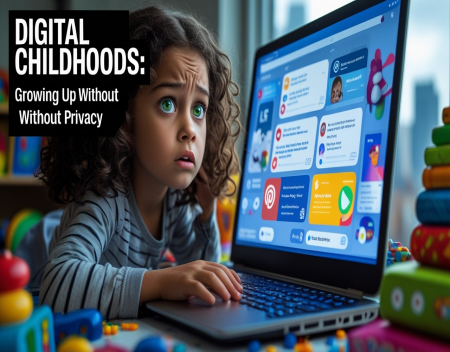
Childhood has always been a period of exploration, experimentation, and gradual self-discovery. Mistakes were once fleeting, memories confined to family stories or fading recollections among friends. Today, that impermanence is disappearing. Digital childhoods are increasingly defined by constant documentation, data collection, and online exposure, creating a generation that grows up without meaningful privacy. From baby monitors connected to the internet to social media profiles created before a child can speak, the modern childhood unfolds under continuous digital observation.
One of the most striking changes is the loss of anonymity during formative years. Parents now document milestones, behaviors, and even emotional moments online, often with good intentions. These digital footprints, however, are permanent. Children inherit online identities that they did not consent to and may not fully understand until much later. Photos, videos, and personal stories become searchable records, shaping how others perceive them long before they can define themselves. This early exposure alters the traditional boundary between private family life and public identity.
Growing up without privacy also affects psychological development. Privacy allows children to test boundaries, experiment with identity, and process emotions away from judgment. When every action can be recorded, shared, or analyzed, self-awareness emerges earlier and more intensely. Children may learn to perform rather than explore, shaping their behavior around imagined audiences instead of internal curiosity. This performative mindset can limit emotional honesty and encourage conformity at an age when creativity and risk-taking are essential for growth.
The presence of surveillance technologies in homes further complicates this dynamic. Smart speakers, connected toys, learning apps, and educational platforms collect data continuously. While these tools often promise safety, convenience, or personalized learning, they also normalize monitoring. Children raised in such environments may internalize the idea that being watched is natural and expected. Over time, this normalization can weaken their sense of autonomy and reduce their awareness of privacy as a right rather than a luxury.
Social relationships are also shaped by digital exposure. Friendships increasingly form and evolve online, where interactions are logged and sometimes moderated by platforms. Conflicts, jokes, and emotional exchanges leave traces that can resurface years later. For children and teenagers, whose identities are still fluid, this permanence can amplify shame and anxiety. A moment of poor judgment that once would have faded can become a defining narrative, influencing self-esteem and social standing well into adulthood.
Educational environments contribute to the erosion of privacy as well. Schools increasingly rely on digital tools to track attendance, performance, behavior, and even emotional states. While data-driven education aims to improve outcomes, it can also create a sense that students are constantly evaluated. This can discourage intellectual risk-taking, as children learn to optimize for metrics rather than curiosity. When learning becomes inseparable from surveillance, the joy of discovery may give way to fear of failure.
There are also long-term societal implications. Children who grow up without privacy may develop different expectations about authority, consent, and personal boundaries. If surveillance is omnipresent from birth, resistance to monitoring may feel unnatural or even suspicious. This shift has the potential to reshape future norms around freedom, expression, and dissent. A generation accustomed to constant observation may be less likely to question systems that collect, analyze, and monetize personal data.
At the same time, digital childhoods are not defined solely by loss. Technology offers connection, creativity, and access to knowledge that previous generations could not imagine. The challenge lies in balance. Protecting children does not require exposing every moment of their lives. Teaching digital literacy must include teaching the value of privacy, consent, and control over one’s own narrative. Parents, educators, and policymakers all play a role in shaping environments where children can benefit from technology without being consumed by it.
Ultimately, growing up without privacy changes how individuals understand themselves and the world. Childhood is not just preparation for adulthood. It is a crucial period where identity, resilience, and moral understanding are formed. Preserving spaces where children can grow unobserved, unjudged, and free to make mistakes may be one of the most important challenges of the digital age.
Great experience with Computer Geek. They helped with my website needs and were professional, respon . . . [MORE].

Great, quick service when my laptop went into meltdown and also needed Windows 11 installed. Also ca . . . [MORE].
It was a great experience to working with you. thank you so much. . . . [MORE].
Thank you so much for great service and over all experience is good . highly recommended for all peo . . . [MORE].
We engaged The Computer Geeks in mid-2023 as they have a reputation for API integration within the T . . . [MORE].

How Technology Is Changin

What Comes After Silicon

The Future of Batteries