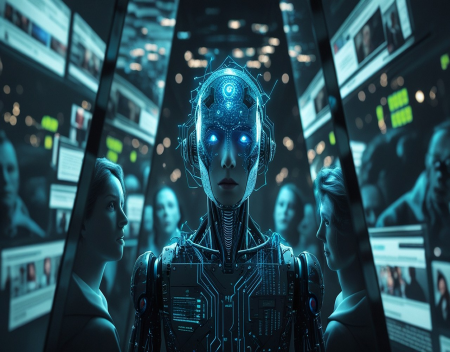
For most of human history, truth was treated as something relatively stable. Facts could be debated, interpreted, or hidden, but they were assumed to exist independently of who observed them. The rise of artificial intelligence is quietly dismantling that assumption. As AI systems increasingly generate information, shape narratives, and personalize reality, truth itself is becoming probabilistic rather than absolute. We are entering an era where what is true depends less on what happened and more on what is statistically likely, contextually convincing, or emotionally resonant.
Artificial intelligence does not deal in truth the way humans traditionally understand it. Large language models, recommendation systems, and predictive algorithms operate on probability. They generate outputs based on patterns in data, not on a grounded understanding of reality. When an AI produces a statement, image, or video, it is not asserting a fact. It is offering the most plausible approximation given its training. This distinction is subtle but profound. Plausibility is not the same as truth, yet in practice the two are increasingly indistinguishable.
This shift has enormous implications for how information spreads. AI generated content can be endlessly replicated, remixed, and optimized for believability. A false narrative does not need to be perfectly accurate to gain traction. It only needs to feel right. When millions of people encounter slightly different versions of the same story, tailored to their beliefs and biases, consensus reality begins to fracture. Truth becomes less about verification and more about reinforcement.
Deepfakes exemplify this collapse. When images, audio, and video can be convincingly fabricated, visual evidence loses its authority. Seeing is no longer believing. Instead, people are forced to evaluate information through trust networks, emotional reactions, or tribal alignment. If a piece of content supports what someone already believes, it is likely to be accepted as true. If it challenges those beliefs, it can be dismissed as artificial or manipulated. AI makes both claims plausible.
The news ecosystem is particularly vulnerable. Algorithms already decide which stories people see, how they are framed, and how often they appear. As AI begins to write articles, generate headlines, and summarize events, editorial judgment is replaced by optimization. Stories that generate engagement are prioritized over those that are accurate or nuanced. In a probabilistic reality, truth competes with content that is merely more clickable.
Even science and data analysis are not immune. AI models are increasingly used to interpret complex datasets, generate hypotheses, and predict outcomes. While these tools are powerful, they also introduce opacity. When a model produces a result that cannot be easily explained, trust shifts from understanding to authority. People are asked to accept conclusions because the system is statistically confident, not because the reasoning is transparent. Truth becomes something inferred rather than demonstrated.
Living in a probabilistic reality also affects personal identity. Recommendation systems predict who we are and who we might become, then shape our experiences accordingly. The content we see reinforces those predictions, creating feedback loops that feel like destiny. When AI defines likelihood, possibility shrinks. Truth about ourselves becomes something externalized, measured, and nudged rather than discovered.
The ethical danger is not that AI lies intentionally, but that it erodes the conditions necessary for truth to matter. When everything is uncertain, emotionally framed, and algorithmically filtered, people lose motivation to seek objective verification. Cynicism replaces skepticism. If nothing can be trusted, then everything becomes equally valid. This is fertile ground for manipulation, authoritarianism, and social fragmentation.
Preserving truth in an AI driven world requires more than technical solutions. Transparency in AI systems is essential, but so is cultural adaptation. Education must emphasize critical thinking, media literacy, and an understanding of probabilistic systems. People need to recognize that confidence, realism, and fluency do not equal truth.
AI does not end truth outright. It changes how truth must be defended. In a probabilistic reality, truth becomes an active practice rather than a passive assumption. The collapse of truth is not inevitable, but resisting it will require intentional effort from individuals, institutions, and the technologies shaping modern life.
Great experience with Computer Geek. They helped with my website needs and were professional, respon . . . [MORE].

Great, quick service when my laptop went into meltdown and also needed Windows 11 installed. Also ca . . . [MORE].
It was a great experience to working with you. thank you so much. . . . [MORE].
Thank you so much for great service and over all experience is good . highly recommended for all peo . . . [MORE].
We engaged The Computer Geeks in mid-2023 as they have a reputation for API integration within the T . . . [MORE].
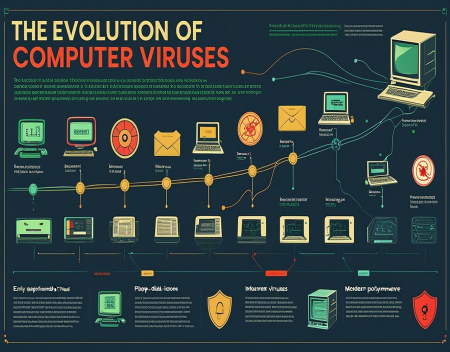
The Evolution of Computer

The Browser Wars Revisite
The Rise and Fall of Flas