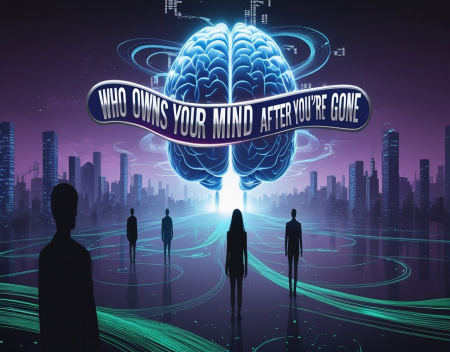
For centuries, human beings have searched for ways to leave something of themselves behind. Ancient civilizations built monuments, wrote books, and created art in hopes that their thoughts and identities would endure beyond their lifetimes. In the digital age, a new and far more literal form of legacy is emerging. Through vast stores of personal data and increasingly sophisticated artificial intelligence, it may soon be possible to simulate a person’s personality, voice, and behavior long after they have died. This concept—often called digital immortality—raises a profound question: if a digital version of you can continue to exist, who actually owns your mind after you are gone?
Digital immortality does not necessarily mean preserving a biological brain. Instead, it refers to reconstructing aspects of a person’s identity from their digital footprint. Emails, text messages, voice recordings, social media posts, photos, and videos collectively form an enormous archive of personal expression. When analyzed using advanced machine learning systems, these fragments can be used to model how a person communicates, reacts, and expresses themselves. The result may be an artificial entity capable of speaking in a voice that resembles the original individual.
Some early forms of this idea already exist. Chatbots trained on a deceased person’s messages can simulate conversations that feel eerily authentic. Voice synthesis technology can recreate speech patterns from recorded audio. Digital avatars can replicate facial expressions and gestures. As these technologies improve, the line between a memorial and a simulated presence may become increasingly difficult to distinguish.
For grieving families, the appeal of digital immortality can be powerful. The possibility of hearing a loved one’s voice again, receiving messages in their familiar tone, or interacting with a digital representation can offer comfort during loss. In theory, a digital archive could preserve stories, memories, and advice for future generations. Grandchildren might one day converse with a simulated version of a grandparent who passed away decades earlier. In this sense, digital immortality appears to transform memory into interaction.
However, the concept also raises complicated ethical and legal questions. The first involves ownership. The data used to construct digital personas often resides on platforms controlled by private companies. Social media posts, emails, and online recordings are typically stored on corporate servers governed by terms of service agreements. After a person dies, who has the right to use this information to recreate their voice or personality? Is it the family, the company hosting the data, or the individual who originally produced it?
Consent becomes another crucial issue. Most people have never explicitly agreed to have their digital traces used to create posthumous AI replicas. Yet the sheer volume of personal data generated online makes such reconstruction technically possible. Without clear guidelines, companies or developers could theoretically create digital personas from archived content without direct permission from the individual involved. This possibility raises concerns about dignity, autonomy, and the right to control one’s identity.
There is also a philosophical challenge in defining what such replicas actually represent. A digital reconstruction might mimic someone’s style of speech, their favorite expressions, and even their opinions based on historical data. But it cannot truly capture consciousness, subjective experience, or the evolving nature of human thought. A person’s mind is shaped by constant change—new experiences, emotions, and reflections. A static dataset can only approximate the past, not recreate the living mind that once generated it.
This distinction is important because people may attribute more authenticity to digital replicas than they deserve. If an AI trained on someone’s writings begins producing new messages, are those statements truly reflective of the person who died? Or are they simply algorithmic predictions based on previous patterns? The risk lies in confusing simulation with continuation.
Digital immortality may also influence how people approach their own lives. Knowing that personal data might one day be used to reconstruct their identity could encourage individuals to curate their digital presence more carefully. Online posts might begin to feel less like fleeting communication and more like contributions to a permanent archive of the self.
Despite these uncertainties, interest in digital immortality continues to grow as technology advances. Some futurists envision a time when digital archives become so detailed that they form complex models of human personality. Others advocate for strict ethical frameworks to ensure that posthumous digital identities are handled with respect and consent.
Ultimately, the idea of preserving a person’s mind in digital form challenges traditional boundaries between memory, identity, and technology. Humans have always sought ways to overcome the limits of mortality, but digital tools are transforming that desire into something more tangible. The question is no longer simply whether a digital version of a person can exist. It is whether society is prepared to decide who controls it.
As technology reshapes how identities are stored and reconstructed, digital immortality may become less of a science fiction concept and more of a practical reality. When that moment arrives, the challenge will not only be technical but deeply human: determining how to preserve memory without losing sight of what it means to truly be alive.
Great experience with Computer Geek. They helped with my website needs and were professional, respon . . . [MORE].

Great, quick service when my laptop went into meltdown and also needed Windows 11 installed. Also ca . . . [MORE].
It was a great experience to working with you. thank you so much. . . . [MORE].
Thank you so much for great service and over all experience is good . highly recommended for all peo . . . [MORE].
We engaged The Computer Geeks in mid-2023 as they have a reputation for API integration within the T . . . [MORE].
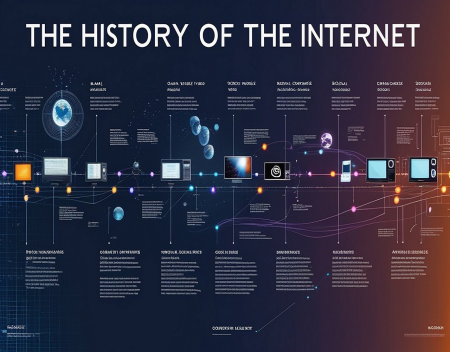
The History of the Intern
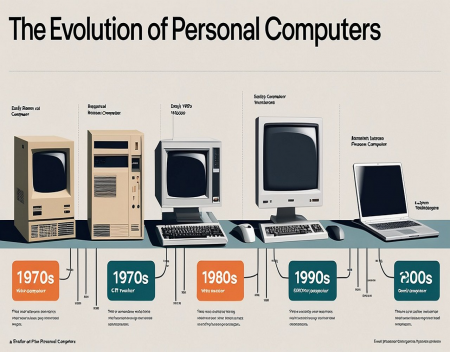
The Evolution of Personal
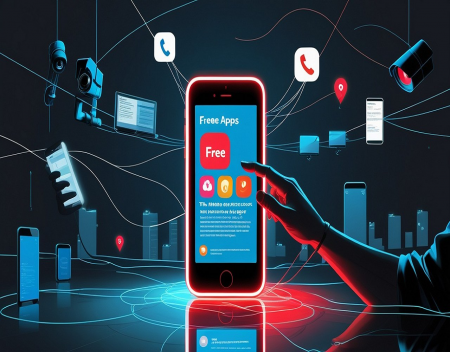
The Hidden Cost of Free A