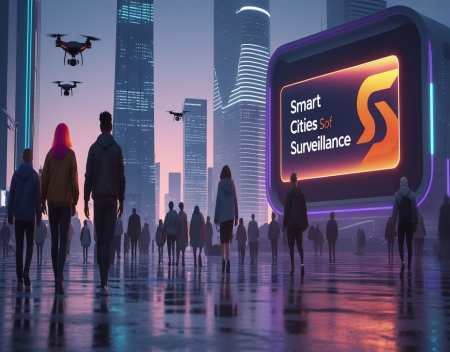
Across the globe, cities are undergoing a transformation driven by data, connectivity, and automation. The concept of the “smart city” promises a future where urban environments are more efficient, sustainable, and responsive to the needs of their residents. Sensors embedded in infrastructure monitor traffic flow, energy consumption, air quality, and public safety. Data is collected and analyzed in real time, allowing city systems to adapt dynamically. On the surface, this vision offers a compelling solution to many of the challenges facing modern urban life. Yet beneath the promise of convenience and optimization lies a growing concern: are smart cities also becoming systems of soft surveillance?
A smart city operates through an interconnected network of devices and platforms. Traffic cameras adjust signals based on congestion patterns. Public transportation systems track movement to improve scheduling. Waste management systems optimize collection routes using sensor data. Even streetlights can adjust brightness based on activity levels. These innovations aim to reduce inefficiency, lower costs, and improve quality of life. For residents, this can translate into shorter commutes, cleaner environments, and more reliable services.
However, the same technologies that enable these improvements also generate vast amounts of data about how people move, behave, and interact within urban spaces. Every sensor, camera, and connected device becomes a point of observation. While this data is often anonymized or aggregated, it still represents a detailed map of human activity. Over time, the accumulation of such data can reveal patterns about individuals and communities that were previously difficult to capture.
The term “soft surveillance” refers to forms of monitoring that are subtle, embedded, and often accepted as part of everyday life. Unlike overt surveillance, which is clearly visible and associated with enforcement, soft surveillance operates quietly in the background. It is integrated into systems designed for convenience and efficiency, making it less noticeable and more normalized. In smart cities, surveillance is not always imposed through strict measures; it is often built into the very infrastructure that residents rely on.
One of the key issues is consent. In many cases, individuals do not actively choose to participate in data collection; it occurs as a byproduct of living in a connected environment. Walking down a street equipped with cameras, using public transportation, or accessing city services may all involve some level of data capture. While these systems are intended to benefit the public, the lack of clear awareness or control can raise concerns about autonomy and privacy.
Another challenge lies in data governance. Smart city initiatives often involve partnerships between governments and private technology companies. These collaborations can blur the lines of responsibility regarding who owns the data, how it is used, and how it is protected. If data is stored and managed by private entities, questions arise about transparency and accountability. Residents may have limited insight into how their information is being processed or whether it is being shared beyond its original purpose.
There is also the potential for function creep, where data collected for one purpose is later used for another. For example, traffic monitoring systems designed to improve flow could be repurposed for law enforcement or behavioral analysis. While such uses may be justified in certain contexts, they can expand the scope of surveillance beyond what residents initially expected. Over time, this can lead to a gradual normalization of monitoring that would have been controversial if introduced more directly.
Equity is another important consideration. The deployment of smart technologies is not always uniform across a city. Some neighborhoods may receive more advanced infrastructure, while others remain underserved. Additionally, data driven systems may reflect existing biases if the data used to train them is incomplete or skewed. This can result in uneven outcomes, where certain communities benefit more than others or face unintended disadvantages.
Despite these concerns, it is important to acknowledge the genuine benefits of smart city technologies. Efficient resource management, improved public safety, and environmental sustainability are critical goals for rapidly growing urban populations. The ability to respond quickly to changing conditions can enhance resilience and quality of life. The challenge is not to reject these innovations, but to implement them in ways that respect individual rights and maintain public trust.
Achieving this balance requires thoughtful design and governance. Transparency about data collection and use is essential. Residents should have access to clear information about how smart systems operate and what data is being gathered. Mechanisms for consent and control, such as opt out options or anonymization standards, can help protect privacy. Independent oversight and regulation may also play a role in ensuring that data is used responsibly.
Public participation is equally important. Smart cities should not be designed solely by technologists and policymakers. Engaging residents in decision making processes can help align technological development with community values. This collaborative approach can foster trust and ensure that the benefits of innovation are shared broadly.
Ultimately, the question of “smart cities or soft surveillance” is not a simple choice between two opposing paths. It is a reflection of how technology is integrated into the fabric of daily life. Cities can be both intelligent and respectful of privacy, but achieving this requires intentional effort.
As urban environments become more connected, the invisible systems that support them will shape how people experience public space. Ensuring that these systems serve the public without quietly monitoring it beyond necessity will be one of the defining challenges of the smart city era.
Great experience with Computer Geek. They helped with my website needs and were professional, respon . . . [MORE].

Great, quick service when my laptop went into meltdown and also needed Windows 11 installed. Also ca . . . [MORE].
It was a great experience to working with you. thank you so much. . . . [MORE].
Thank you so much for great service and over all experience is good . highly recommended for all peo . . . [MORE].
We engaged The Computer Geeks in mid-2023 as they have a reputation for API integration within the T . . . [MORE].
The Hidden Cost of Free A

The Psychology of Notific
Why Subscription Services