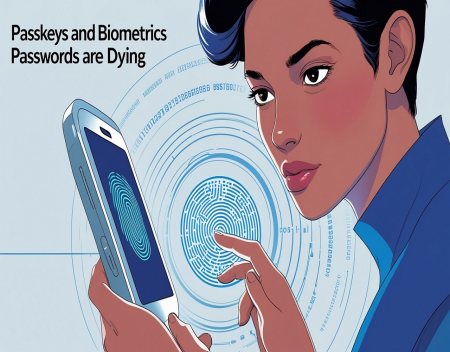
For decades, passwords have been the primary method of securing digital accounts. From email and banking to social media and workplace systems, nearly every online interaction has relied on a string of characters meant to prove identity. But as cyber threats have evolved, the weaknesses of passwords have become increasingly clear. In 2026, the shift away from traditional passwords is well underway, driven by the rise of passkeys and biometric authentication. This transition marks a major turning point in the field of Cybersecurity.
The fundamental problem with passwords is that they depend heavily on human behavior. Strong passwords are difficult to remember, while easy-to-remember passwords are often weak and predictable. As a result, many users reuse the same passwords across multiple accounts or choose simple combinations that can be easily guessed or cracked. Even when best practices are followed, passwords can still be compromised through phishing attacks, data breaches, or malware. Once exposed, they can be used to gain unauthorized access with little resistance.
Passkeys are emerging as a solution to many of these issues. Unlike traditional passwords, passkeys are based on cryptographic key pairs. One key is stored securely on the user’s device, while the other is held by the service being accessed. When logging in, the system verifies the connection between these keys rather than relying on a shared secret like a password. This approach significantly reduces the risk of credential theft, as there is no password to steal or reuse.
Major platforms, including Apple and Google, have been leading the adoption of passkeys, integrating them into operating systems and services. The goal is to make authentication both more secure and more user-friendly. Instead of typing a password, users can log in with a simple action such as unlocking their device. This not only improves security but also streamlines the user experience.
Biometric authentication is another key component of this shift. Technologies such as fingerprint scanning, facial recognition, and even voice identification are becoming standard features on modern devices. These methods rely on unique physical characteristics, making them difficult to replicate or steal. When combined with passkeys, biometrics provide a seamless and highly secure way to verify identity.
One of the main advantages of biometrics is convenience. Users no longer need to remember complex passwords or go through lengthy login processes. A quick scan or glance is often enough to gain access. This ease of use encourages better security practices, as users are less likely to take shortcuts that compromise their accounts. In many cases, stronger security is achieved not by adding complexity, but by removing friction.
However, the move toward passkeys and biometrics is not without challenges. One concern is privacy. Biometric data is highly sensitive, and if it is compromised, it cannot be changed like a password. This raises important questions about how such data is stored, protected, and used. Most modern systems address this by keeping biometric information on the device itself rather than storing it centrally, reducing the risk of large-scale breaches.
Another issue is accessibility and compatibility. Not all devices support advanced authentication methods, and some users may prefer or require traditional login options. Ensuring that new systems are inclusive and widely accessible is an important part of the transition. Additionally, there may be situations where biometric authentication is not practical, such as in environments where physical conditions interfere with sensors.
There is also the matter of trust. Users must feel confident that these new systems are secure and reliable. This requires transparency from technology providers and clear communication about how authentication works. As with any major shift, adoption will depend not only on technical capability but also on user acceptance.
Despite these challenges, the direction is clear. Passwords, while still in use, are gradually being phased out in favor of more secure and user-friendly alternatives. Passkeys and biometrics represent a move toward authentication methods that are both stronger and simpler, addressing many of the long-standing issues associated with passwords.
For individuals and businesses, adapting to this change is important. Embracing new authentication methods can reduce the risk of cyberattacks and improve overall security posture. At the same time, staying informed about how these systems work can help users make better decisions about protecting their digital identities.
Ultimately, the decline of passwords reflects a broader evolution in how we think about security. Instead of relying on what we know, such as a password, the future is shifting toward what we have and who we are. This combination of technology and identity is shaping a new standard for digital access.
In the end, passwords are not disappearing overnight, but their dominance is fading. As passkeys and biometrics continue to gain traction, they are redefining what it means to log in securely. The result is a digital environment that is not only safer, but also more aligned with the way people actually use technology today.
Great experience with Computer Geek. They helped with my website needs and were professional, respon . . . [MORE].

Great, quick service when my laptop went into meltdown and also needed Windows 11 installed. Also ca . . . [MORE].
It was a great experience to working with you. thank you so much. . . . [MORE].
Thank you so much for great service and over all experience is good . highly recommended for all peo . . . [MORE].
We engaged The Computer Geeks in mid-2023 as they have a reputation for API integration within the T . . . [MORE].

The Browser Wars Revisite

The Rise and Fall of Flas
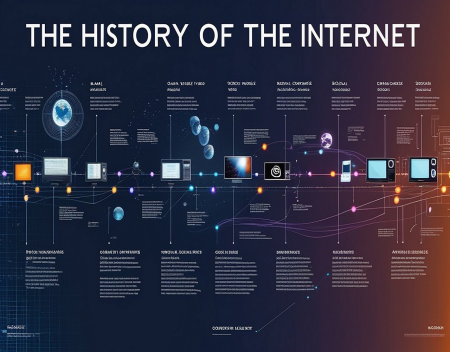
The History of the Intern