
We live in a time where access to information is no longer a limitation, but an overwhelming constant. With a few taps on platforms like Google, X, and Reddit, people can instantly retrieve answers, opinions, data, and perspectives on nearly any subject imaginable. On the surface, this appears to be a triumph of human progress. Knowledge is more accessible than ever before, and barriers to learning have been dramatically reduced. Yet beneath this abundance lies a growing concern: the more information we consume, the less wisdom we seem to cultivate.
Information and wisdom are not the same thing. Information consists of facts, data points, and fragments of knowledge. Wisdom, on the other hand, requires depth, reflection, context, and the ability to apply knowledge meaningfully. It is developed over time through experience, critical thinking, and understanding. The problem with information overload is that it floods the mind with inputs without allowing the necessary space for processing. Instead of deepening understanding, it often fragments it.
One of the key drivers of this phenomenon is the speed at which information is delivered. News updates, social media posts, and algorithmically curated feeds create a continuous stream of content that demands attention. The pressure to stay informed leads people to consume information rapidly, often without verifying sources or considering context. As a result, knowledge becomes shallow. People may know many things superficially but struggle to connect ideas or think critically about them.
Another factor is the structure of digital platforms themselves. Algorithms prioritize content that is engaging, emotional, or controversial, because these qualities drive interaction. This means that the information most likely to reach large audiences is not necessarily the most accurate or insightful, but the most attention-grabbing. Over time, this shapes how people perceive truth and importance. Nuanced, complex ideas are often overshadowed by simplified or sensational narratives, making it harder to develop a balanced understanding of issues.
Information overload also affects memory and focus. When individuals are constantly exposed to new information, the brain has less incentive to retain it. Why remember something when it can be looked up instantly. This reliance on external sources can weaken internal knowledge structures, making it more difficult to build expertise or develop long-term understanding. In addition, constant switching between topics reduces the ability to concentrate deeply, further limiting the development of wisdom.
The social impact is equally significant. In an environment saturated with information, opinions can form quickly and spread widely, often without careful consideration. This can lead to polarization, as people gravitate toward content that reinforces their existing beliefs. The sheer volume of information makes it easy to find support for almost any viewpoint, regardless of its validity. As a result, dialogue becomes more about defending positions than seeking truth.
There is also a paradox of choice at play. With so much information available, individuals must constantly decide what to pay attention to. This can lead to decision fatigue, where the effort of choosing becomes exhausting. In response, people may rely on shortcuts, such as trusting familiar sources or following popular opinions. While these strategies can reduce cognitive load, they also limit exposure to diverse perspectives and deeper analysis.
Despite these challenges, the solution is not to reject information, but to change how we engage with it. Cultivating wisdom in the age of overload requires intentionality. It means slowing down consumption, prioritizing quality over quantity, and taking time to reflect on what is learned. It also involves developing critical thinking skills—questioning sources, examining assumptions, and seeking context.
Another important step is creating space for deep work and contemplation. Wisdom emerges not just from acquiring information, but from integrating it. This requires periods of focus where the mind can process and connect ideas without constant interruption. In a world designed for distraction, this becomes a deliberate practice rather than a default state.
Education systems and cultural norms also have a role to play. Emphasizing memorization and rapid information retrieval is no longer sufficient. Instead, there needs to be a greater focus on interpretation, analysis, and synthesis. Teaching people how to think is more important than simply teaching them what to know.
Ultimately, information overload is a defining challenge of the modern age. It reflects both the incredible capabilities of technology and its unintended consequences. The erosion of wisdom is not inevitable, but it is a risk that must be actively addressed. By becoming more mindful of how we consume and process information, individuals can begin to reclaim depth in a world that often prioritizes speed.
In the end, wisdom is not found in the quantity of information we possess, but in the quality of understanding we develop. It requires patience, curiosity, and a willingness to engage with complexity. In an age where information is infinite, wisdom becomes not just valuable, but essential.
Great experience with Computer Geek. They helped with my website needs and were professional, respon . . . [MORE].

Great, quick service when my laptop went into meltdown and also needed Windows 11 installed. Also ca . . . [MORE].
It was a great experience to working with you. thank you so much. . . . [MORE].
Thank you so much for great service and over all experience is good . highly recommended for all peo . . . [MORE].
We engaged The Computer Geeks in mid-2023 as they have a reputation for API integration within the T . . . [MORE].

The Rise of Automation in
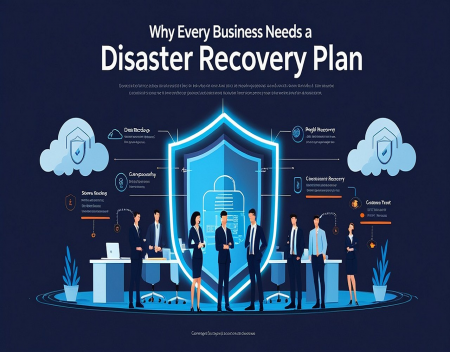
Why Every Business Needs

ERP Systems for Small Bus