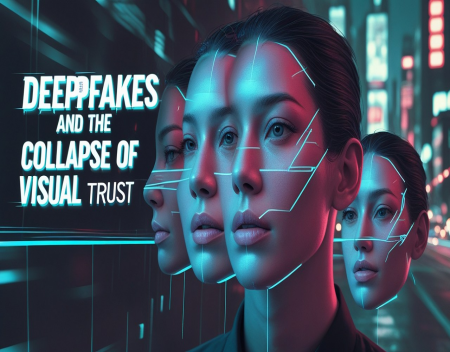
For most of modern history, photographs and video recordings have carried an implicit authority. A picture was widely believed to capture a moment as it truly occurred, while video offered an even stronger sense of authenticity by preserving motion, sound, and context. Courts accepted visual evidence, journalists relied on it, and ordinary people used it to document their lives. The phrase “seeing is believing” captured a cultural assumption that visual media could serve as reliable proof of reality. In the twenty first century, however, that assumption is rapidly eroding. The rise of deepfake technology has introduced a new era in which images and videos can be convincingly fabricated, raising profound questions about truth, evidence, and trust.
Deepfakes are synthetic media generated using artificial intelligence systems, particularly deep learning models capable of analyzing and reproducing human faces, voices, and movements. By training algorithms on large datasets of photographs and videos, developers can teach these systems to mimic the appearance and behavior of specific individuals. Once trained, the models can generate footage that appears to show a person saying or doing things they never actually did. In many cases, the resulting videos are so realistic that even trained observers struggle to detect manipulation.
The technology behind deepfakes evolved from legitimate research in computer vision and machine learning. Early experiments focused on improving image recognition systems or developing tools that could animate digital characters more realistically. Over time, these techniques became more accessible as computing power increased and open source tools spread across the internet. What began as a niche area of academic experimentation quickly expanded into a global phenomenon as hobbyists, filmmakers, and internet communities began experimenting with synthetic video generation.
At first, many deepfake creations appeared in relatively harmless contexts, such as humorous internet videos that placed celebrities into movie scenes they had never filmed. These early examples demonstrated the technology’s creative potential, but they also revealed how easily visual media could be manipulated. As the tools improved, the line between playful experimentation and serious deception began to blur. Today, deepfakes can replicate facial expressions, voice patterns, and subtle body movements with remarkable accuracy, creating videos that feel convincingly real even when they are entirely fabricated.
One of the most significant consequences of deepfake technology is the erosion of visual trust. For decades, images and videos served as powerful forms of evidence in journalism, politics, and law. A photograph could expose corruption, document war crimes, or capture historical moments. Video recordings have been instrumental in revealing events that might otherwise have remained hidden. When visual evidence becomes unreliable, however, the foundation of this system begins to weaken.
In a world where synthetic media can be produced quickly and cheaply, audiences may begin to doubt the authenticity of everything they see. Even genuine footage can be dismissed as fake, particularly in politically charged environments where competing narratives already exist. This phenomenon is sometimes referred to as the “liar’s dividend,” a situation in which the mere existence of deepfake technology allows individuals to deny authentic evidence by claiming it was fabricated. When trust collapses in this way, the consequences extend far beyond individual videos, affecting public discourse as a whole.
The political implications of deepfakes are particularly concerning. Elections, international relations, and public opinion can be influenced by persuasive visual content. A fabricated video showing a political leader making inflammatory statements could spread rapidly through social media before fact checkers have time to respond. Even if the video is eventually exposed as a fake, the initial impact may linger in public memory. In an era of rapid information sharing, the speed of misinformation can easily outpace the process of verification.
Deepfakes also pose challenges for individuals outside the political arena. Ordinary people may find themselves targeted by synthetic media that damages their reputation or personal relationships. Non consensual deepfake content has already emerged as a serious issue, particularly in cases where someone’s face is digitally inserted into fabricated videos. Such incidents demonstrate how powerful image manipulation tools can be used not only for misinformation but also for harassment or exploitation.
Despite these risks, deepfake technology is not inherently malicious. The same techniques that allow for deceptive videos can also support beneficial applications. Filmmakers can use synthetic media to recreate historical figures or restore damaged archival footage. Voice synthesis can help individuals who have lost the ability to speak due to illness or injury. Educational institutions may use realistic simulations to create immersive learning experiences. As with many technologies, the impact depends largely on how the tools are used and regulated.
Addressing the challenges posed by deepfakes requires a combination of technological, legal, and cultural responses. Researchers are developing detection systems designed to identify subtle artifacts or inconsistencies that reveal synthetic media. These systems analyze patterns in lighting, facial movement, and pixel structure to determine whether a video has been artificially generated. While detection tools are improving, they exist in a constant race against increasingly sophisticated generation methods.
Legal frameworks are also beginning to adapt to the realities of synthetic media. Some governments are exploring regulations that require disclosure when artificial intelligence is used to create realistic images or videos of real people. Such policies aim to preserve transparency while still allowing creative uses of the technology. At the same time, educators and media organizations are emphasizing digital literacy, encouraging audiences to question and verify visual content rather than accepting it at face value.
Ultimately, the rise of deepfakes signals a fundamental shift in how society understands visual evidence. The age in which images automatically carried authority is fading. In its place is a more complex landscape where authenticity must be actively verified rather than assumed. This transition may be unsettling, but it also offers an opportunity to develop more sophisticated ways of evaluating information.
The collapse of visual trust does not necessarily mean that truth itself disappears. Instead, it forces societies to rethink the relationship between technology, evidence, and belief. As artificial intelligence continues to evolve, the challenge will be to build systems of accountability and verification that preserve trust while recognizing that the tools capable of creating convincing illusions are now widely available. In the years ahead, learning to navigate this new visual reality may become one of the defining skills of the digital age.
Great experience with Computer Geek. They helped with my website needs and were professional, respon . . . [MORE].

Great, quick service when my laptop went into meltdown and also needed Windows 11 installed. Also ca . . . [MORE].
It was a great experience to working with you. thank you so much. . . . [MORE].
Thank you so much for great service and over all experience is good . highly recommended for all peo . . . [MORE].
We engaged The Computer Geeks in mid-2023 as they have a reputation for API integration within the T . . . [MORE].
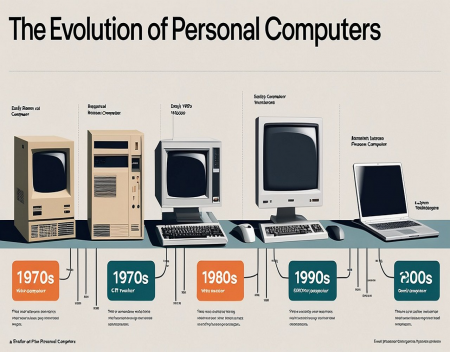
The Evolution of Personal

The Hidden Cost of Free A
The Psychology of Notific