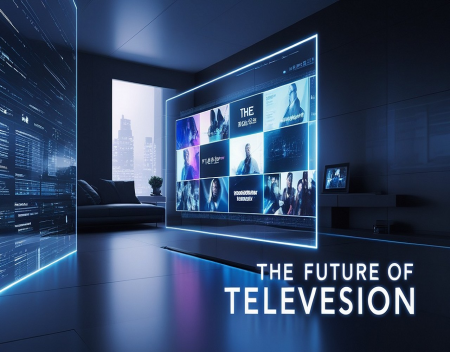
Television has undergone remarkable changes since the days of black-and-white broadcasts and bulky television sets. Colour programming, cable and satellite services, high-definition screens, and internet streaming have each transformed how people watch entertainment and access information. Today, televisions are connected to the internet, support thousands of applications, and deliver picture quality that would have seemed extraordinary just a few decades ago.
But the evolution of television is far from over. Advances in artificial intelligence, display technology, streaming services, and interactive entertainment are creating new possibilities for the future. At the same time, traditional broadcasters are facing increasing competition from online platforms and independent content creators.
So what will television look like in the next ten to twenty years? The answer will likely involve a combination of better technology, more personalized programming, and a fundamental change in how audiences discover and consume content.
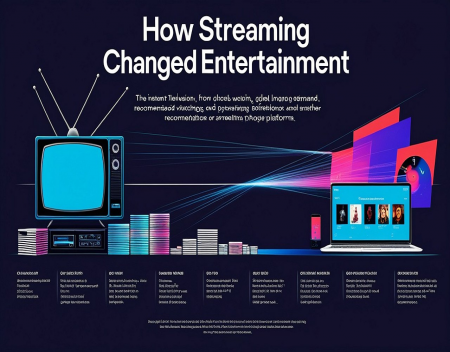
The Continued Rise of StreamingOne of the biggest forces shaping television's future is streaming. Instead of relying exclusively on cable or satellite subscriptions, viewers can watch movies, television series, documentaries, and live programming through internet-based services.
This shift has given audiences greater control over their viewing schedules. People can watch an entire season of a show in a weekend, pause a movie and resume it later, or access entertainment on multiple devices.
Traditional television providers are adapting by launching their own streaming platforms and offering services that combine live channels with on-demand content. Some streaming companies are also introducing advertising-supported subscriptions to appeal to customers who want lower prices.
In the future, the distinction between traditional television and streaming may become less important. Viewers may simply turn on their televisions and access live broadcasts, subscription services, free online channels, and personal media through a single interface.
However, subscription costs and the fragmentation of content across competing platforms remain challenges. Consumers may increasingly favour bundled services or platforms that make it easier to find programming without managing numerous separate subscriptions.
Smarter Televisions Powered by Artificial IntelligenceArtificial intelligence is likely to become an increasingly important part of the television experience.
Modern smart televisions already offer recommendations based on viewing habits, but future systems could provide more sophisticated ways to discover content. Instead of scrolling through endless menus, viewers might ask their television to find a particular type of movie, locate a documentary about a specific subject, or suggest something suitable for the entire family.
AI could also improve accessibility through more accurate captions, real-time translation, and personalized audio settings. For example, a television might automatically make dialogue clearer for someone who has difficulty hearing conversations over background music.
Picture and sound processing may improve as well. AI systems can already enhance certain lower-resolution videos, reduce noise, and adjust images to suit different screens. Future televisions could become even better at improving older recordings, optimizing brightness, and adapting sound to the room.
Nevertheless, AI-powered personalization raises privacy questions. A television that learns about viewing habits may collect sensitive information about household preferences and routines. Consumers will need clear privacy controls and the ability to limit unnecessary data collection.
The Next Generation of Display TechnologyTelevision displays continue to improve in brightness, contrast, colour accuracy, and energy efficiency.
OLED technology produces deep blacks by controlling individual pixels, while QLED and other quantum-dot technologies can deliver bright, colourful images. Mini-LED backlighting has also helped improve contrast and brightness in many LCD televisions.
Future developments may bring more refined versions of these technologies, along with advances such as MicroLED displays. MicroLED uses microscopic light-emitting diodes and has the potential to combine high brightness, excellent contrast, and long operating life. However, manufacturing complexity and cost remain significant obstacles to widespread adoption.
Screens may also become larger and more flexible. Improvements in manufacturing could make very large displays more affordable, while new materials might support rollable or foldable screens for specialized applications.
Higher resolutions will continue to be marketed, but there is a practical limit to how much improvement viewers can perceive from a normal viewing distance. For many households, better contrast, colour reproduction, motion handling, and access to high-quality content may matter more than simply increasing pixel counts.
Will Traditional Television Channels Disappear?Traditional broadcasting is unlikely to vanish overnight, but its role may continue to change.
Live sports, breaking news, major award shows, and significant public events remain important reasons for people to watch scheduled programming. Broadcast television can also deliver information to large audiences without requiring every viewer to have a high-speed internet connection.
However, younger audiences increasingly encounter entertainment through streaming services, social media, and video-sharing platforms. YouTube and similar services allow independent creators to reach millions of viewers without working through traditional television networks.
As a result, broadcasters may focus more heavily on live events, trusted news coverage, and distinctive original programming. Some may operate primarily as digital media companies, distributing content across television, websites, mobile applications, and streaming platforms.
The television set itself will remain relevant, but the channels and companies supplying its content may look very different.
More Interactive EntertainmentTelevision has traditionally been a passive experience. Viewers sit back and watch a program without influencing what happens on the screen.
That distinction could gradually become less clear.
Interactive programs may allow audiences to choose story directions, explore different camera angles during live events, or access additional information about what they are watching. Sports viewers might select alternative commentary, view detailed statistics, or switch between camera perspectives.
The boundaries between television and video games may also become less distinct. Connected televisions already support gaming applications, and cloud gaming can deliver games over the internet without requiring a powerful console or computer in every household.
Virtual reality and augmented reality could introduce new forms of entertainment, although their long-term role will depend on comfort, affordability, and whether audiences actually enjoy using them.
Not every viewer wants an interactive experience, of course. Many people will continue to prefer sitting down and watching a conventional movie or television series. The future will likely offer more choices rather than replace traditional viewing entirely.
Advertising and the Changing Business ModelTelevision advertising is also evolving.
Traditional commercials interrupt programs at scheduled intervals. Streaming services can use digital advertising systems that offer more targeted campaigns, potentially showing different advertisements to different households watching the same program.
This may help advertisers reach relevant audiences, but it also raises concerns about privacy, tracking, and how much personal information platforms use to select advertisements.
Some viewers will continue paying for subscriptions that reduce or eliminate commercials, while others will choose cheaper plans that include advertising. Free, ad-supported streaming television services may become an increasingly important part of the market.
The challenge for providers will be balancing advertising revenue with a good viewing experience. Too many commercials or overly intrusive targeting could encourage viewers to switch platforms.
Will Television Become More Expensive?Television technology often becomes cheaper as manufacturing improves, but the newest features can still carry premium prices. Large displays, advanced panels, and emerging technologies may remain expensive when first introduced.
The cost of watching television is also affected by subscriptions, internet access, and optional services. A household may purchase an affordable television but spend considerably more over time on streaming subscriptions and other digital entertainment.
Consumers will need to decide which features and services genuinely improve their experience. In many cases, a mid-range television combined with a reliable internet connection may provide better overall value than purchasing the most expensive screen available.
Longer-lasting hardware, software support, repairability, and energy efficiency may become increasingly important considerations as consumers look beyond headline specifications.
Final ThoughtsThe future of television will be shaped by several connected developments: streaming, artificial intelligence, improved displays, interactive entertainment, and changing business models.
Televisions will likely become better at finding content, improving picture and sound quality, and connecting viewers with a wider range of entertainment. Traditional broadcasting will continue to serve important purposes, particularly for live events and news, but it will compete with an expanding range of digital alternatives.
The biggest change may not be the television screen itself. It may be the disappearance of the old boundaries between television channels, streaming services, online videos, and gaming.
For viewers, this could mean more choice and convenience. The challenge will be finding worthwhile content, protecting personal privacy, and controlling the growing cost of entertainment.
Television has survived enormous technological changes throughout its history. Rather than disappearing, it is likely to remain a central part of home entertainment—although the way we use it may become almost unrecognizable compared with the television experience of the past.
Great experience with Computer Geek. They helped with my website needs and were professional, respon . . . [MORE].

Great, quick service when my laptop went into meltdown and also needed Windows 11 installed. Also ca . . . [MORE].
It was a great experience to working with you. thank you so much. . . . [MORE].
Thank you so much for great service and over all experience is good . highly recommended for all peo . . . [MORE].
We engaged The Computer Geeks in mid-2023 as they have a reputation for API integration within the T . . . [MORE].
The Future of Television
How Streaming Changed Ent
Digital Minimalism in a C