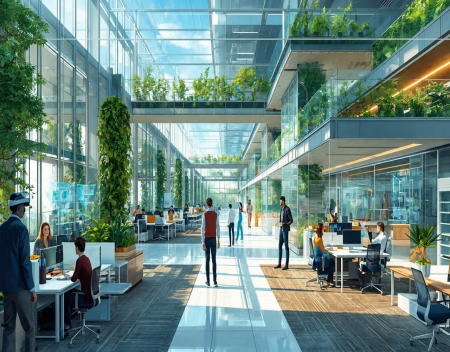
The traditional office has already undergone significant changes. Computers replaced typewriters, email reduced the need for paper correspondence, video conferencing made remote meetings possible, and cloud computing allowed employees to work from almost anywhere. More recently, artificial intelligence and hybrid work arrangements have begun changing how businesses organize their employees and physical workplaces.
But what will offices look like in 2040?
Over the next 14 years, technology could fundamentally transform the workplace. Offices may become more automated, intelligent, flexible, and environmentally efficient. Some employees may spend much of their time working remotely, while others will use advanced office environments designed around collaboration rather than individual desk work.
The office of 2040 may look less like a traditional collection of cubicles and more like a technology-powered workspace that adapts to the needs of the people using it.
Artificial Intelligence Will Become Part of Everyday Office LifeArtificial intelligence will likely be one of the biggest influences on the future workplace.
Today, employees already use AI tools to write documents, analyze information, prepare presentations, summarize meetings, and answer questions. By 2040, these capabilities could become deeply integrated into everyday business operations.
Employees may have personal AI assistants that understand their responsibilities, manage schedules, organize communications, and help complete complicated projects.
Instead of spending hours reviewing emails and preparing reports, workers might delegate much of this routine work to AI systems. Meetings could be automatically summarized, action items assigned, and project progress monitored without requiring someone to manually update multiple applications.
AI could also help managers make better decisions by identifying patterns in business performance, forecasting demand, and highlighting potential problems.
This does not necessarily mean offices will have fewer people. Instead, employees may spend less time on repetitive administrative work and more time on activities requiring creativity, judgment, communication, and problem-solving.
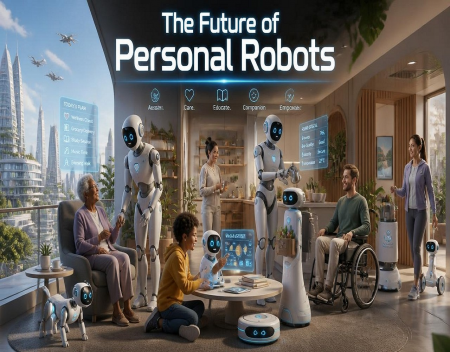
Robots May Handle Physical Office TasksRobots could become a familiar part of the office environment by 2040.
Automated machines may handle routine activities such as cleaning floors, delivering supplies, transporting documents, and managing inventory. Some larger workplaces could use mobile robots to move equipment between departments or deliver packages directly to employees.
Maintenance robots might monitor building systems and identify problems before they become serious. For example, a robot equipped with cameras and sensors could inspect equipment, check for leaks, or report unusual conditions.
Reception areas may also become more automated. Visitors could check in through digital systems, receive instructions from virtual assistants, and be guided to meeting rooms without requiring a traditional reception desk.
Humanoid robots may eventually perform some of these tasks, although specialized machines designed for individual jobs could remain more practical and affordable.
The End of Assigned Desks?One noticeable change could be the disappearance of permanently assigned desks.
Hybrid work has already encouraged many businesses to rethink how much office space they need. If employees work remotely several days a week, maintaining a dedicated desk for every worker may not make financial sense.
By 2040, many offices could operate using flexible workstations. Employees would reserve a desk when they plan to come into the office, using an application or AI-powered scheduling system.
Workspaces might automatically adjust to individual preferences. When an employee arrives, the desk could recognize their authorized device and configure the lighting, monitor settings, temperature, and preferred software environment.
Some offices may also offer different types of work areas, including quiet rooms, collaboration spaces, private meeting areas, and informal lounges.
Rather than giving every employee the same workspace, businesses could provide environments suited to different types of work.
Virtual Reality and Augmented Reality MeetingsVideo conferencing has become a standard part of modern business, but today's systems still have limitations. Participants generally appear as small images on a screen, making it difficult to recreate the experience of being in the same room.
By 2040, virtual reality and augmented reality could provide more immersive meeting experiences.
Employees working remotely might use lightweight headsets or smart glasses to participate in virtual meeting rooms. Digital representations of colleagues could appear around a virtual conference table, allowing participants to interact with shared documents, presentations, and three-dimensional models.
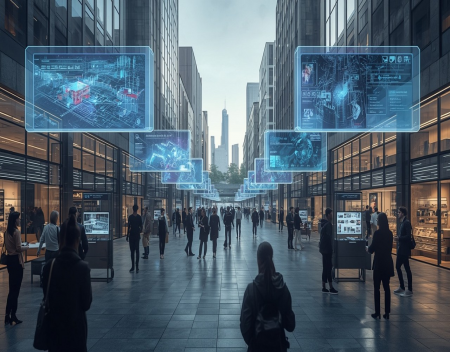
Augmented reality could also bring digital information into physical meeting rooms. Employees might see project data, diagrams, and presentations displayed in their field of vision without requiring traditional screens.
Holographic-style communication could become another possibility, allowing remote participants to appear as realistic three-dimensional images.
These technologies could make remote collaboration feel more natural, although ordinary video calls will probably remain popular because they are inexpensive and convenient.
Smarter Buildings and Automated EnvironmentsOffice buildings themselves will likely become much more intelligent.
Smart building technology already allows businesses to monitor lighting, heating, cooling, security, and energy consumption. By 2040, these systems could become significantly more sophisticated.
Artificial intelligence could analyze occupancy patterns and automatically adjust building operations. If an area is empty, lighting and climate systems could reduce energy use. If a meeting room becomes crowded, ventilation could adjust automatically.
Sensors might monitor air quality, temperature, humidity, and noise levels to create healthier working conditions.
Security systems could use advanced identification technologies to manage building access, detect unusual activity, and protect sensitive areas.
Predictive maintenance could also become standard. Instead of waiting for elevators, heating systems, or electrical equipment to fail, AI systems could identify warning signs and schedule repairs in advance.
The result could be office buildings that are more comfortable, efficient, and less expensive to operate.
Smaller Offices and More Remote WorkThe office of 2040 may also be considerably smaller than the offices businesses operate today.
If AI tools, cloud computing, and virtual collaboration continue improving, many companies may need less physical space. Employees could work from home, shared workspaces, or smaller regional offices.
Large corporate headquarters may become more focused on meetings, training, collaboration, and company events rather than providing individual workstations for hundreds or thousands of employees.
However, physical offices are unlikely to disappear completely.
People still benefit from face-to-face communication, teamwork, social interaction, and the opportunity to develop professional relationships. New employees may also benefit from in-person training and mentorship.
The office may become a destination employees visit for specific activities rather than somewhere they are expected to sit every weekday.
Employee Health and Workplace DesignFuture offices may place greater emphasis on employee health and comfort.
Workplace designers could use technology to improve lighting, reduce noise, monitor air quality, and create environments that encourage movement.
Smart desks might automatically adjust their height, while advanced seating systems could provide personalized ergonomic support.
Some buildings may include more natural lighting, indoor plants, outdoor workspaces, and dedicated areas for relaxation.
Wearable technology could potentially help employees monitor activity levels and encourage healthier habits. However, businesses will need to be careful about privacy and avoid turning workplace wellness systems into intrusive employee surveillance.
A successful office should help people work effectively without making them feel constantly monitored.
Will Artificial Intelligence Replace Office Jobs?One of the biggest questions surrounding the future workplace is whether AI will eliminate large numbers of office jobs.
By 2040, AI could perform many tasks currently handled by administrative assistants, data entry employees, customer service representatives, analysts, and other office workers.
Some existing positions may disappear or change significantly. At the same time, new roles could emerge involving AI management, cybersecurity, automation, data governance, and technology maintenance.
Employees will likely need to develop new skills throughout their careers. Understanding how to work with AI systems may become as important as knowing how to use computers and office software today.
Human abilities such as leadership, creativity, negotiation, critical thinking, and personal communication could become even more valuable.
Final ThoughtsThe office of 2040 could be dramatically different from the workplaces most people know today. Artificial intelligence may handle routine administrative tasks, robots could perform physical duties, and virtual reality may make remote collaboration more immersive.
Buildings themselves could become intelligent environments that automatically adjust to the needs of employees while reducing energy consumption.
The traditional office may not disappear, but its purpose could change. Instead of being a place where employees spend eight hours sitting at assigned desks, it may become a flexible environment designed for collaboration, creativity, training, and human interaction.
Technology will undoubtedly reshape the workplace, but the most successful offices will still need to serve the people working inside them. In 2040, the best office may not be the one with the most impressive technology. It will be the one that uses technology to make working more productive, comfortable, and rewarding.
Great experience with Computer Geek. They helped with my website needs and were professional, respon . . . [MORE].

Great, quick service when my laptop went into meltdown and also needed Windows 11 installed. Also ca . . . [MORE].
It was a great experience to working with you. thank you so much. . . . [MORE].
Thank you so much for great service and over all experience is good . highly recommended for all peo . . . [MORE].
We engaged The Computer Geeks in mid-2023 as they have a reputation for API integration within the T . . . [MORE].
What Will Offices Look Li
The Future of Personal Ro
Could Holographic Display