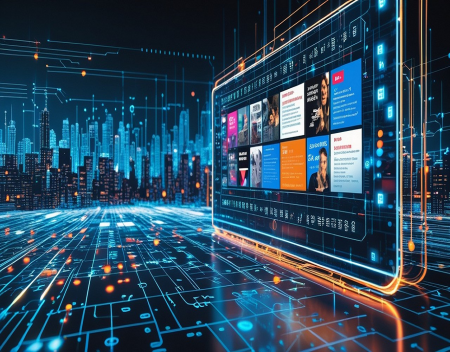
The internet contains more information than any person could ever consume in a lifetime. Every minute, users upload videos, publish articles, share photos, post comments, and create countless pieces of new content across websites and social media platforms. With such an overwhelming amount of information available, one important question arises: how do online platforms decide what you see?
The answer lies in algorithms.
Algorithms have become the invisible gatekeepers of the modern internet. They determine which social media posts appear in your feed, which videos are recommended on streaming platforms, which products are suggested while shopping, and even which news stories are presented when you search for information. While many people use the internet every day, relatively few understand just how much influence these algorithms have over their online experience.
At its simplest, an algorithm is a set of rules or instructions designed to solve a problem or make a decision. In the online world, algorithms help platforms sort through enormous amounts of content and decide what is most relevant to each user.
Without algorithms, many modern websites would be nearly impossible to use. Imagine opening a social media platform that displayed every post from every user in chronological order. The sheer volume of content would make finding relevant information extremely difficult. Algorithms help filter and organize content so users can quickly find what interests them.
The challenge is determining what "relevant" actually means.
Most modern platforms collect a variety of information about user behavior. They track what content users click on, how long they watch videos, which posts they like, what they share, who they follow, and even how long they pause while scrolling. These signals help algorithms build a profile of user interests and preferences.
For example, if someone frequently watches technology videos, reads computer-related articles, and follows software developers on social media, recommendation systems may conclude that technology content is likely to keep that person engaged. As a result, the platform will show more content related to computers, software, gadgets, and similar topics.
Over time, these recommendations become increasingly personalized. Two people using the same platform may see completely different content even when searching for similar topics. Their individual histories, interests, and behaviors influence what appears on their screens.
One of the primary goals of many algorithms is maximizing engagement. Engagement refers to actions such as clicking, viewing, commenting, liking, sharing, or spending time on a platform. The longer users remain engaged, the more advertisements they may see and the more revenue the platform can potentially generate.
This business model has significantly influenced how recommendation systems are designed. Content that captures attention often receives greater visibility. In some cases, this can create unintended consequences.
Emotionally charged content, controversial opinions, sensational headlines, and highly entertaining material often generate strong engagement. Because algorithms frequently prioritize engagement metrics, such content may receive greater distribution than less dramatic but potentially more informative material.
This has led to concerns about so-called "filter bubbles" and "echo chambers." A filter bubble occurs when algorithms repeatedly show users content that aligns with their existing interests and beliefs. Over time, people may be exposed to fewer opposing viewpoints or alternative perspectives.
For example, if a user consistently interacts with content supporting a particular viewpoint, the algorithm may conclude that similar content is most relevant. As a result, the user's feed may become increasingly one-sided, reinforcing existing beliefs rather than encouraging exposure to diverse perspectives.
Algorithms also play a major role in online shopping. E-commerce platforms analyze browsing history, previous purchases, search queries, and user behavior to recommend products. These recommendations can be extremely effective because they are tailored to individual preferences.
Streaming services operate similarly. Movie, television, and music recommendations are often driven by sophisticated algorithms that analyze viewing and listening habits. The goal is to keep users engaged by presenting content they are likely to enjoy.
Artificial intelligence has made these systems even more powerful. Modern recommendation engines can process enormous amounts of data and identify patterns that would be impossible for humans to detect manually. As AI continues to advance, personalization is becoming increasingly sophisticated.
While algorithms offer many benefits, they also raise important questions about transparency and control. Most users do not fully understand why certain content appears in their feeds or how recommendations are generated. In many cases, the decision-making processes are proprietary and not publicly disclosed in detail.
This lack of transparency has led to growing calls for greater accountability. Critics argue that users should have more insight into how algorithms influence what they see online and more control over those recommendations.
Some platforms have responded by offering options to customize feeds, view content chronologically, or adjust recommendation settings. However, algorithmic curation remains a central feature of most major online services.
The influence of algorithms will likely continue growing as artificial intelligence becomes more deeply integrated into digital platforms. Future systems may become even better at predicting interests, preferences, and behaviors. While this could create more personalized and useful online experiences, it also increases the importance of understanding how these systems operate.
In the end, algorithms shape much of what we see online every day. They determine which stories gain visibility, which videos become popular, which products are recommended, and which conversations attract attention. Although they often work behind the scenes, their influence is enormous. Understanding how algorithms function is becoming an essential part of digital literacy in an increasingly connected world. By recognizing their role, users can become more informed consumers of information and make more conscious decisions about the content they engage with online.
Great experience with Computer Geek. They helped with my website needs and were professional, respon . . . [MORE].

Great, quick service when my laptop went into meltdown and also needed Windows 11 installed. Also ca . . . [MORE].
It was a great experience to working with you. thank you so much. . . . [MORE].
Thank you so much for great service and over all experience is good . highly recommended for all peo . . . [MORE].
We engaged The Computer Geeks in mid-2023 as they have a reputation for API integration within the T . . . [MORE].
The Evolution of Personal

The Hidden Cost of Free A
The Psychology of Notific