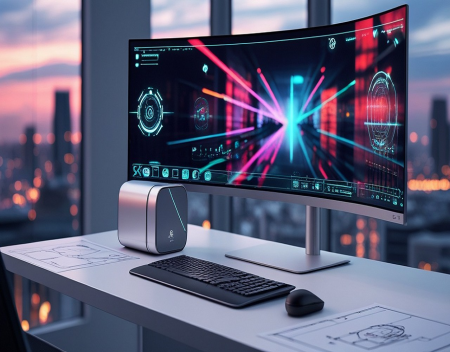
For decades, desktop computers have been the foundation of personal and professional computing. They have powered businesses, creative industries, scientific research, gaming, and home offices around the world. Although laptops, tablets, and smartphones have become increasingly popular, many people have predicted the decline of the traditional desktop PC. Yet despite these predictions, desktop computers remain an essential tool for millions of users. Rather than disappearing, desktop computing is evolving to meet the demands of a rapidly changing technological landscape.
The desktop computer of the future will look very different from the machines many people use today. Advances in hardware, artificial intelligence, cloud computing, energy efficiency, and connectivity are reshaping what desktop systems can do and how people interact with them.
One of the biggest trends is the continued increase in processing power. Modern processors already contain multiple cores capable of handling demanding workloads such as video editing, 3D rendering, software development, scientific simulations, and high-end gaming. Future desktop CPUs are expected to become even more efficient, combining traditional processing cores with specialized AI acceleration hardware designed to perform machine learning tasks directly on the computer.
This shift toward AI-enabled processors is already underway. New generations of CPUs include Neural Processing Units (NPUs), which allow artificial intelligence features to run locally rather than relying entirely on cloud services. This enables faster performance, improved privacy, and reduced internet dependence for applications such as image editing, voice recognition, language translation, and intelligent productivity tools.
Graphics technology will also continue advancing rapidly. Graphics Processing Units (GPUs) are no longer used solely for gaming. They now accelerate video production, artificial intelligence, engineering simulations, cryptocurrency research, medical imaging, and countless professional applications. As GPU technology evolves, desktop computers will become even more powerful platforms for creators, researchers, and engineers.
Artificial intelligence will likely become deeply integrated into desktop operating systems. Instead of simply launching applications and searching for files, users may increasingly rely on AI assistants capable of understanding natural language, organizing information, automating repetitive tasks, summarizing documents, generating content, scheduling meetings, and troubleshooting technical problems.
Rather than replacing traditional software, AI is expected to enhance it. Word processors may automatically improve writing, spreadsheets could generate complex analyses from simple questions, and design software may create initial layouts based on user instructions. Desktop computers will increasingly act as intelligent assistants rather than simply responding to manual commands.
Cloud computing will continue changing how desktop computers are used. Instead of storing every file locally, many users already rely on cloud storage services for documents, photos, and backups. Software itself is also moving toward cloud-based delivery through Software-as-a-Service (SaaS) platforms.
However, desktop computers will remain important because many demanding workloads still require local processing power. Video editing, large-scale software development, engineering applications, scientific research, and modern gaming often perform better when executed directly on powerful desktop hardware rather than entirely through cloud services.
Remote work has also strengthened the role of desktop computing. Many professionals now maintain dedicated home offices equipped with large monitors, ergonomic keyboards, powerful processors, and multiple displays that improve productivity compared to smaller portable devices.
Hybrid work environments are likely to increase demand for desktop systems that seamlessly synchronize with cloud services while providing workstation-level performance for complex tasks.
Gaming continues to be one of the strongest drivers of desktop innovation. Desktop gaming PCs offer significantly greater performance than most laptops and remain the preferred platform for enthusiasts seeking high frame rates, advanced graphics, virtual reality, and ultra-wide display support.
As technologies such as real-time ray tracing, AI-enhanced graphics rendering, and higher-resolution displays become standard, desktop gaming systems will continue pushing hardware manufacturers to develop faster processors and graphics cards.
Modularity is another advantage that ensures desktops remain relevant. Unlike many laptops, desktop computers can be upgraded over time. Users can replace graphics cards, add more memory, install faster storage devices, or upgrade processors without replacing the entire system.
This flexibility not only reduces long-term costs but also contributes to sustainability by extending the useful lifespan of computer hardware.
Energy efficiency will become increasingly important as processors become more powerful. Future desktop systems will likely deliver substantially higher performance while consuming less electricity than previous generations. Advances in chip manufacturing, cooling technologies, and power management will help reduce operating costs while supporting more environmentally responsible computing.
Desktop form factors are also evolving. While traditional tower cases remain popular among enthusiasts, compact mini PCs and small-form-factor desktops have become increasingly powerful. Many modern mini PCs offer impressive performance while occupying only a fraction of the space required by older desktop systems.
This trend is expected to continue as manufacturers design quieter, smaller, and more energy-efficient systems suitable for home offices, businesses, and educational environments.
Cybersecurity will play a much larger role in desktop computing's future. Hardware-based security features such as Trusted Platform Modules (TPMs), secure boot technologies, encrypted storage, biometric authentication, and AI-powered threat detection will become increasingly standard.
As ransomware, phishing, and identity theft continue evolving, desktop operating systems will incorporate more intelligent security mechanisms capable of identifying suspicious activity before attacks succeed.
The future of desktop computing will also involve greater integration between devices. Rather than functioning independently, desktop computers will seamlessly communicate with smartphones, tablets, smart home devices, wearable technology, and cloud platforms. Users may begin tasks on one device and continue them instantly on another with minimal effort.
Virtual and augmented reality could also reshape desktop computing. While today's VR headsets are primarily associated with gaming, future desktop systems may support immersive workspaces where users interact with multiple virtual monitors, collaborate in three-dimensional environments, or manipulate digital models using natural gestures.
Despite rapid technological progress, some aspects of desktop computing are unlikely to change. Large monitors remain more comfortable for extended work sessions than laptop screens. Full-sized keyboards and precision pointing devices continue offering ergonomic advantages for professionals who spend hours each day at their computers.
Content creators, software developers, engineers, architects, financial analysts, scientists, and gamers all benefit from the superior performance, expandability, and reliability that desktop computers provide.
Some observers have predicted that smartphones, tablets, or cloud computing would eventually replace desktop PCs entirely. While these devices have certainly transformed personal computing, they have not eliminated the need for high-performance desktop systems. Instead, each device category serves different purposes, with desktops continuing to excel in areas requiring sustained performance, multitasking, precision, and upgradeability.
Looking ahead, desktop computers will become smarter, faster, quieter, more energy-efficient, and more tightly integrated with artificial intelligence and cloud technologies. They will increasingly automate routine tasks while providing users with unprecedented computing power for creative, scientific, and professional work.
Far from becoming obsolete, desktop computing is entering a new era. Artificial intelligence, advanced processors, improved graphics, enhanced security, and seamless cloud integration are transforming desktops into intelligent workstations capable of handling the increasingly demanding applications of tomorrow. For users who require performance, flexibility, and productivity, the desktop computer will remain an indispensable tool for many years to come.
Great experience with Computer Geek. They helped with my website needs and were professional, respon . . . [MORE].

Great, quick service when my laptop went into meltdown and also needed Windows 11 installed. Also ca . . . [MORE].
It was a great experience to working with you. thank you so much. . . . [MORE].
Thank you so much for great service and over all experience is good . highly recommended for all peo . . . [MORE].
We engaged The Computer Geeks in mid-2023 as they have a reputation for API integration within the T . . . [MORE].
The Browser Wars Revisite
The Rise and Fall of Flas
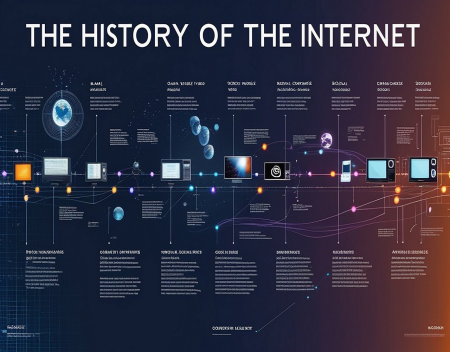
The History of the Intern