
In the digital age, attention has become one of the most valuable commodities on Earth. Platforms compete not merely for users, but for hours, minutes, and even seconds of engagement. Behind this competition lies a powerful neurological driver: dopamine. Often simplified as the “pleasure chemical,” dopamine is more accurately associated with motivation, anticipation, and reward prediction. Modern technology companies have learned to design products that stimulate this system repeatedly, creating what many critics describe as a dopamine economy—an ecosystem engineered to capture and hold human attention at massive scale.
The dopamine economy is built on behavioral psychology. Features such as infinite scrolling, push notifications, streak systems, personalized recommendations, and variable reward schedules are not accidental. They are carefully tested mechanisms designed to maximize user engagement. Variable rewards, in particular, are highly effective. When outcomes are unpredictable—such as not knowing which post will go viral or what content will appear next—users are more likely to keep checking. This mirrors principles long observed in gambling systems, where intermittent rewards can reinforce repetitive behavior more strongly than consistent ones.
Social media platforms have refined these techniques with extraordinary precision. Every like, comment, or share acts as a small social reward, reinforcing posting behavior and encouraging users to return. Algorithms track user preferences and serve increasingly tailored content, ensuring that feeds align closely with personal interests and emotional triggers. Over time, platforms learn not just what users enjoy, but what keeps them engaged the longest. The result is a feedback loop in which behavior generates data, data improves targeting, and targeting deepens engagement.
This model is not limited to social media. Video streaming platforms automatically queue the next episode. Mobile games use micro rewards, level ups, and timed bonuses to keep players returning daily. E commerce sites deploy flash sales and personalized recommendations to stimulate urgency and anticipation. Even productivity apps incorporate streaks and achievement badges to encourage repeated use. Across industries, digital experiences are increasingly optimized around behavioral reinforcement principles.
The economic incentives behind this design are clear. Advertising revenue often depends directly on user engagement metrics such as time spent on platform and interaction frequency. The longer users stay, the more advertisements they see and the more data they generate. In subscription models, high engagement reduces churn by making services feel indispensable. As a result, companies invest heavily in data science, user experience research, and algorithmic optimization to maximize engagement without necessarily prioritizing user well being.
Critics argue that this system can blur the line between engagement and addiction. While not all frequent usage qualifies as clinical addiction, patterns of compulsive checking, disrupted sleep, reduced concentration, and increased anxiety have been widely observed. The constant stimulation of reward pathways may reduce tolerance for boredom and diminish the ability to focus on long term goals. Young users, whose brains are still developing, may be particularly vulnerable to these effects. The challenge lies in distinguishing between healthy enjoyment of digital tools and patterns that undermine autonomy and mental health.
Defenders of digital platforms counter that users ultimately retain choice. People can log off, disable notifications, or delete apps. Moreover, dopamine itself is not inherently harmful; it plays a crucial role in learning and motivation. Many educational and fitness applications harness reward systems to encourage positive behaviors such as language learning or exercise. The problem, therefore, may not be dopamine stimulation itself, but the scale and intensity at which it is engineered in pursuit of profit.
Regulatory discussions are beginning to address these concerns. Some policymakers propose transparency requirements around algorithmic design, limits on certain engagement features for minors, or stronger data privacy protections. Others emphasize digital literacy education, encouraging individuals to understand how platforms shape behavior. However, regulating the dopamine economy is complex. Behavioral design techniques are subtle, constantly evolving, and difficult to quantify in legal terms.
Ultimately, the dopamine economy reflects a broader shift in capitalism. Industrial economies extracted physical labor; information economies extracted data; the dopamine economy extracts attention and behavioral engagement. In doing so, it transforms human psychology into a resource to be optimized and monetized. This transformation raises fundamental questions about autonomy, responsibility, and the ethical boundaries of design.
As technology becomes more immersive through virtual reality, augmented reality, and AI driven personalization, the capacity to engineer engagement will only grow stronger. The challenge for societies worldwide is not to eliminate reward based systems, but to align them with human flourishing rather than dependency. In an environment where distraction is profitable and focus is scarce, preserving the capacity for intentional choice may become one of the defining struggles of the digital era.
Great experience with Computer Geek. They helped with my website needs and were professional, respon . . . [MORE].

Great, quick service when my laptop went into meltdown and also needed Windows 11 installed. Also ca . . . [MORE].
It was a great experience to working with you. thank you so much. . . . [MORE].
Thank you so much for great service and over all experience is good . highly recommended for all peo . . . [MORE].
We engaged The Computer Geeks in mid-2023 as they have a reputation for API integration within the T . . . [MORE].
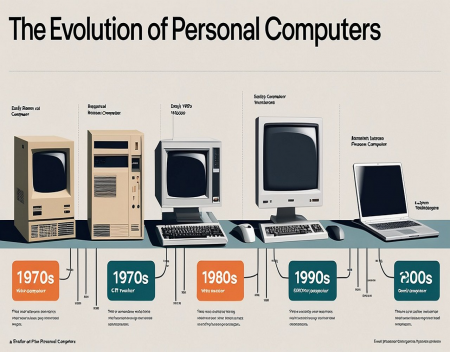
The Evolution of Personal

The Hidden Cost of Free A

The Psychology of Notific