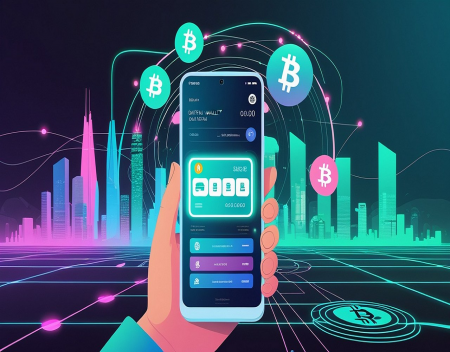
The way people pay for things has changed dramatically over the past few decades. Cash was once the standard method of payment for almost everything. Then came credit cards, debit cards, online banking, contactless payments, and now digital wallets.
Today, a smartphone can effectively replace a physical wallet for many people. Instead of carrying cash, cards, and loyalty cards, users can store much of their financial information on a phone or smartwatch.
Digital wallets are becoming increasingly common, but they also raise an important question: Are we moving toward a completely cashless future?
What Is a Digital Wallet?A digital wallet is an application or service that allows users to store payment information electronically.
Popular digital wallet systems can store credit cards, debit cards, loyalty cards, tickets, identification documents, and other digital credentials.
Instead of pulling a physical credit card from your wallet, you can hold your smartphone or smartwatch near a compatible payment terminal.
The transaction is processed electronically, usually using technologies such as near-field communication, commonly known as NFC.
Digital wallets can also be used for online purchases, where users can pay without manually entering their card number every time.
The Convenience FactorOne of the biggest advantages of digital wallets is convenience.
Most people already carry their smartphones everywhere. Having payment information on the same device means there is less to carry.
Instead of searching through a physical wallet for the correct card, users can select a payment method on their phone.
Digital wallets can also store multiple cards.
A user might have a personal credit card, business card, debit card, and loyalty cards available from the same device.
For frequent shoppers, this can make payments considerably faster.
Contactless PaymentsContactless payment technology has helped accelerate the adoption of digital wallets.
Rather than inserting a card into a payment terminal, customers can simply tap their card, phone, or smartwatch.
The process is fast and convenient.
Digital wallets take this one step further by allowing the phone itself to function as the payment device.
For many consumers, tapping a phone has become almost as natural as tapping a physical card.
Are Digital Wallets Secure?Security is one of the biggest advantages of digital wallets, although they are not completely risk-free.
A digital wallet can use device security features such as fingerprint recognition, facial recognition, or a passcode before authorizing a transaction.
Many digital payment systems also use tokenization.
Instead of giving a merchant the actual card number, the payment system can use a unique digital token to represent the transaction.
This can reduce the amount of sensitive payment information exposed during a purchase.
However, users still need to protect their phones and accounts carefully.
A stolen phone, weak password, compromised account, or phishing attack can potentially create problems.
Losing Your PhoneOne concern people often have is what happens if their phone is lost or stolen.
Fortunately, modern smartphones have security systems designed to prevent unauthorized access.
A strong passcode, biometric authentication, and remote device management can help protect information.
Users can often remotely lock or erase a lost device.
Digital wallets may also require authentication before a payment can be made.
However, users should never assume their phone is automatically secure.
Using a strong device passcode and enabling available security features is essential.
Digital Wallets Aren't Just for PaymentsThe modern digital wallet is becoming more than a payment tool.
Depending on the platform and region, digital wallets can also contain airline boarding passes, event tickets, transit passes, loyalty cards, digital keys, and identification documents.
This could eventually reduce the number of physical items people carry.
Instead of having a wallet filled with plastic cards and paper documents, someone could potentially have most of these items stored securely on a smartphone.
The Decline of CashDigital payments are becoming more common, but cash hasn't disappeared.
Cash still has several advantages.
It doesn't require a smartphone, battery, internet connection, or payment network.
Cash can also provide privacy because transactions don't automatically create the same type of digital record associated with electronic payments.
For these reasons, many people and businesses continue to use cash.
However, cash is becoming less important in many everyday transactions.
Restaurants, stores, transportation systems, and online businesses increasingly support electronic payments.
The Cashless SocietyA completely cashless society would be one where physical currency is no longer commonly used.
Some countries are moving closer to this model than others.
However, eliminating cash entirely creates concerns.
What happens during a major power outage?
What happens if payment networks go offline?
What happens to people who don't have smartphones or bank accounts?
These questions are important because a cashless economy depends heavily on technology.
Financial InclusionDigital wallets can potentially make financial services easier to access, but they can also create challenges.
People without smartphones, bank accounts, reliable internet access, or digital literacy may have difficulty participating in an increasingly digital economy.
Older adults and people living in areas with limited connectivity can also face barriers.
A truly inclusive cashless economy would need to ensure that people aren't excluded simply because they don't have access to the latest technology.
Privacy ConcernsDigital payments create another important issue: privacy.
Cash transactions can generally be completed without creating a detailed digital record of what was purchased.
Electronic payments are different.
Every transaction can potentially create information about where someone shops, when they shop, and how much they spend.
Payment companies, banks, merchants, and other organizations may have access to various types of transaction information.
This doesn't necessarily make digital payments bad, but it means consumers need to understand that convenience can come with a loss of some financial privacy.
Cybersecurity Becomes More ImportantAs more money moves electronically, cybersecurity becomes increasingly important.
Criminals can target payment accounts through phishing, malware, identity theft, social engineering, and other techniques.
Users should be suspicious of unexpected messages asking for payment information or login credentials.
Using multi-factor authentication, strong passwords, software updates, and reputable payment services can reduce the risk.
Businesses also have a responsibility to protect customer payment information.
Digital CurrenciesThe future of digital payments could also involve digital currencies.
Cryptocurrencies already provide one form of digital money, although they function very differently from traditional bank payments.
Governments and central banks around the world have also explored central bank digital currencies, commonly called CBDCs.
These could potentially provide another form of electronic money backed by a central bank.
Whether CBDCs become widely adopted remains uncertain, but they demonstrate how rapidly the concept of money itself is evolving.
The Future of Digital WalletsDigital wallets are likely to become increasingly integrated into everyday technology.
Smartphones and smartwatches are obvious examples, but connected vehicles, wearable devices, and other technologies could eventually become payment devices.
A car might be able to pay for parking automatically.
A smartwatch could handle purchases without a phone.
A digital wallet could potentially contain payment credentials, identification, tickets, keys, and other personal information.
The physical wallet could eventually become far less important.
Will Cash Disappear?Probably not completely, at least not anytime soon.
Cash continues to provide benefits that digital payments cannot completely replicate.
It works without electricity or internet access, provides a certain level of privacy, and is accessible to people who may not use digital banking.
However, cash could become increasingly uncommon.
People may continue carrying a small amount of cash for emergencies while using digital payments for most purchases.
The transition may therefore be less about eliminating cash and more about making electronic payments the default.
Final ThoughtsDigital wallets represent an important step toward a more connected and cashless economy.
They make payments faster and more convenient while allowing people to carry fewer physical cards and documents.
At the same time, they introduce concerns involving privacy, cybersecurity, accessibility, and dependence on technology.
The biggest question isn't whether digital payments will continue growing. They almost certainly will.
The more interesting question is how much of our financial lives we are willing to move into digital systems.
In the future, your smartphone may not just be the device you use to communicate, browse the internet, and take photographs.
It could become your wallet, identification card, transit pass, collection of tickets, keys, and primary method of payment.
The physical wallet may not disappear completely, but for many people, its role could become increasingly small in a world where money is becoming less physical and more digital every day.
Great experience with Computer Geek. They helped with my website needs and were professional, respon . . . [MORE].

Great, quick service when my laptop went into meltdown and also needed Windows 11 installed. Also ca . . . [MORE].
It was a great experience to working with you. thank you so much. . . . [MORE].
Thank you so much for great service and over all experience is good . highly recommended for all peo . . . [MORE].
We engaged The Computer Geeks in mid-2023 as they have a reputation for API integration within the T . . . [MORE].
The Rise of Automation in
Why Every Business Needs
ERP Systems for Small Bus