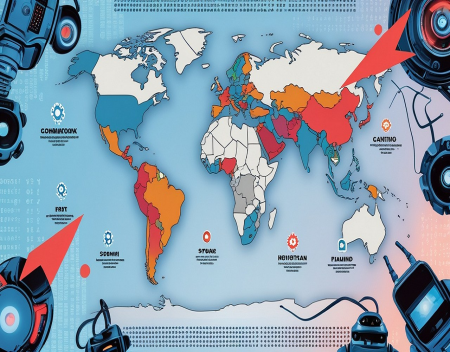
Artificial intelligence is advancing at an extraordinary pace, transforming industries ranging from healthcare and education to finance, manufacturing, and entertainment. AI systems are helping businesses automate tasks, improve customer service, analyze massive datasets, and generate content that was once created only by humans. While these innovations offer tremendous opportunities, they also raise important questions about privacy, security, accountability, bias, and the responsible use of technology. As a result, governments around the world are working to develop regulations that encourage innovation while protecting citizens from potential risks.
Creating effective AI regulations is proving to be a difficult balancing act. Governments want to support technological advancement and economic growth without allowing AI to be used irresponsibly. At the same time, overly restrictive laws could slow innovation and place companies at a competitive disadvantage. Different countries have adopted different approaches based on their legal systems, political priorities, and economic goals.
One of the most comprehensive efforts to regulate artificial intelligence has come from the European Union. Rather than focusing on individual AI technologies, the EU has adopted a risk-based approach. Under this framework, AI applications are classified according to the level of risk they pose to individuals and society.
Low-risk systems, such as AI used for spam filtering or recommendation engines, face relatively few regulatory requirements. High-risk applications, however, including those used in healthcare, employment, education, banking, critical infrastructure, and law enforcement, are subject to much stricter oversight. Organizations developing these systems may be required to conduct risk assessments, maintain detailed documentation, ensure transparency, and implement human oversight before deployment.
Certain AI applications are considered unacceptable because they present serious threats to individual rights or public safety. These may include systems designed for unlawful surveillance, social scoring, or manipulative behavior that could exploit vulnerable individuals.
The United States has taken a somewhat different approach. Rather than implementing a single nationwide AI law, regulation has developed through a combination of federal guidance, executive actions, existing laws, and state-level legislation. Government agencies are focusing on areas such as consumer protection, competition, privacy, cybersecurity, healthcare, and national security while encouraging continued AI innovation.
Individual states have also introduced their own AI-related legislation. Some have enacted laws addressing deepfakes in political advertising, automated hiring systems, biometric privacy, and the disclosure of AI-generated content. This decentralized approach allows regulations to evolve rapidly but can also create compliance challenges for businesses operating across multiple jurisdictions.
Canada is also developing legislation aimed at promoting responsible AI development while protecting consumers and encouraging innovation. Canadian policymakers have emphasized transparency, accountability, fairness, and the responsible use of automated decision-making systems. Particular attention has been given to ensuring that AI systems used in high-impact sectors are appropriately tested and monitored before deployment.
The United Kingdom has chosen a flexible regulatory strategy rather than creating an entirely new AI regulatory authority. Existing regulators oversee AI within their respective sectors, such as healthcare, finance, and transportation. This approach allows existing expertise to be applied while providing flexibility as AI technology continues to evolve.
Asian countries are also playing major roles in shaping AI policy. Japan has generally emphasized innovation while encouraging voluntary guidelines and responsible business practices. South Korea has invested heavily in AI research while simultaneously developing ethical frameworks and governance standards.
China has adopted one of the world's most active regulatory approaches. Authorities have introduced rules governing recommendation algorithms, generative AI, facial recognition, and deepfake technologies. Companies developing AI systems may be required to conduct security reviews, verify training data, identify AI-generated content, and comply with various content management requirements.
Many countries also recognize that AI regulation cannot focus solely on software developers. Organizations deploying AI systems must also take responsibility for ensuring that those systems operate safely, fairly, and transparently. Businesses are increasingly expected to evaluate potential risks before implementing AI for hiring decisions, lending, healthcare recommendations, customer service, or other important functions.
One of the central issues in AI regulation is transparency. Users often want to know when they are interacting with artificial intelligence rather than a human. Many proposed regulations encourage or require organizations to disclose when AI is generating content, making recommendations, or assisting with important decisions.
Bias is another major concern. AI systems learn from existing data, and if that data contains historical biases or inaccuracies, the resulting models may unintentionally produce unfair outcomes. Regulators are increasingly encouraging organizations to test AI systems regularly for discriminatory behavior and correct problems before deployment.
Privacy also plays a significant role in AI regulation. Modern AI systems often rely on enormous amounts of data, including personal information. Governments are working to ensure that organizations collect, store, and process this information responsibly while respecting existing privacy laws and consumer rights.
Deepfakes have become another major focus for lawmakers. Artificial intelligence can now generate realistic videos, images, and voice recordings that may be difficult to distinguish from authentic content. While these technologies have legitimate applications in entertainment, education, and accessibility, they also create opportunities for fraud, misinformation, identity theft, and political manipulation.
Many governments are introducing laws requiring AI-generated political advertisements or synthetic media to include clear disclosures indicating that the content was artificially created. Some jurisdictions have also introduced criminal penalties for creating malicious deepfakes intended to deceive, harass, or defraud others.
Intellectual property presents another evolving challenge. AI systems are often trained using enormous collections of publicly available text, images, music, and other creative works. Questions continue to arise regarding copyright, ownership, licensing, and compensation for creators whose work contributes to AI training datasets.
International cooperation will likely become increasingly important. Artificial intelligence is a global technology, and AI services frequently operate across national borders. Without some level of international coordination, businesses may struggle to comply with differing legal requirements in multiple countries. Governments, technology companies, researchers, and international organizations are therefore working together to develop common principles for responsible AI development.
One challenge facing regulators is the extraordinary speed of AI advancement. New models and capabilities appear every few months, while legislative processes often require years to complete. This makes it difficult for governments to create laws that remain effective without becoming outdated almost immediately.
Many experts believe that future AI regulation will focus less on specific technologies and more on outcomes. Rather than regulating every new AI model individually, lawmakers may increasingly establish broad principles involving safety, transparency, accountability, privacy, fairness, and human oversight that apply regardless of how the underlying technology evolves.
Artificial intelligence has the potential to improve healthcare, education, scientific research, transportation, manufacturing, and countless other industries. However, realizing these benefits requires public trust. Thoughtful regulation can help build that trust by ensuring AI systems are developed responsibly while still allowing innovation to flourish.
The future of AI regulation will continue evolving alongside the technology itself. Governments around the world face the difficult task of protecting society without restricting innovation. Finding the right balance between opportunity and responsibility may ultimately determine how successfully artificial intelligence improves lives in the decades ahead.
Great experience with Computer Geek. They helped with my website needs and were professional, respon . . . [MORE].

Great, quick service when my laptop went into meltdown and also needed Windows 11 installed. Also ca . . . [MORE].
It was a great experience to working with you. thank you so much. . . . [MORE].
Thank you so much for great service and over all experience is good . highly recommended for all peo . . . [MORE].
We engaged The Computer Geeks in mid-2023 as they have a reputation for API integration within the T . . . [MORE].

The Browser Wars Revisite

The Rise and Fall of Flas
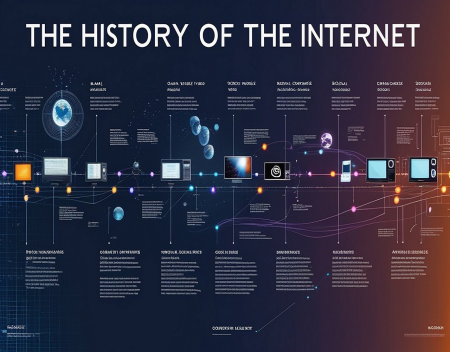
The History of the Intern