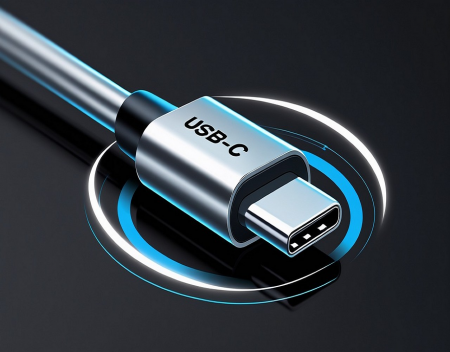
For years, connecting devices to a computer often meant digging through a drawer full of different cables and adapters. USB-A, USB-B, Mini USB, Micro USB, Lightning, HDMI, DisplayPort, power connectors, and proprietary charging cables all competed for space in our homes and offices. Fortunately, the technology industry has been moving toward a simpler solution: USB-C.
USB-C is more than just another connector. It represents a major step toward universal connectivity, offering a single cable capable of charging devices, transferring data, connecting displays, delivering audio, and even powering laptops. As more manufacturers adopt USB-C, many people are wondering if this truly is the one connector that can replace them all.
The answer is: almost.
The first thing most people notice about USB-C is its design. Unlike the original USB connector, USB-C is small, compact, and fully reversible. There is no "right side up," meaning you can plug it in either way without frustration. This simple improvement may seem minor, but it solved one of the most common annoyances in consumer electronics.
However, the real innovation lies beneath the connector itself.
Unlike earlier USB standards, USB-C was designed to support a wide variety of technologies through a single physical port. Depending on the device, the same USB-C connector can handle data transfer, video output, audio transmission, internet connectivity, and power delivery simultaneously.
One of the biggest advantages of USB-C is charging. Modern smartphones, tablets, laptops, wireless headphones, portable gaming systems, cameras, and countless accessories now use USB-C for power. Instead of carrying several different chargers while travelling, many people can charge nearly every device they own using a single USB-C charger.
USB Power Delivery (USB PD) has made this possible. Earlier USB ports supplied relatively little power, suitable for charging phones or powering small accessories. USB-C with Power Delivery can provide dramatically higher wattage, allowing it to charge everything from wireless earbuds to powerful laptops and external monitors.
Many modern laptops no longer include dedicated charging ports because USB-C handles both charging and data through the same connector. Some monitors can even power a laptop while simultaneously acting as a display and USB hub using a single cable.
Data transfer has also improved significantly. Older USB standards were relatively slow by today's standards, but USB-C supports a wide range of transfer speeds depending on the underlying technology.
Basic USB-C devices may operate at modest speeds, while newer USB4 and Thunderbolt-enabled ports can transfer enormous amounts of data every second. This allows photographers, videographers, and creative professionals to move large files in a fraction of the time previously required.
For example, copying hundreds of gigabytes of video footage from a high-speed external SSD can now take minutes instead of hours.
USB-C has also become an excellent solution for connecting displays. Using technologies such as DisplayPort Alt Mode or Thunderbolt, a single USB-C cable can transmit high-resolution video to monitors, televisions, or projectors.
Many modern laptops require only one USB-C cable to connect to an external monitor while simultaneously charging the laptop, connecting to wired internet, accessing USB peripherals, and using external storage. This has greatly simplified desk setups for remote workers and office environments.
Docking stations have become increasingly popular because of USB-C's versatility. Instead of plugging in multiple cables individually, users simply connect one USB-C cable to their laptop. Instantly, they gain access to multiple monitors, keyboards, mice, printers, speakers, wired networking, storage devices, webcams, and power—all through a single connection.
Gamers have also benefited from USB-C adoption. Many handheld gaming devices, controllers, VR headsets, and gaming accessories now use USB-C for charging and connectivity. Portable gaming systems such as the Nintendo Switch helped introduce millions of consumers to the convenience of a single universal charging standard.
Smartphones have seen perhaps the biggest shift toward USB-C. Android devices adopted the connector several years ago, and more manufacturers have standardized on it. Even devices that previously relied on proprietary connectors have increasingly transitioned to USB-C, making charging more convenient across different brands.
However, one important point often confuses consumers: not every USB-C port is the same.
Although two devices may have identical USB-C connectors, they may support very different capabilities. One port may only charge a device, while another supports high-speed data transfer, multiple displays, Thunderbolt connectivity, or advanced power delivery.
Similarly, not every USB-C cable offers identical performance. Some cables support only charging, while others support fast charging, high-speed data transfer, video output, or all three. Purchasing high-quality, certified cables ensures you receive the performance your devices are capable of delivering.
This variation is currently one of USB-C's biggest challenges. The connector may be universal, but the features behind it can differ considerably between devices and cables.
Another advantage of USB-C is its role in reducing electronic waste. When multiple devices use the same charging standard, consumers no longer need separate chargers for every product they purchase. Reusing existing chargers and cables reduces manufacturing, packaging, and discarded electronics, contributing to a more sustainable technology ecosystem.
Businesses also benefit from USB-C standardization. Employees can share chargers, docking stations, monitors, and accessories regardless of laptop brand, simplifying equipment management while reducing support costs.
USB-C has also accelerated innovation in portable storage. External SSDs using USB-C deliver speeds that were unimaginable only a few years ago. Professionals working with large photo libraries, 4K and 8K video, engineering projects, or software development can now carry terabytes of storage in devices small enough to fit in a pocket.
Artificial intelligence is increasing demand for these high-speed connections as well. AI applications often process large datasets that must move quickly between computers and external storage. USB-C's growing bandwidth makes it well suited for these increasingly demanding workloads.
Looking ahead, USB-C is expected to become even more capable. Future versions of USB and Thunderbolt will continue increasing data transfer speeds while supporting higher-resolution displays, faster charging, and more advanced peripherals.
As laptops become thinner and desktop computers continue simplifying their designs, USB-C is likely to replace even more legacy connectors. Many manufacturers have already eliminated dedicated charging ports, Ethernet ports, and video outputs in favour of versatile USB-C connections.
That doesn't necessarily mean every connector will disappear. HDMI will likely remain common for televisions, certain professional equipment may continue using specialized connectors, and desktop computers will still include a variety of ports depending on their intended use.
Even so, USB-C has already become the closest thing the technology industry has ever had to a truly universal connector.
For consumers, the benefits are clear: fewer cables, simpler charging, faster data transfers, cleaner workspaces, and greater compatibility between devices. While understanding the differences between cables and port capabilities remains important, USB-C has dramatically reduced the confusion that once surrounded computer connectivity.
The dream of one cable for nearly everything is no longer science fiction. With each new generation of computers, smartphones, monitors, and accessories embracing USB-C, we're moving closer to a future where one small connector truly does rule them all.
Great experience with Computer Geek. They helped with my website needs and were professional, respon . . . [MORE].

Great, quick service when my laptop went into meltdown and also needed Windows 11 installed. Also ca . . . [MORE].
It was a great experience to working with you. thank you so much. . . . [MORE].
Thank you so much for great service and over all experience is good . highly recommended for all peo . . . [MORE].
We engaged The Computer Geeks in mid-2023 as they have a reputation for API integration within the T . . . [MORE].
The Rise and Fall of Flas
The History of the Intern
The Evolution of Personal