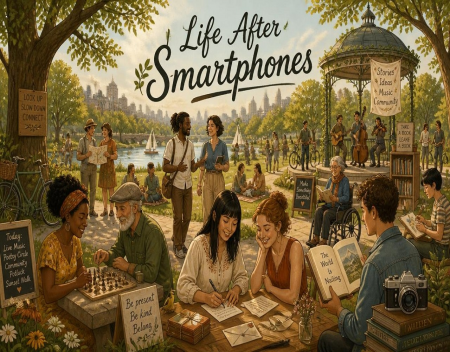
For more than a decade, smartphones have been the centre of our digital lives. We use them to communicate, navigate, shop, work, take photographs, watch videos, manage finances, and control devices in our homes. For many people, the smartphone is the first thing they reach for in the morning and the last thing they look at before going to sleep.
But what happens when smartphones are no longer the primary way we interact with technology?
Although smartphones are unlikely to disappear overnight, the technology industry is already exploring alternatives. Artificial intelligence assistants, smart glasses, wearable computers, voice-controlled devices, and even experimental brain-computer interfaces could eventually change how people access digital services.
The next major technology revolution may not involve a better smartphone. It could involve moving beyond the smartphone altogether.
The Limitations of SmartphonesSmartphones have become incredibly powerful, but their basic design has remained relatively consistent. They are handheld computers with touchscreens, cameras, batteries, and wireless connections.
Despite improvements in processing power, screen quality, and camera technology, the fundamental experience has not changed dramatically. Users still take their phones out of their pockets, unlock them, open applications, and interact with a small display.
This approach has several limitations.
First, smartphones demand attention. Notifications, messages, social media applications, and endless streams of online content encourage people to constantly check their devices. This can interrupt conversations, work, and everyday activities.
Second, interacting with a smartphone often requires both hands and visual attention. Reading a message while walking, following navigation instructions while driving, or looking up information while working can be inconvenient or distracting.
Finally, smartphones have become overloaded with features. Many people use only a small portion of what their devices can do, yet they continue to purchase new models because manufacturers introduce incremental improvements.
These limitations create opportunities for entirely different ways of interacting with technology.
Artificial Intelligence Could Replace Many Smartphone AppsOne of the biggest potential changes involves artificial intelligence.
Today, using a smartphone often means opening separate applications for different tasks. Someone might open a weather application, a calendar, a mapping service, an email application, and a shopping app throughout the day.
AI assistants could eventually make this process much simpler.
Instead of opening multiple applications, users could simply tell an assistant what they want to accomplish. An AI system might arrange appointments, book travel, summarize emails, order groceries, provide directions, or manage household devices.
Rather than navigating menus and entering information manually, people could communicate with technology through ordinary conversation.
This could fundamentally change the role of smartphones. The device might become less important as an application platform and more important as a connection to a personal AI assistant.
In the future, the AI itself may operate across multiple devices, allowing users to begin a task on one device and continue it somewhere else without thinking about which application is being used.
Smart Glasses and Augmented Reality<PRIVATE_PERSON>Smart glasses could become one of the most interesting alternatives to traditional smartphones.
Unlike ordinary glasses, smart glasses contain electronic components that can provide information directly within the user's field of vision. Depending on the design, they may include cameras, microphones, speakers, displays, and wireless connections.
Imagine walking through a city and seeing navigation instructions appear in front of you. You could look at a restaurant and receive information about its opening hours, menu, and reviews. You might receive a message notification without reaching into your pocket.
Augmented reality could make these experiences even more advanced by placing digital objects and information into the physical environment.
Smart glasses could also be useful in professional settings. Technicians might receive repair instructions while working on equipment. Warehouse employees could view inventory information without carrying handheld scanners. Medical professionals could access relevant information while keeping their hands free.
However, smart glasses face several challenges. Battery life, comfort, privacy, cost, and the social acceptance of cameras built into eyewear will all influence their success.
They may not replace smartphones immediately, but they could eventually take over many tasks currently performed on them.
Wearable Technology Will Become More ImportantSmartwatches and fitness trackers already demonstrate that technology does not always need a traditional screen.
Wearable devices can monitor physical activity, display notifications, track sleep, and provide basic communication features. Some can also support payments, navigation, and emergency alerts.
Future wearables could become much more capable.
Smaller processors, improved batteries, and more efficient wireless technology may allow devices to perform tasks that currently require a smartphone. A smartwatch could become a primary communication device for some people, while other wearables might provide specialized functions.
Technology could also become integrated into clothing, jewellery, hearing devices, and accessories.
For example, smart earbuds could provide real-time language translation, voice-based AI assistance, and audio notifications. A small wearable device could act as a personal assistant without requiring users to look at a screen.
The result could be an ecosystem of connected devices that collectively replace many smartphone functions.
Voice Could Become the New TouchscreenVoice technology has improved significantly over the past several years. Digital assistants can recognize speech, answer questions, control smart home equipment, and perform basic tasks.
Artificial intelligence is making voice interaction more natural. Instead of issuing short commands, people can increasingly communicate with AI systems using complete sentences and follow-up questions.
This could make voice the primary interface for many digital services.
Consider driving a car. Instead of looking at a phone to find directions, a driver could simply ask an assistant to locate a destination, check traffic, and suggest a route.
At home, someone could ask an AI assistant to adjust the temperature, turn off lights, prepare a shopping list, or summarize important messages.
Voice interaction is not appropriate for every situation, particularly in public places or environments where privacy matters. However, combined with wearables and smart glasses, it could significantly reduce the need to handle a smartphone.
Brain-Computer Interfaces: A More Distant PossibilityOne of the more ambitious technologies being developed is the brain-computer interface, commonly known as a BCI.
These systems are designed to interpret signals from the brain and translate them into commands that computers can understand.
Some brain-computer interface technologies are being developed for medical applications, particularly to help people with paralysis communicate or control external devices.
In the more distant future, researchers may develop systems that allow people to interact with computers using neural signals rather than physical movements.
This does not mean people will suddenly be able to download information directly into their brains or control every device through thought alone. Significant technical, medical, and ethical challenges remain.
Nevertheless, brain-computer interfaces represent a possible future in which interacting with digital technology becomes less dependent on physical devices.
Will Smartphones Actually Disappear?Despite all these developments, smartphones are unlikely to disappear quickly.
They are convenient, relatively affordable, familiar, and supported by a massive global infrastructure. Manufacturers, software developers, telecommunications companies, and businesses have invested enormous resources in the smartphone ecosystem.
Even if smart glasses and AI assistants become popular, smartphones may continue to serve as the central processing, storage, and connectivity device behind many experiences.
The smartphone could gradually become less visible rather than completely disappear. It might spend more time in a pocket or bag while other devices handle everyday interactions.
Much like desktop computers did not disappear when laptops became popular, smartphones may remain useful even after newer technologies become mainstream.
Privacy and Security in a Post-Smartphone WorldMoving beyond smartphones will create new privacy and security challenges.
Smart glasses equipped with cameras could record people without their knowledge. Always-listening AI assistants could collect sensitive conversations. Wearable devices might gather detailed information about someone's daily activities and behaviour.
If personal AI assistants become responsible for managing financial accounts, communications, shopping, and appointments, protecting access to those systems will be extremely important.
Companies developing these technologies will need to provide clear privacy controls, strong authentication, and transparent data policies.
There is also a risk that people could become even more dependent on technology. If an AI assistant controls many aspects of daily life, losing access to it could become a serious inconvenience.
The next generation of personal technology must offer more than convenience. It must also give users control over their information and provide reliable alternatives when systems fail.
Final ThoughtsLife after smartphones may not mean abandoning personal technology. Instead, it could mean interacting with technology in ways that are less dependent on screens.
Artificial intelligence assistants, smart glasses, wearables, voice interfaces, and eventually brain-computer interfaces could transform how people communicate and access information.
The most successful technologies will probably be those that make computing feel less like an activity and more like a natural part of everyday life.
Smartphones changed the world by putting a powerful computer into almost everyone's pocket. The next revolution could take that computer out of our hands and distribute its capabilities across the devices and environments around us.
The smartphone may not be the final form of personal computing. It could simply be another step in the evolution of how humans interact with technology.
Great experience with Computer Geek. They helped with my website needs and were professional, respon . . . [MORE].

Great, quick service when my laptop went into meltdown and also needed Windows 11 installed. Also ca . . . [MORE].
It was a great experience to working with you. thank you so much. . . . [MORE].
Thank you so much for great service and over all experience is good . highly recommended for all peo . . . [MORE].
We engaged The Computer Geeks in mid-2023 as they have a reputation for API integration within the T . . . [MORE].
Life After Smartphones
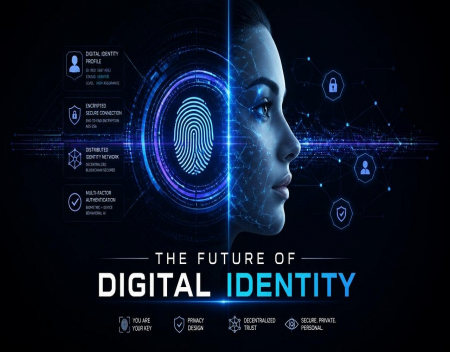
The Future of Digital Ide
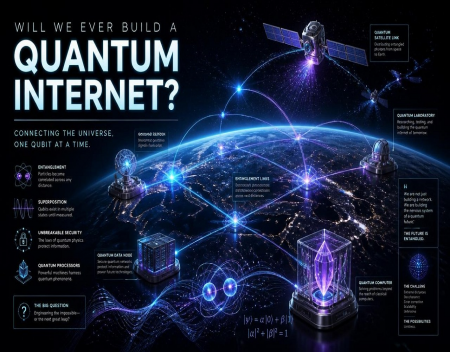
Will We Ever Build a Quan