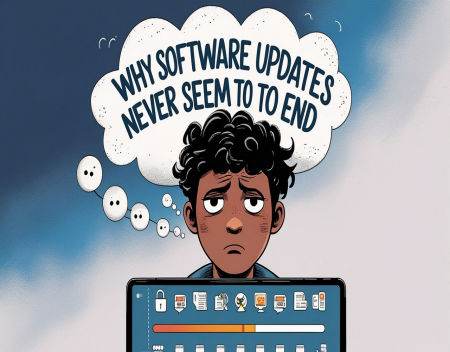
If you use a computer, smartphone, or any connected device, you’ve likely noticed a constant stream of updates. Just when you think your system is up to date, another notification appears prompting you to download and install the latest version. For many users, this raises an obvious question: why do software updates never seem to end.
At the heart of the issue is the nature of modern software itself. Today’s applications and operating systems are far more complex than those of the past. A platform like Windows 11 is not a static product released once and left unchanged. Instead, it is an evolving system that must adapt to new hardware, emerging technologies, and shifting user expectations. This continuous evolution requires ongoing updates to keep everything functioning smoothly.
One of the primary reasons for frequent updates is security. As technology advances, so do the methods used by attackers. New vulnerabilities are discovered regularly, and developers must respond quickly to protect users. Updates often include patches that fix these security flaws, preventing them from being exploited. Without these updates, systems would become increasingly vulnerable over time, making regular maintenance essential rather than optional.
Another factor is compatibility. The ecosystem of devices, applications, and services is constantly changing. New hardware components, drivers, and software integrations require updates to ensure everything works together properly. For example, as new processors, graphics technologies, and peripherals are introduced, operating systems must be updated to support them. This ongoing process helps maintain a consistent user experience across different configurations.
The rise of Artificial Intelligence has also contributed to the frequency of updates. AI-driven features often rely on continuous improvement, learning from new data and refining their performance. This means that updates are not just about fixing problems, but also about enhancing capabilities. Features may be improved, expanded, or entirely reimagined based on how users interact with them.
User expectations play a significant role as well. In the past, software was often released in large, infrequent versions. Today, users expect regular improvements, new features, and quick fixes for issues. Companies have shifted toward delivering updates in smaller, more frequent increments. This approach allows for faster innovation and more responsive development, but it also creates the perception that updates are never-ending.
There is also a business aspect to consider. Many software products are now delivered as services rather than one-time purchases. This model encourages continuous development and support, as companies aim to keep users engaged and satisfied. Regular updates help maintain relevance in a competitive market, ensuring that products remain useful and appealing over time.
Another reason updates seem constant is the diversity of environments in which software operates. Developers must account for different hardware configurations, network conditions, and user behaviors. Issues that do not appear in one setup may surface in another, requiring additional fixes and adjustments. This variability makes it difficult to achieve a “final” version that works perfectly for everyone.
Despite the benefits, frequent updates can be frustrating. They can interrupt workflows, consume time, and occasionally introduce new issues. Balancing the need for improvement with the desire for stability is an ongoing challenge for developers. Efforts are being made to make updates less intrusive, such as allowing installations in the background or scheduling them at convenient times.
There is also a growing emphasis on reliability. As systems become more complex, ensuring that updates do not cause unintended problems is critical. Testing processes, user feedback, and gradual rollouts are used to minimize risks. Even so, the complexity of modern software means that occasional issues are almost inevitable.
Looking ahead, updates are unlikely to slow down. As technology continues to evolve, the need for ongoing maintenance and improvement will remain. However, the way updates are delivered may change. Advances in automation and smarter update systems could make the process more seamless, reducing the impact on users while maintaining security and performance.
Ultimately, software updates never seem to end because software itself is never truly finished. It exists within a dynamic environment where change is constant. Rather than viewing updates as a nuisance, they can be seen as a reflection of progress—an indication that systems are being maintained, improved, and adapted to meet the demands of a rapidly changing world.
In the end, the continuous cycle of updates is not a flaw, but a feature of modern computing. It ensures that the tools we rely on remain secure, functional, and relevant, even as the digital landscape continues to evolve.
Great experience with Computer Geek. They helped with my website needs and were professional, respon . . . [MORE].

Great, quick service when my laptop went into meltdown and also needed Windows 11 installed. Also ca . . . [MORE].
It was a great experience to working with you. thank you so much. . . . [MORE].
Thank you so much for great service and over all experience is good . highly recommended for all peo . . . [MORE].
We engaged The Computer Geeks in mid-2023 as they have a reputation for API integration within the T . . . [MORE].
The Evolution of Personal
The Hidden Cost of Free A

The Psychology of Notific