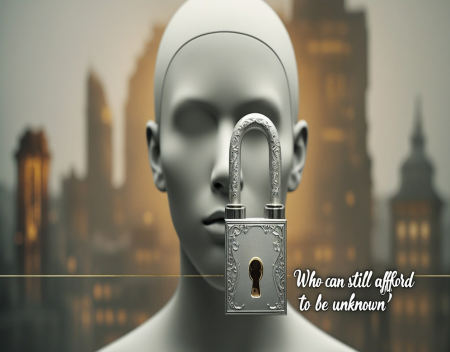
Privacy was once an assumed condition of everyday life. Moving through the world without being tracked, recorded, or analyzed was normal. Today, that assumption has collapsed. In a hyperconnected society built on data extraction, privacy is no longer evenly distributed. It is becoming a luxury good, accessible primarily to those with money, power, or technical expertise. The ability to remain unknown is no longer a right enjoyed by all, but a privilege afforded to a shrinking few.
Modern life generates data constantly. Smartphones track location. Apps log behavior. Cameras monitor public and private spaces. Online platforms record preferences, relationships, and opinions. Participation in work, education, healthcare, and social life increasingly requires digital tools that collect information by default. Avoiding data exposure often means opting out of essential services, which is not a realistic choice for most people.
Wealth changes this equation. Those with financial resources can buy privacy. They can live in gated communities, use private transportation, hire legal counsel, and access exclusive services that minimize surveillance. They can afford privacy focused devices, premium services that reduce data sharing, and legal strategies to suppress or remove information. For them, anonymity is protected by insulation.
Meanwhile, people with fewer resources face disproportionate exposure. Low income communities are often subject to higher levels of surveillance, from predictive policing to workplace monitoring. Public housing, public transportation, and public services increasingly rely on data collection and biometric identification. Opting out can mean losing access to basic needs. Privacy becomes a tradeoff that the less powerful cannot afford.
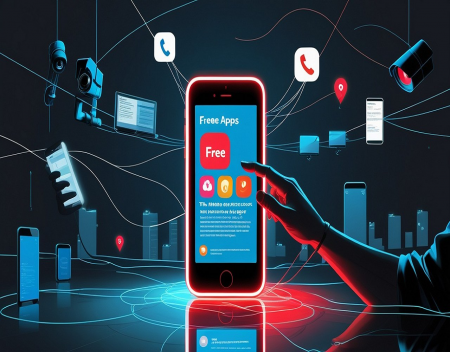
Technology companies reinforce this divide. Free or low cost services are frequently funded by data collection. Users pay with information instead of money. Paid alternatives may offer stronger privacy protections, fewer ads, or reduced tracking. This creates a two tier system where privacy is bundled with purchasing power. Those who can pay remain less visible. Those who cannot become the product.
The workplace reflects the same pattern. High status professionals often enjoy autonomy and trust, while lower wage workers are subject to constant monitoring through productivity software, biometric clocks, and performance tracking systems. Surveillance is framed as efficiency, but it tracks power. The more replaceable a worker is perceived to be, the more closely they are watched.
Public space also reveals this imbalance. Affluent neighborhoods may resist invasive surveillance through political influence or zoning power. Marginalized areas are more likely to be saturated with cameras, sensors, and monitoring technologies justified by security concerns. Visibility becomes unevenly distributed across geography and class.
There is also a knowledge gap. Privacy requires literacy. Understanding how data flows, how to configure settings, and how to minimize exposure takes time and expertise. Those with education and technical skills can navigate these systems more effectively. Others are left vulnerable, not by choice, but by design. Complexity becomes a barrier that protects institutions rather than individuals.
This stratification has profound social consequences. When privacy is unequal, so is freedom. Being watched changes behavior. It discourages dissent, experimentation, and self expression. If only some people can afford to act without scrutiny, then equality before the law and society erodes quietly.
Defenders of the current system argue that people choose convenience over privacy. This framing ignores structural constraints. Choice is meaningful only when alternatives are viable. When participation in society requires surveillance, consent becomes coerced. Privacy does not disappear because people stopped valuing it. It disappears because protecting it became too costly.
Reversing this trend requires treating privacy as a public good rather than a personal upgrade. Strong default protections, limits on data collection, and enforcement that does not depend on individual action are essential. Privacy should not require constant vigilance, technical mastery, or disposable income.
If the ability to remain unknown belongs only to the wealthy, then privacy ceases to function as a democratic value. It becomes a marker of status. The question is no longer whether privacy matters, but who society believes deserves it.
Great experience with Computer Geek. They helped with my website needs and were professional, respon . . . [MORE].

Great, quick service when my laptop went into meltdown and also needed Windows 11 installed. Also ca . . . [MORE].
It was a great experience to working with you. thank you so much. . . . [MORE].
Thank you so much for great service and over all experience is good . highly recommended for all peo . . . [MORE].
We engaged The Computer Geeks in mid-2023 as they have a reputation for API integration within the T . . . [MORE].
The Evolution of Personal
The Hidden Cost of Free A
The Psychology of Notific