
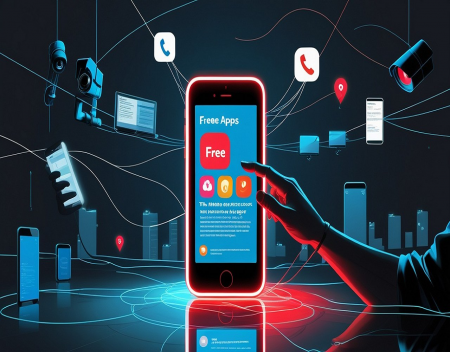
Many of the most popular online services in the world are available at no direct cost to users. Search engines, social media platforms, email services, navigation apps, video-sharing websites, and countless mobile applications can be accessed without paying a subscription fee. At first glance, this seems like one of the greatest bargains in modern history. Billions of people have access to powerful digital tools without opening their wallets. However, there is an old saying in the technology industry: if you are not paying for the product, you may be the product.
While this statement is somewhat oversimplified, it highlights an important reality about the modern internet. The business models of many large technology companies are built around collecting, analyzing, and monetizing user data. In today's digital economy, information has become one of the most valuable resources in the world.
The concept is relatively straightforward. Every time someone uses a website, mobile application, search engine, or social media platform, they generate data. This data may include search queries, browsing habits, purchase history, location information, device details, viewing preferences, social interactions, and countless other signals.
Individually, these pieces of information may seem insignificant. However, when collected over months or years and combined with data from millions of other users, they become extremely valuable. Technology companies can use this information to better understand user behavior, improve services, personalize experiences, and most importantly, target advertising.
Advertising remains the primary revenue source for many of the world's largest technology companies. Traditional advertising often relied on broad demographics and guesswork. A television commercial might reach millions of viewers, but advertisers had limited knowledge about who was actually interested in the product being promoted.
Digital advertising changed that model completely. By analyzing user behavior, platforms can show highly targeted advertisements to specific audiences. Someone searching for a new vehicle may begin seeing automotive advertisements. A person researching vacation destinations may encounter travel-related promotions. The more accurately a platform understands user interests, the more valuable its advertising becomes.
This is where data collection plays such an important role. Every interaction helps build a more detailed picture of user preferences and behaviors. The goal is not necessarily to learn everything about a specific individual but to improve the accuracy of predictions and recommendations across large populations.
Social media platforms are among the most visible examples of this business model. Users voluntarily share photos, interests, opinions, locations, and social connections. This information helps platforms deliver personalized content and advertising while keeping users engaged for longer periods of time.
Search engines operate in a similar manner. Search queries reveal what users are interested in at a given moment. Combined with other signals, this information can help improve search results while also supporting targeted advertising systems.
Mobile devices have expanded the amount of available data even further. Smartphones contain sensors, GPS receivers, cameras, microphones, and numerous applications that generate information throughout the day. Location data alone can provide valuable insights into consumer behavior, commuting patterns, shopping habits, and lifestyle preferences.
The rise of artificial intelligence has increased the importance of data even more. Modern AI systems require vast amounts of information for training, optimization, and personalization. Data has become the fuel that powers many of today's intelligent systems. The more information available, the more accurately these systems can recognize patterns and generate useful results.
Supporters of the current model argue that users receive significant value in exchange for their data. Free email services, cloud storage, navigation tools, social networks, communication platforms, and search engines have transformed daily life. Many of these services would not exist in their current form without advertising-supported business models.
Critics, however, raise concerns about privacy, transparency, and control. Many users are unaware of how much information is collected or how it is used. Privacy policies can be lengthy and difficult to understand, and data-sharing practices are often more complex than most people realize.
Another concern involves data security. Large collections of user information can become attractive targets for cybercriminals. Data breaches, unauthorized access, and misuse of information remain ongoing risks throughout the digital ecosystem.
Governments and regulators around the world have responded by introducing privacy laws and regulations designed to increase transparency and give users greater control over their personal information. Consumers today generally have more options to manage permissions, review privacy settings, and limit data collection than they did a decade ago.
Looking ahead, the relationship between users and technology companies will likely continue evolving. Artificial intelligence, wearable devices, smart homes, connected vehicles, and ambient computing systems may generate even more data than today's smartphones and websites. As technology becomes increasingly integrated into everyday life, questions surrounding privacy and data ownership will become even more important.
In the end, the business model of much of the modern internet is built upon information. Data allows companies to provide free services, improve products, personalize experiences, and generate advertising revenue. While this model has fueled enormous technological innovation, it also raises important questions about privacy, transparency, and control. Understanding how user data drives the digital economy is becoming an essential part of understanding the technology that shapes modern life.
Great experience with Computer Geek. They helped with my website needs and were professional, respon . . . [MORE].

Great, quick service when my laptop went into meltdown and also needed Windows 11 installed. Also ca . . . [MORE].
It was a great experience to working with you. thank you so much. . . . [MORE].
Thank you so much for great service and over all experience is good . highly recommended for all peo . . . [MORE].
We engaged The Computer Geeks in mid-2023 as they have a reputation for API integration within the T . . . [MORE].
The History of the Intern
The Evolution of Personal
The Hidden Cost of Free A