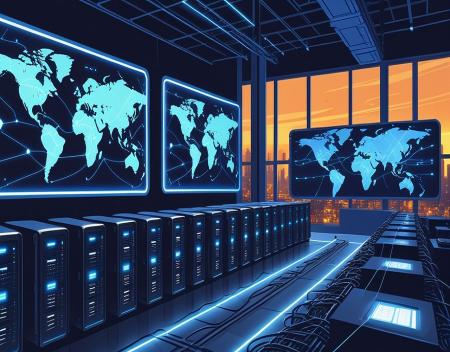
When you open a website, stream a movie, send an email, upload a photograph, or ask an AI assistant a question, it can feel like everything happens instantly and almost magically. In reality, every one of these actions depends on a massive network of physical computers, cables, power systems, cooling equipment, and communications infrastructure.
At the heart of this system are data centers.
Data centers are the facilities that house the servers and networking equipment responsible for running much of the modern internet. They are the hidden infrastructure behind websites, cloud computing, online shopping, social media, streaming services, artificial intelligence, and countless other digital services that people use every day.
What Exactly Is a Data Center?A data center is essentially a highly specialized facility designed to house computer equipment.
Instead of having a few computers sitting in an ordinary office, a data center can contain thousands or even tens of thousands of servers. These servers work together to store information, run applications, process requests, and deliver data to users around the world.
A typical data center contains much more than computers. It also requires:
Every component has an important role to play in keeping online services running.
Servers Are the WorkhorsesServers are the primary computing machines inside a data center.
A server is essentially a powerful computer designed to provide services to other computers. Depending on its purpose, a server might host a website, store photographs, run a database, process payments, stream video, or perform calculations for an artificial intelligence system.
When you visit a website, your computer sends a request across the internet. That request eventually reaches a server capable of providing the information you requested.
The server processes the request and sends the necessary information back to your device.
All of this can happen in a fraction of a second.
Storage Keeps the Internet's InformationThe internet contains an enormous amount of information.
Web pages, photographs, videos, documents, databases, software, backups, emails, and application data all need to be stored somewhere.
Data centers use massive storage systems to hold this information.
Traditional hard drives remain useful for storing enormous amounts of relatively inexpensive data, while solid-state drives provide extremely fast access for applications that require high performance.
Large data centers may contain petabytes or even exabytes of information.
As people create more photographs, videos, documents, and other digital content, the amount of storage required continues to grow.
Networking Connects EverythingComputers inside data centers need to communicate with one another, but they also need to communicate with the rest of the internet.
This is where networking equipment becomes critical.
High-speed switches and routers direct data between servers and external networks. Data may travel through fiber-optic cables connecting the data center to internet service providers, cloud networks, content delivery networks, and other facilities.
Many large data centers have multiple network connections.
If one connection fails, traffic can potentially be redirected through another route.
This redundancy helps prevent a single cable or network failure from taking an entire service offline.
Electricity Is EssentialData centers consume enormous amounts of electricity.
Every server requires power, and thousands of servers operating continuously can create a substantial electricity demand.
But the computers aren't the only equipment using electricity.
Cooling systems, networking equipment, lighting, security systems, pumps, monitoring equipment, and other infrastructure also require power.
Because online services are expected to remain available 24 hours a day, data centers must have highly reliable electrical systems.
What Happens During a Power Outage?A normal building can often survive a short power outage with relatively little impact.
A major data center cannot.
Even a few seconds without electricity could potentially disrupt thousands of websites and online services.
That's why data centers typically have multiple layers of backup power.
Battery-based uninterruptible power supply systems can immediately provide electricity if the primary power source fails.
Backup generators can then take over for longer outages.
Large facilities may have enough fuel and backup capacity to continue operating for extended periods.
Some data centers also have multiple connections to the electrical grid, reducing their dependence on a single source of electricity.
Keeping Servers CoolComputers generate heat when they operate.
Thousands of servers running simultaneously can generate an enormous amount of heat, making cooling one of the most important jobs inside a data center.
Traditional facilities use powerful air-conditioning and ventilation systems to move heat away from servers.
Newer facilities are increasingly using more sophisticated cooling technologies, including liquid cooling.
Liquid cooling can be particularly useful for high-performance computing systems and artificial intelligence hardware, which can generate significantly more heat than traditional servers.
Maintaining the correct temperature is essential because excessive heat can reduce hardware reliability and cause equipment failures.
Redundancy Keeps the Internet RunningOne of the most important principles of data center design is redundancy.
A critical system should not depend on a single component.
For example, a large data center may have multiple:
If one component fails, another can take over.
This concept is one reason major cloud services can continue operating even when individual servers or pieces of equipment fail.
The goal isn't to prevent every failure. Failures are inevitable.
The goal is to make sure one failure doesn't cause a major outage.
Data Centers Are Connected GloballyModern internet services rarely depend on a single data center.
Large technology companies operate facilities in multiple geographic locations around the world.
This provides several advantages.
If a data center experiences a major technical problem, traffic can potentially be redirected to another location.
Geographic distribution also improves performance.
If a user in Canada requests information from a service, it may be faster to provide that information from a nearby facility rather than sending the request halfway around the world.
Content delivery networks take advantage of this principle by placing copies of popular content closer to users.
Cloud Computing Depends on Data CentersThe cloud can sometimes sound like an abstract concept, but there is nothing mysterious about it.
The cloud is ultimately a collection of physical computers located somewhere.
When you store photographs in cloud storage, those photographs are stored on physical servers.
When a company runs an application in the cloud, that application is running on physical hardware inside a data center.
Cloud computing allows organizations to rent computing resources rather than purchasing and maintaining all of the necessary hardware themselves.
This has made advanced computing accessible to businesses of virtually every size.
Artificial Intelligence Is Changing Data CentersArtificial intelligence is creating new demands on data center infrastructure.
Modern AI systems require enormous amounts of computing power. Specialized processors, particularly GPUs and other AI accelerators, can consume significant amounts of electricity and generate substantial heat.
As AI adoption continues growing, data centers are being redesigned to support these workloads.
Facilities need stronger power systems, more advanced cooling, faster networking, and higher-density computing equipment.
The rapid growth of AI is therefore not just changing software—it is changing the physical infrastructure of the internet.
Data Centers and the EnvironmentThe enormous amount of electricity required by data centers has also raised environmental concerns.
Technology companies and data center operators are investing in more efficient servers, cooling systems, power management, and renewable energy.
Some facilities are being built in locations where renewable electricity is readily available.
Others are experimenting with innovative cooling systems that reduce water and energy consumption.
Improving efficiency is becoming increasingly important as internet usage, cloud computing, and AI continue expanding.
Security Is a Major PriorityData centers also need extensive security.
Physical security can include fences, security personnel, cameras, biometric authentication, locked server areas, and multiple layers of access control.
Digital security is equally important.
Networks must be protected against hacking attempts, malware, ransomware, denial-of-service attacks, and unauthorized access.
Many data centers operate continuously monitored security systems that detect suspicious activity and respond to potential threats.
Protecting the physical infrastructure is just as important as protecting the software running on it.
What Happens When a Data Center Goes Down?Even with extensive redundancy, outages can happen.
Hardware can fail. Network connections can be damaged. Power systems can experience problems. Software bugs can cause unexpected failures. Natural disasters can also affect facilities.
When a major data center experiences an outage, the effects can be widespread.
Websites may become unavailable, applications may stop working, streaming services can be interrupted, and businesses may temporarily lose access to critical systems.
This is why companies invest heavily in backup systems, geographically separated facilities, disaster recovery plans, and redundant infrastructure.
The Future of Data CentersData centers will become even more important as technology advances.
Artificial intelligence, autonomous vehicles, cloud computing, virtual reality, streaming media, smart cities, connected devices, and business applications will all require increasing amounts of computing power.
Future data centers are likely to become more automated and energy efficient.
AI itself may help manage data center operations by predicting hardware failures, optimizing cooling systems, balancing workloads, and reducing unnecessary energy consumption.
New generations of processors and storage technology will also improve performance while reducing power consumption.
Final ThoughtsThe internet may seem like an invisible service that exists somewhere in cyberspace, but the reality is very different.
Behind every website, cloud application, streaming service, online store, and AI system is a massive physical infrastructure made up of servers, storage systems, networking equipment, power systems, cooling technology, and miles of fiber-optic cable.
Data centers bring all of these components together.
They operate around the clock, often with multiple layers of redundancy designed to keep services available even when individual components fail.
As our dependence on digital technology continues growing, data centers will become even more important. The future of the internet will depend not only on better software and faster networks, but also on the physical facilities capable of supporting them.
The next time you send an email, stream a movie, upload a photograph, or visit a website, remember that somewhere in the world, a data center is working behind the scenes to make it happen.
Great experience with Computer Geek. They helped with my website needs and were professional, respon . . . [MORE].

Great, quick service when my laptop went into meltdown and also needed Windows 11 installed. Also ca . . . [MORE].
It was a great experience to working with you. thank you so much. . . . [MORE].
Thank you so much for great service and over all experience is good . highly recommended for all peo . . . [MORE].
We engaged The Computer Geeks in mid-2023 as they have a reputation for API integration within the T . . . [MORE].
The Future of Television
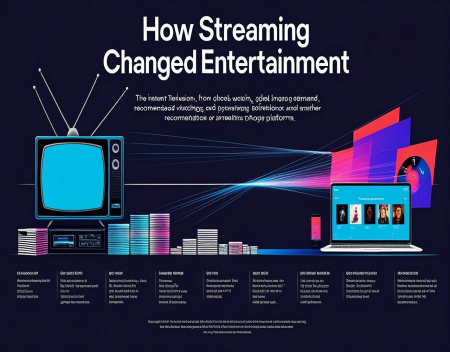
How Streaming Changed Ent
Digital Minimalism in a C