
The idea of constant surveillance is not new. Philosophers and political theorists have long warned that being watched changes how people behave. What is new is the scale, subtlety, and pervasiveness of observation in the digital age. Today, we live inside a digital panopticon, a world where algorithms monitor behavior continuously, invisibly, and automatically. Unlike traditional surveillance, there is no single guard tower. Observation is distributed across platforms, devices, and systems that watch not because they are curious, but because watching is profitable, efficient, and normalized.
The original concept of the panopticon described a prison designed so inmates could never know when they were being watched. The uncertainty itself enforced discipline. Digital surveillance operates on the same principle, but far beyond prison walls. Smartphones track location. Social media monitors interactions. Smart devices record habits. Online platforms log clicks, pauses, preferences, and emotional reactions. Even silence is data. The result is a population that internalizes observation and adjusts behavior accordingly, often without realizing it.
Algorithmic observation differs from human surveillance in critical ways. Algorithms do not sleep, get bored, or forget. They collect continuously and at scale, converting behavior into patterns that can be analyzed, predicted, and influenced. These systems are not interested in who you are as a person, but in how likely you are to act in certain ways. Identity becomes statistical. Individuality is reduced to probability.
This constant monitoring reshapes behavior. People curate themselves for algorithms as much as for other humans. Posts are crafted for visibility. Opinions are softened or exaggerated based on expected engagement. Even private thoughts are influenced by awareness that devices may be listening or that searches will be recorded. Over time, self expression becomes optimized rather than authentic. The fear is not punishment, but invisibility.
The digital panopticon is often justified through convenience and security. Personalized recommendations save time. Surveillance promises safety. Smart systems claim to improve efficiency and user experience. These benefits are real, but they come with tradeoffs that are rarely transparent. Data collected for one purpose is repurposed for another. Observation meant to assist quietly becomes a mechanism for control.
One of the most troubling aspects is that algorithmic surveillance is predictive. Systems do not just record what people have done. They attempt to forecast what people will do next. This predictive power influences credit decisions, job opportunities, advertising exposure, and even interactions with law enforcement. When algorithms decide risk or value, individuals are judged not by actions, but by correlations. Escaping these predictions becomes difficult because behavior that contradicts the model is often treated as noise rather than agency.
Unlike traditional surveillance states, the digital panopticon is largely voluntary. People opt in by using platforms essential for modern life. Refusing participation can mean social isolation, economic disadvantage, or reduced access to services. Consent becomes coerced by necessity. Few people fully understand the scope of observation they accept, and fewer still have meaningful alternatives.
There is also an imbalance of power. Those being watched have limited insight into how observation works. Algorithms are opaque. Data flows are hidden. Decisions are automated without explanation. This asymmetry erodes accountability. When outcomes feel unfair or harmful, there is often no clear authority to challenge. The watcher is everywhere and nowhere at once.
Psychologically, constant observation has consequences. Studies suggest that being monitored increases anxiety, conformity, and self censorship. Creativity suffers when risk feels costly. Dissent weakens when disagreement is tracked. Over time, a culture of quiet compliance emerges, not enforced by violence, but by metrics and incentives.
Living under algorithmic observation forces society to confront a fundamental question. Is efficiency worth the erosion of privacy and autonomy. The digital panopticon does not announce itself with cameras on every corner. It hides behind interfaces, convenience, and personalization. Yet its influence is profound. To live freely in an observed world requires more than regulation. It requires awareness, resistance to normalization, and a collective decision about how much of ourselves we are willing to surrender for comfort.
Great experience with Computer Geek. They helped with my website needs and were professional, respon . . . [MORE].

Great, quick service when my laptop went into meltdown and also needed Windows 11 installed. Also ca . . . [MORE].
It was a great experience to working with you. thank you so much. . . . [MORE].
Thank you so much for great service and over all experience is good . highly recommended for all peo . . . [MORE].
We engaged The Computer Geeks in mid-2023 as they have a reputation for API integration within the T . . . [MORE].
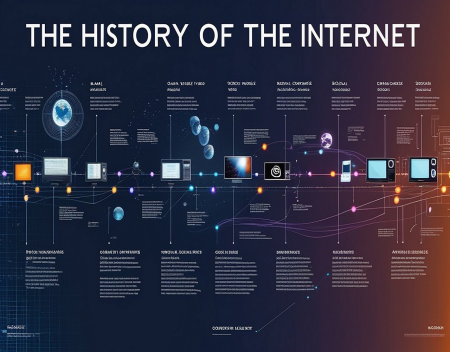
The History of the Intern
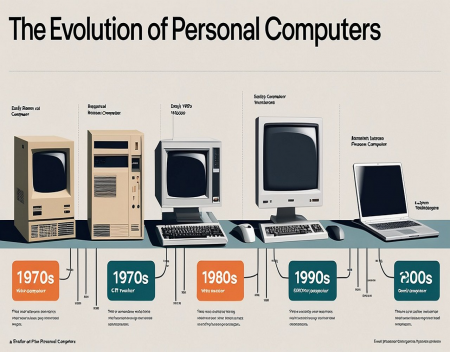
The Evolution of Personal

The Hidden Cost of Free A