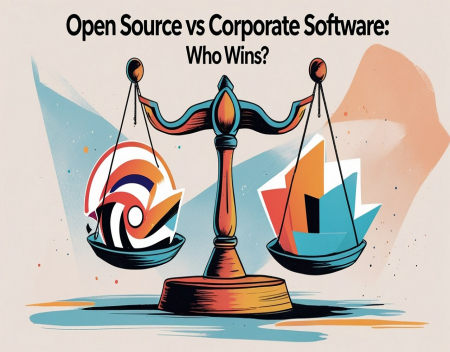
Few debates in the tech world are as persistent as the one between open source and corporate software. On one side are community-driven projects, often built collaboratively and freely shared. On the other are proprietary solutions developed and maintained by companies with commercial goals. Both models have shaped modern computing in profound ways, and both continue to evolve. The real question is not simply who wins, but what each approach offers—and where each excels.
At its core, Open Source Software is built on transparency and collaboration. The source code is publicly available, allowing anyone to inspect, modify, and distribute it. This openness fosters innovation, as developers from around the world can contribute improvements, fix bugs, and adapt the software to different needs. Projects like the Linux kernel demonstrate how powerful this model can be, forming the foundation for servers, mobile devices, and countless embedded systems.
Corporate or proprietary software, by contrast, is typically developed within a controlled environment. Companies invest significant resources into design, development, testing, and support. Products like Microsoft Windows exemplify this approach, offering polished user experiences, extensive compatibility, and professional support services. The closed nature of proprietary software allows companies to maintain control over quality, branding, and direction.
One of the key advantages of open source software is flexibility. Because the code is accessible, organizations can customize it to meet specific requirements. This is particularly valuable for businesses with unique workflows or technical needs. Open source also reduces dependency on a single vendor, giving users more control over their technology stack. In contrast, proprietary software often involves vendor lock-in, where switching to another solution can be complex and costly.
Cost is another major factor. Open source software is often free to use, which can significantly reduce expenses, especially for small businesses and startups. However, “free” does not always mean without cost. Implementation, customization, and maintenance may require technical expertise, which can offset the initial savings. Corporate software, while typically requiring licensing fees, often includes support, documentation, and regular updates as part of the package.
Security is a point of debate between the two models. Open source advocates argue that transparency leads to stronger security, as vulnerabilities can be identified and fixed by a global community. Critics, however, point out that open code can also be examined by attackers. Proprietary software relies on controlled development and internal testing, which can provide consistency but may limit external scrutiny. In practice, both models can be secure or vulnerable depending on how they are managed.
Usability is another area where differences emerge. Corporate software often prioritizes user experience, offering intuitive interfaces and seamless integration. This makes it accessible to a broad audience, including those without technical backgrounds. Open source software, while powerful, may sometimes require more expertise to configure and use effectively. That said, many open source projects have made significant strides in improving usability, narrowing this gap over time.
The rise of Artificial Intelligence is influencing both sides of the debate. Open source AI frameworks enable rapid experimentation and collaboration, accelerating innovation. At the same time, corporations are investing heavily in AI development, leveraging their resources to create advanced, integrated solutions. This dynamic highlights how both models can coexist and even complement each other.
Support and reliability are also important considerations. Corporate software typically comes with dedicated support teams, service agreements, and predictable update cycles. This can be critical for organizations that rely on stability and quick resolution of issues. Open source projects may offer community support, which can be highly effective but less predictable. Some open source solutions are backed by companies that provide professional support, blending the benefits of both models.
Ultimately, the question of who wins depends on context. Open source excels in flexibility, transparency, and innovation, making it ideal for developers, researchers, and organizations seeking control and customization. Corporate software shines in usability, support, and integration, appealing to users who prioritize convenience and reliability.
In reality, the modern technology landscape is not a simple competition between the two. Many organizations use a combination of both, leveraging the strengths of each where appropriate. Even large corporations contribute to open source projects, recognizing their value in driving progress and collaboration.
In the end, there is no single winner. Open source and corporate software represent different philosophies and approaches, each with its own advantages and challenges. Together, they form a balanced ecosystem that continues to push the boundaries of what technology can achieve.
Great experience with Computer Geek. They helped with my website needs and were professional, respon . . . [MORE].

Great, quick service when my laptop went into meltdown and also needed Windows 11 installed. Also ca . . . [MORE].
It was a great experience to working with you. thank you so much. . . . [MORE].
Thank you so much for great service and over all experience is good . highly recommended for all peo . . . [MORE].
We engaged The Computer Geeks in mid-2023 as they have a reputation for API integration within the T . . . [MORE].

The Future of Digital Pay

How Technology Is Changin

What Comes After Silicon