
Technological unemployment is often discussed in economic terms, measured through productivity gains, job displacement statistics, and shifts in labor markets. Yet beneath these metrics lies a deeper and more unsettling question about human value. As machines and algorithms increasingly perform tasks once reserved for people, society is forced to confront how closely worth has been tied to work, and what happens when that connection begins to fray.
For much of modern history, employment has served as more than a means of income. It has been a source of identity, structure, and social recognition. People introduce themselves by what they do, organize their time around work schedules, and measure success through professional achievement. When technology replaces roles at scale, the loss is not only financial but existential. Displaced workers often report feelings of invisibility, shame, and uncertainty that cannot be addressed by retraining alone.
Automation has already transformed industries such as manufacturing, logistics, and customer service. More recently, advances in artificial intelligence have expanded the scope of displacement into areas once considered safe, including analysis, writing, and creative work. This challenges long held assumptions about human uniqueness in the workplace. When machines can perform cognitive tasks efficiently and cheaply, the idea that intelligence or creativity guarantees economic relevance becomes less certain.
The social consequences of this shift are unevenly distributed. Those with access to education, capital, or networks may adapt by moving into new roles that oversee, design, or collaborate with technology. Others face prolonged periods of instability. This disparity risks deepening existing inequalities and creating a class of people who are not just unemployed, but perceived as unnecessary. When worth is tied to productivity, those left behind by technological change may be viewed as failures rather than casualties of structural transformation.
This raises ethical questions about responsibility. Technological progress is often framed as inevitable, but its impacts are shaped by policy choices, corporate strategies, and cultural values. If society benefits collectively from automation through increased efficiency and wealth, there is a moral argument for sharing those gains. Without mechanisms to support displaced workers, technological unemployment becomes a form of social abandonment rather than progress.
Proposals such as universal basic income, shorter workweeks, and expanded public investment attempt to address this tension. Beyond economic security, these ideas implicitly challenge the notion that a person’s worth depends on their labor. They suggest that dignity and meaning might be grounded in citizenship, creativity, care, or community participation rather than employment alone. However, such shifts require cultural change as much as policy reform.
There is also a psychological dimension to consider. Work provides routine, goals, and a sense of contribution. Removing it without replacing those functions can lead to isolation and loss of purpose. Societies that navigate technological unemployment successfully will need to create new avenues for meaning, whether through education, volunteering, artistic expression, or shared civic projects. Simply providing income without addressing purpose risks leaving a void.
At its core, technological unemployment forces a reckoning with how value is defined. If machines handle an increasing share of productive activity, humanity must decide whether worth is measured by output or by existence. This question has no easy answer, but it cannot be avoided. The challenge is not only to manage economic transition, but to reimagine a social contract that affirms human dignity in a world where work is no longer the primary measure of value.
Great experience with Computer Geek. They helped with my website needs and were professional, respon . . . [MORE].

Great, quick service when my laptop went into meltdown and also needed Windows 11 installed. Also ca . . . [MORE].
It was a great experience to working with you. thank you so much. . . . [MORE].
Thank you so much for great service and over all experience is good . highly recommended for all peo . . . [MORE].
We engaged The Computer Geeks in mid-2023 as they have a reputation for API integration within the T . . . [MORE].

The Rise and Fall of Flas
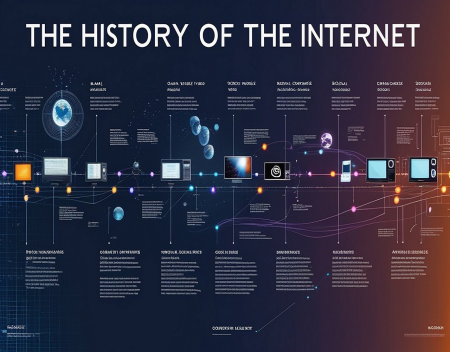
The History of the Intern
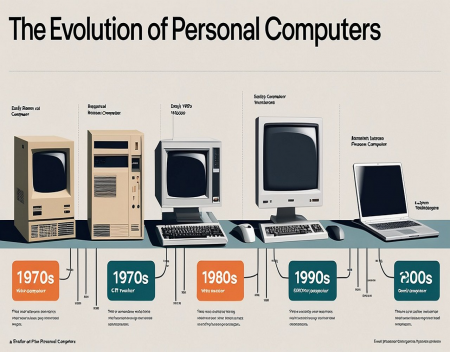
The Evolution of Personal