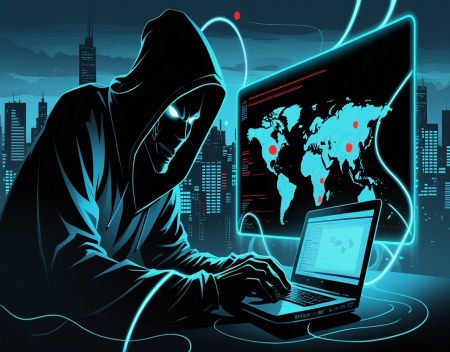
When people think of hackers, they often imagine highly technical attacks targeting large corporations or government systems. While those attacks do exist, the reality is that everyday users are among the most common targets. In fact, most cyberattacks succeed not because of advanced technology, but because they exploit human behavior. Understanding how this happens is a key part of modern Cybersecurity, and it is essential for anyone who uses the internet.
One of the most common methods hackers use is phishing. This involves sending emails or messages that appear to come from legitimate sources, such as banks, delivery services, or even coworkers. The goal is to trick the recipient into clicking a link or providing sensitive information. These messages are often carefully crafted to create a sense of urgency, such as claiming there is a problem with an account or a package that cannot be delivered. Because they look convincing, many users respond without questioning their authenticity.
Another widespread tactic is the use of weak or reused passwords. Many people use the same password across multiple accounts for convenience. If one of those accounts is compromised in a data breach, hackers can use the same credentials to access other accounts. This technique, often referred to as credential reuse, is highly effective because it takes advantage of common user habits rather than technical vulnerabilities.
Malware is another major tool in a hacker’s arsenal. This can include viruses, spyware, or ransomware that is installed on a device without the user’s knowledge. Malware often enters a system through downloaded files, email attachments, or compromised websites. Once installed, it can monitor activity, steal data, or even lock the user out of their own system. Many users unknowingly install malware by clicking on pop-ups or downloading software from untrusted sources.
Social engineering goes beyond phishing and involves manipulating people directly. Hackers may pose as technical support representatives, company employees, or even friends or family members. By building trust, they can convince users to reveal passwords, grant access, or perform actions that compromise security. These attacks rely on psychology rather than technology, making them particularly difficult to detect.
Public Wi-Fi networks are another common point of exploitation. While convenient, these networks are often not secure. Hackers can intercept data transmitted over public connections, potentially capturing login credentials, personal messages, or financial information. Users who access sensitive accounts on unsecured networks are especially vulnerable.
Outdated software also creates opportunities for attackers. Software developers regularly release updates to fix security vulnerabilities. When users delay or ignore these updates, their systems remain exposed to known exploits. Hackers actively search for devices running outdated software because they are easier to compromise.
Fake websites and apps are another method used to deceive users. These sites may look identical to legitimate ones, complete with logos and design elements. Users who enter their login information on these sites unknowingly hand over their credentials. Similarly, malicious apps can be disguised as useful tools, but once installed, they may collect data or perform unauthorized actions.
The common thread in all these methods is that they target human behavior. Hackers rely on curiosity, urgency, trust, and convenience to achieve their goals. This means that even the most advanced security systems can be bypassed if users are not cautious.
Protecting against these threats does not require advanced technical knowledge, but it does require awareness and good habits. One of the most important steps is to be cautious with emails and messages. Users should verify the source before clicking links or providing information. If something feels suspicious, it is better to check directly with the organization rather than responding immediately.
Using strong, unique passwords for each account is another critical practice. Password managers can help generate and store complex passwords, reducing the temptation to reuse them. Enabling multi-factor authentication adds an extra layer of security, making it much harder for attackers to gain access even if a password is compromised.
Keeping software and devices updated is equally important. Regular updates ensure that known vulnerabilities are patched, reducing the risk of exploitation. Users should also install software only from trusted sources and avoid clicking on unknown links or pop-ups.
When using public Wi-Fi, it is best to avoid accessing sensitive accounts or to use a secure connection such as a virtual private network. Being mindful of where and how data is transmitted can prevent many common attacks.
Ultimately, hackers succeed by exploiting predictable human behavior. By understanding these tactics and adopting safer habits, everyday users can significantly reduce their risk. Cybersecurity is not just about technology—it is about awareness, vigilance, and making informed choices in a connected world.
In 2026, the threat landscape continues to evolve, but the fundamentals remain the same. The more informed users are, the less effective these common tactics become. And in many cases, the best defense is simply knowing what to look out for before it is too late.
Great experience with Computer Geek. They helped with my website needs and were professional, respon . . . [MORE].

Great, quick service when my laptop went into meltdown and also needed Windows 11 installed. Also ca . . . [MORE].
It was a great experience to working with you. thank you so much. . . . [MORE].
Thank you so much for great service and over all experience is good . highly recommended for all peo . . . [MORE].
We engaged The Computer Geeks in mid-2023 as they have a reputation for API integration within the T . . . [MORE].

The Browser Wars Revisite

The Rise and Fall of Flas
The History of the Intern