
The rise of Big Tech has reshaped twenty-first-century society in ways few could have predicted. What began as a handful of innovative startups has evolved into a collection of global power centers with influence that rivals, and in some cases surpasses, that of traditional governments. This has led scholars, economists, and cultural critics to adopt a provocative term for our current era: techno-feudalism. The comparison to medieval feudal systems may seem dramatic, but the parallels are surprisingly strong. As tech giants increasingly control the platforms, infrastructure, and digital resources upon which modern life depends, a pressing question emerges. Are Big Tech corporations becoming the new kingdoms of a digital age?
Feudalism, at its core, was a system of lords, vassals, and peasants, all tied together through relationships of dependency. Land was the ultimate source of power, and those who controlled it determined who could live upon it, work it, and benefit from it. In the digital world, data has replaced land as the most valuable resource, and the corporations that gather, store, and monetize this data occupy the most powerful positions. Just as medieval peasants were bound to the estates of noble lords, today’s internet users are tethered to a small number of platforms that control communication, commerce, entertainment, and even identity.
Consider how deeply intertwined everyday life has become with the ecosystems of a few major companies. Logging into email, storing personal files, making purchases, running a business, receiving news, navigating roads, and even social interaction—all of it funnels through centralized digital estates controlled by a few tech “nobles.” Users may technically be free to leave, but doing so often means losing access to vital digital functions, much like a medieval villager trying to abandon the land that feeds them.
The power imbalance becomes even more pronounced when examining surveillance capabilities. Big Tech companies often monitor users’ behaviors, preferences, locations, and interactions with astonishing granularity. This data collection is frequently justified as a means to improve services or provide targeted advertising, but it also creates a relationship in which the corporation knows far more about its users than its users know about it. In medieval times, lords monitored their land to maintain control. Today, corporations monitor digital space in much the same way, though with far more precision and reach.
Economically, the analogy holds as well. Tech giants now command global wealth comparable to national economies. They set their own rules, influence global policy, and shape markets. Their workers—especially contractors, gig workers, and platform-dependent creators—are often economically dependent on these corporations for their livelihoods. And just as feudal peasants had limited mobility or bargaining power, many digital laborers find themselves at the mercy of algorithms, opaque decision-making processes, or sudden policy changes beyond their control.
Still, the term techno-feudalism is not universally accepted. Critics argue that comparing Big Tech to medieval empires oversimplifies complex economic realities. Users are not literal peasants, and corporations cannot impose traditional coercion. Others point out that digital platforms have also democratized communication, empowered small businesses, and provided unprecedented access to information. Tech companies are not solely oppressive forces; they can be engines of opportunity. Yet even these critics acknowledge that the consolidation of power in the hands of a few corporate actors is a trend that demands scrutiny.
The deeper danger of techno-feudalism may not lie solely in economic dependency but in cultural and psychological influence. When a handful of companies control the flow of information and social interaction, they shape public discourse, norms, expectations, and even values. Medieval lords governed physical territories, but modern tech corporations govern cognitive ones. What people see, believe, or engage with is increasingly mediated by algorithms designed to maximize attention and profit, not public well-being.
To counter techno-feudalism, societies may need to rethink how digital resources are governed. Stronger antitrust efforts, decentralized platforms, user-owned data models, and public digital infrastructure are among the many proposals floated by researchers and policymakers. The challenge lies in balancing innovation with accountability. Breaking up or limiting corporate power without stifling creativity is complex, but failing to act risks allowing digital kingdoms to grow even stronger.
Whether or not we accept the analogy, the trend is clear. Big Tech corporations have become dominant actors shaping the structure of modern society. If left unchecked, they may evolve from powerful companies into de facto rulers of a digital realm that no individual or nation can easily escape. The question is not just whether they are becoming new kingdoms, but whether humanity is prepared to navigate the political and ethical implications of living under digital lords.
Great experience with Computer Geek. They helped with my website needs and were professional, respon . . . [MORE].

Great, quick service when my laptop went into meltdown and also needed Windows 11 installed. Also ca . . . [MORE].
It was a great experience to working with you. thank you so much. . . . [MORE].
Thank you so much for great service and over all experience is good . highly recommended for all peo . . . [MORE].
We engaged The Computer Geeks in mid-2023 as they have a reputation for API integration within the T . . . [MORE].
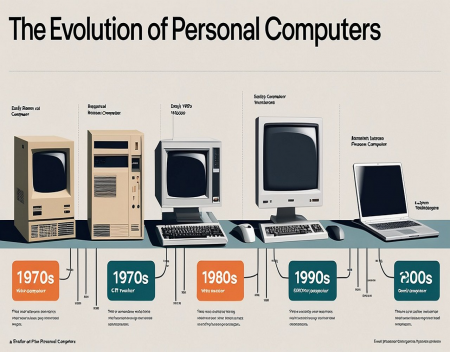
The Evolution of Personal

The Hidden Cost of Free A

The Psychology of Notific