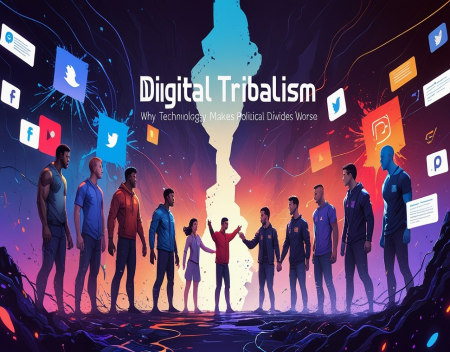
In an age where information flows instantly and globally, technology was once hailed as a great unifier. The internet promised open dialogue, access to knowledge, and the breakdown of traditional barriers between people. Yet, paradoxically, the digital era has coincided with some of the deepest political divisions in modern history. Rather than fostering understanding, technology has increasingly amplified tribalism—an instinctive tendency to divide the world into “us” versus “them.” This phenomenon, often called digital tribalism, is reshaping politics, culture, and even personal relationships, raising urgent questions about whether our tools are pushing us further apart instead of bringing us together.
At its core, tribalism is not new. Humans evolved in small groups where loyalty and shared beliefs were essential for survival. These instincts still exist, but digital platforms have supercharged them. Social media algorithms are designed to maximize engagement, not harmony. Content that provokes strong emotional reactions—anger, fear, outrage—tends to keep users scrolling, commenting, and sharing. As a result, divisive political content is often rewarded with greater visibility, reinforcing group identity while demonizing outsiders.
Echo chambers are one of the most powerful drivers of digital tribalism. Online platforms personalize content based on past behavior, creating curated information environments where users are repeatedly exposed to viewpoints they already agree with. Over time, this narrows perspectives and hardens beliefs. When people rarely encounter opposing arguments—or only see them framed in extreme or mocking ways—political disagreement transforms into moral conflict. Opponents are no longer seen as people with different opinions but as threats to values, identity, and even national survival.
This dynamic erodes the foundations of democratic discourse. Healthy democracies depend on compromise, debate, and mutual recognition. Digital tribalism replaces these with loyalty tests and ideological purity. Nuanced positions struggle to survive in environments that reward absolutism. Politicians and commentators, aware of how algorithms work, increasingly tailor messages to inflame their base rather than persuade undecided voters. The result is a political landscape defined more by mobilizing anger than solving problems.
Technology also accelerates misinformation, which thrives in tribal contexts. False or misleading information spreads more easily when it confirms group narratives. Within digital tribes, trust is often placed in identity rather than evidence—people believe information because it comes from “one of us,” not because it is accurate. Attempts to correct misinformation can backfire, reinforcing beliefs through defensiveness and perceived attacks. This makes consensus on basic facts increasingly difficult, further deepening political divides.
Another factor is the loss of shared public spaces. In the past, people consumed news from a limited number of broadly trusted sources. Today, media is fragmented across countless platforms, influencers, and partisan outlets. While this diversity can be empowering, it also means there is less common ground. When societies no longer share a basic understanding of reality, political disagreement becomes existential. Each tribe feels as though it is living in a different world, governed by different truths.
Digital tribalism also affects individual psychology. Constant exposure to political conflict can create stress, cynicism, and dehumanization. Online interactions strip away many social cues that promote empathy, making it easier to insult, dismiss, or threaten others. Over time, this can normalize hostility and reduce the willingness to engage in good-faith discussion. Politics becomes less about ideas and more about identity defense, where changing one’s mind is seen as betrayal rather than growth.
Importantly, technology itself is not inherently divisive. The same tools that deepen tribalism can also be used to foster understanding. The problem lies in incentive structures. Platforms are optimized for attention and profit, not social cohesion. Until those incentives change, digital environments will continue to reward polarization. Some researchers and designers argue for alternative models—such as algorithmic transparency, slower content feeds, or features that encourage exposure to diverse perspectives—but these approaches often clash with commercial interests.
Addressing digital tribalism requires more than technical fixes. Media literacy, critical thinking, and emotional resilience are essential skills in the digital age. Users must learn to recognize when they are being emotionally manipulated and resist the urge to reduce complex issues to simplistic narratives. Political leaders and public figures also play a role by modeling restraint and refusing to exploit divisions for short-term gain.
Ultimately, digital tribalism reflects a tension between ancient human instincts and modern technology. Our tools have evolved faster than our ability to use them wisely. If left unchecked, this mismatch threatens social trust, democratic institutions, and the possibility of collective action on shared challenges. The question is not whether technology makes political divides worse—it clearly can—but whether we are willing to redesign our digital spaces, and our behavior within them, to prioritize understanding over outrage. In doing so, we may rediscover that disagreement does not have to mean division, even in a deeply connected world.
Great experience with Computer Geek. They helped with my website needs and were professional, respon . . . [MORE].

Great, quick service when my laptop went into meltdown and also needed Windows 11 installed. Also ca . . . [MORE].
It was a great experience to working with you. thank you so much. . . . [MORE].
Thank you so much for great service and over all experience is good . highly recommended for all peo . . . [MORE].
We engaged The Computer Geeks in mid-2023 as they have a reputation for API integration within the T . . . [MORE].
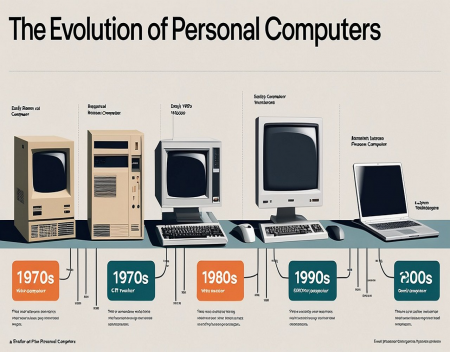
The Evolution of Personal
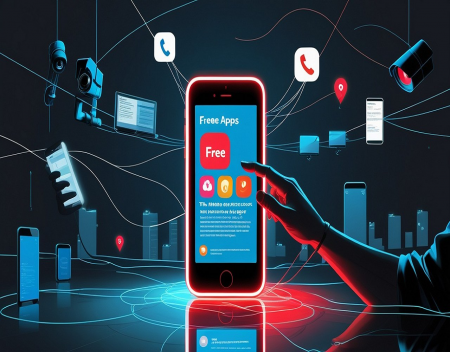
The Hidden Cost of Free A
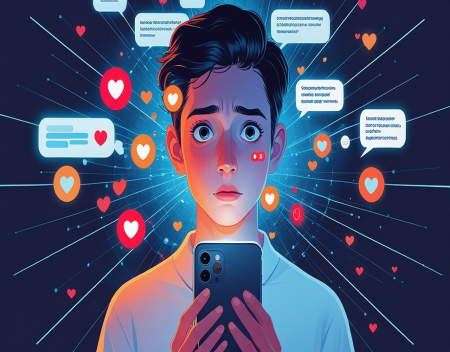
The Psychology of Notific