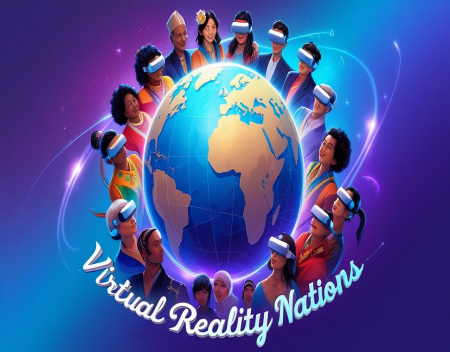
For centuries, the concept of a nation has been tied to geography. Borders drawn on maps define who belongs to a particular political community, who holds citizenship, and who participates in its governance. Physical territory has served as the foundation of national identity, legal authority, and economic organization. Yet the rapid evolution of digital technology—especially immersive virtual reality environments—is beginning to challenge this centuries old relationship between people, place, and power. As online worlds grow more complex and socially meaningful, a provocative possibility emerges: the formation of virtual reality nations where citizenship exists beyond traditional borders.
Virtual reality technology allows users to enter immersive digital environments that simulate physical presence. By wearing headsets and interacting through avatars, individuals can explore shared spaces, communicate with others, attend events, and even work in entirely digital settings. Early virtual worlds were relatively simple social platforms or online games, but modern systems increasingly resemble persistent environments where communities develop long term relationships and shared cultures.
As these environments grow more sophisticated, some observers have begun to imagine them as more than entertainment platforms. A virtual world with millions of participants, a functioning economy, systems of governance, and cultural traditions begins to resemble a society rather than a game. In such spaces, people may spend significant portions of their daily lives, forming friendships, collaborating professionally, and participating in social rituals. The boundaries between digital presence and real world identity gradually blur.
In this context, the idea of a “virtual nation” becomes easier to imagine. Instead of belonging to a country defined by physical territory, individuals could affiliate with a digital community organized around shared values, goals, or interests. Citizenship in such a community might grant access to certain digital spaces, voting rights in governance decisions, or participation in collective economic systems.
Some early experiments in digital governance already hint at this possibility. Online communities frequently establish rules, moderation systems, and leadership structures to manage their members. Decentralized digital organizations allow participants to vote on proposals using blockchain based mechanisms. Virtual platforms host digital economies where users create, trade, and own virtual assets. While these systems are still far from functioning as full nations, they demonstrate how governance structures can emerge in purely digital environments.
One potential advantage of virtual citizenship is flexibility. Traditional citizenship is usually determined by birthplace, ancestry, or legal immigration processes. These factors can be difficult or impossible for individuals to change. Virtual nations, by contrast, could allow people to choose affiliations based on personal values rather than geography. A person might simultaneously belong to multiple digital communities, each serving different aspects of their social, professional, or creative life.
Economic activity could also flourish within such digital societies. Virtual worlds already support marketplaces for digital goods, services, and experiences. Artists create virtual clothing for avatars, developers design interactive environments, and educators host classes inside immersive spaces. As these economies grow, they may develop their own financial systems, currencies, and trade networks independent of physical location.
However, the emergence of virtual nations also raises complex challenges. One major question concerns authority and legal recognition. Governments derive legitimacy from control over territory and populations within defined borders. A digital community, by contrast, exists across many countries simultaneously. If conflicts arise within a virtual nation, which legal system applies? Who enforces decisions made by digital governance structures?
There are also concerns about inequality and access. Participation in immersive virtual worlds requires technology, internet connectivity, and digital literacy. If virtual nations become significant centers of economic and cultural activity, those without access to the necessary tools could be excluded from opportunities that exist in these environments.
Another issue involves identity and accountability. In virtual spaces, individuals often interact through avatars rather than their physical identities. This anonymity can encourage creativity and experimentation with self expression, but it can also complicate trust and responsibility. Establishing stable systems of citizenship may require mechanisms for verifying identity without sacrificing privacy.
Despite these challenges, the concept of virtual reality nations reflects a broader transformation in how humans organize themselves. Throughout history, technological change has reshaped social structures. The printing press expanded communication across distances, railroads connected regions into national economies, and the internet created global networks of information. Virtual reality may represent the next step in this evolution, enabling communities that exist primarily in shared digital environments.
In the long term, virtual citizenship might not replace traditional national identity, but it could complement it. Individuals could remain citizens of their physical countries while also participating in digital societies that transcend geographic boundaries. These parallel affiliations might influence culture, economics, and even politics as ideas and collaborations flow freely across virtual borders.
The idea of citizenship beyond borders challenges long standing assumptions about belonging and governance. As immersive technologies continue to develop, societies will need to reconsider how identity, community, and authority function in a world where the most meaningful spaces are not always physical. Virtual nations may still be in their early stages, but they offer a glimpse of how human communities could evolve when geography is no longer the primary constraint.
Great experience with Computer Geek. They helped with my website needs and were professional, respon . . . [MORE].

Great, quick service when my laptop went into meltdown and also needed Windows 11 installed. Also ca . . . [MORE].
It was a great experience to working with you. thank you so much. . . . [MORE].
Thank you so much for great service and over all experience is good . highly recommended for all peo . . . [MORE].
We engaged The Computer Geeks in mid-2023 as they have a reputation for API integration within the T . . . [MORE].
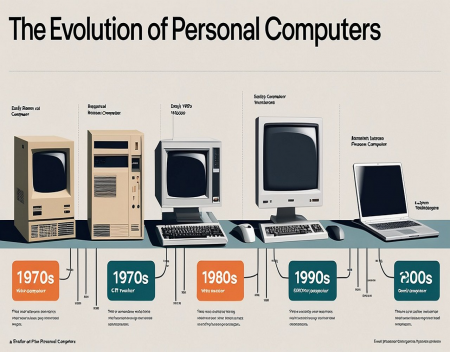
The Evolution of Personal
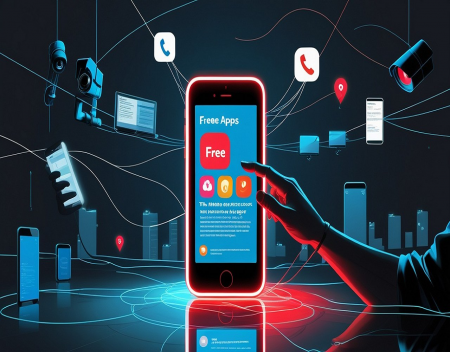
The Hidden Cost of Free A
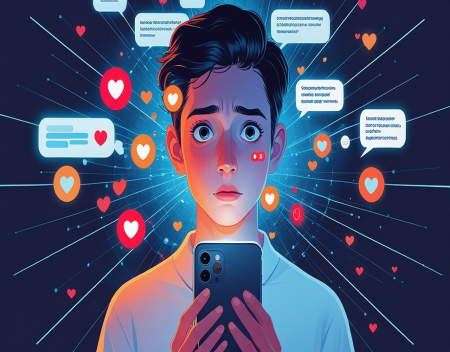
The Psychology of Notific