
Crime has always been understood as a human act. Laws are built on the assumption that wrongdoing requires intent, awareness, or at least negligence. But as artificial intelligence systems become more autonomous, a troubling question is emerging: what happens when harm is caused by software that has no intent, no consciousness, and no understanding of right or wrong? Welcome to the era of AI crime, where damage can be real, devastating, and widespread—yet the perpetrator is not a person at all.
AI systems already make decisions that affect millions of lives. Algorithms determine who qualifies for loans, which job applicants get interviews, how medical resources are allocated, and even how police departments deploy officers. When these systems malfunction, behave unpredictably, or learn harmful patterns from biased data, the consequences can resemble criminal acts. People can be wrongfully denied opportunities, falsely flagged as threats, financially ruined, or physically endangered. The harm is undeniable, but assigning blame becomes extraordinarily difficult.
Traditional criminal justice relies on intent, or mens rea. A crime usually requires that someone meant to do harm or acted with reckless disregard for others. AI, however, does not “mean” anything. It optimizes objectives, follows training patterns, and adapts to data inputs. When an autonomous vehicle causes a fatal accident, or a trading algorithm triggers a market crash, the software did not intend to cause damage. Yet the outcome can be as destructive as any deliberate human act. This disconnect exposes a fundamental weakness in our legal and ethical frameworks.
One of the most alarming aspects of AI crime is scale. Human criminals are limited by time, energy, and opportunity. AI systems are not. A faulty or malicious algorithm can affect millions of people simultaneously. A biased facial recognition system can misidentify thousands of innocent individuals. A flawed content recommendation algorithm can amplify extremist ideologies across the globe. In such cases, the damage is not isolated—it is systemic. And because these systems operate invisibly, victims may not even realize they are being harmed.
Responsibility is often diffused across multiple actors. Is the developer at fault for writing the code. Is the company responsible for deploying it without sufficient oversight. Is the data provider to blame for biased or incomplete training material. Or does accountability lie with regulators who failed to establish safeguards. AI crime challenges the idea that wrongdoing must have a single identifiable culprit. Instead, harm emerges from complex systems where no one actor fully controls the outcome.
This ambiguity creates dangerous loopholes. Corporations can hide behind the complexity of algorithms, claiming that harmful outcomes were unintended or unforeseeable. Governments may rely on automated systems precisely because they reduce visible human accountability. When something goes wrong, blame can be shifted endlessly between engineers, executives, and machines. Meanwhile, those harmed are left without justice, compensation, or even acknowledgment.
There is also the issue of malicious use. While AI itself lacks intent, humans can weaponize it. Deepfake scams, automated hacking tools, AI-driven fraud schemes, and autonomous cyberattacks blur the line between human and machine criminality. In these cases, AI becomes an amplifier of wrongdoing, allowing individuals or groups to commit crimes at a scale and speed previously impossible. Law enforcement often struggles to keep pace, as AI-generated attacks evolve faster than traditional investigative methods.
Some scholars argue that new legal categories are needed. Instead of forcing AI harm into existing criminal frameworks, societies may need concepts such as algorithmic liability or strict responsibility for autonomous systems. Under such models, accountability would not depend on intent but on outcome. If an AI system causes significant harm, someone must be held responsible—whether that is the operator, the owner, or the organization that benefits from its use. This approach mirrors how we treat dangerous machinery or pharmaceuticals: intent matters less than safety and oversight.
Others caution against overcorrection. Punishing developers too harshly could stifle innovation and discourage beneficial AI research. Not all harm caused by AI is predictable or preventable, especially in complex real-world environments. The challenge lies in finding a balance between encouraging technological progress and protecting society from unchecked algorithmic power.
At a deeper level, AI crime forces humanity to confront uncomfortable truths about itself. Algorithms reflect the values, priorities, and biases of the societies that create them. When AI systems discriminate, exploit, or harm, they often reveal flaws that already exist in human decision-making. In this sense, AI crime is not entirely new—it is a mirror, magnifying our ethical blind spots and institutional failures.
As AI continues to integrate into critical systems, the question is no longer whether software can cause harm, but how we will respond when it does. Justice systems must evolve beyond intent alone and grapple with responsibility in a world where actions can be automated, distributed, and opaque. If we fail to adapt, we risk creating a future where harm is widespread, accountability is optional, and crime has no face to answer for it.
AI may not have intent, but its consequences are real. How we choose to define responsibility in this new landscape will shape not only the future of law, but the moral foundations of a society increasingly governed by machines.
Great experience with Computer Geek. They helped with my website needs and were professional, respon . . . [MORE].

Great, quick service when my laptop went into meltdown and also needed Windows 11 installed. Also ca . . . [MORE].
It was a great experience to working with you. thank you so much. . . . [MORE].
Thank you so much for great service and over all experience is good . highly recommended for all peo . . . [MORE].
We engaged The Computer Geeks in mid-2023 as they have a reputation for API integration within the T . . . [MORE].

Digital Minimalism in a C

Are We Becoming Too Depen
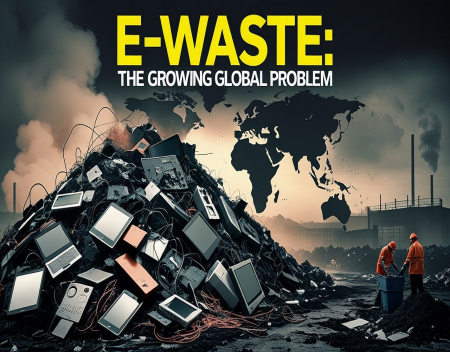
E-Waste: The Growing Glob