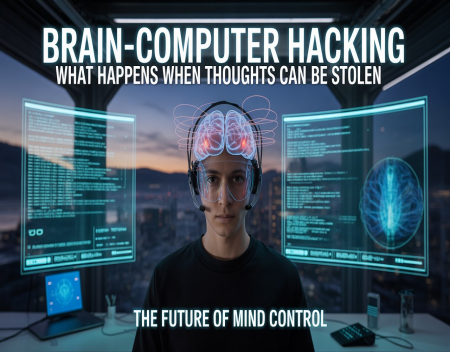
For decades, the idea of reading or manipulating human thoughts belonged firmly in the realm of science fiction. Today, brain-computer interfaces are turning that fiction into emerging reality. These technologies, designed to translate neural signals into digital commands, promise life-changing benefits for people with paralysis, neurological disorders, or sensory impairments. Yet alongside this promise comes a chilling possibility. If thoughts can be read, recorded, or influenced by machines, they can also be hacked. Brain-computer hacking raises profound questions about privacy, identity, and the future of human autonomy in a digital age where even the mind may no longer be secure.
Brain-computer interfaces work by detecting electrical signals produced by neurons and translating them into data that computers can understand. In medical contexts, this allows patients to control prosthetic limbs, type using their thoughts, or restore limited vision or hearing. As the technology advances, consumer applications are also being explored, including cognitive enhancement, gaming, and seamless interaction with digital devices. The closer these systems move to widespread use, the more attractive they become as targets for malicious actors. Any system that connects the brain to a network introduces a new and unprecedented attack surface.
Unlike traditional cyberattacks, brain-computer hacking would not just steal information like passwords or financial data. It could expose a person’s private thoughts, emotional states, memories, or intentions. Thoughts are not simply data points; they are the core of personal identity. The idea that an external actor could access or manipulate them challenges the very notion of mental sovereignty. Privacy laws were designed to protect communications and personal information, not the raw contents of the human mind. Once thoughts become data, existing legal and ethical frameworks may prove dangerously inadequate.
One of the most alarming possibilities is the theft of involuntary information. Even if a user consents to a brain-computer interface for a specific purpose, such as medical treatment, the device may capture far more data than intended. Subconscious reactions, emotional responses, or latent memories could be extracted without the user’s awareness. In the wrong hands, this information could be used for blackmail, psychological manipulation, or targeted coercion. The mind, once considered the last private space, could become a commodity.
Beyond theft lies the threat of manipulation. If a system can read neural signals, it may also be capable of influencing them. Malicious interference could alter perception, mood, or decision-making. Subtle changes in emotional processing could influence behavior without the victim ever realizing it. In extreme cases, brain-computer hacking could be weaponized, used to incapacitate individuals, manipulate political figures, or control soldiers on future battlefields. The distinction between cyberwarfare and psychological warfare would effectively disappear.
The ethical implications extend even further. Responsibility and accountability become blurred when thoughts can be altered externally. If a person commits an action after their neural signals were interfered with, who is to blame. The individual, the hacker, or the designer of the system that allowed the intrusion. Legal systems built on intent and free will would struggle to assign guilt in a world where mental processes can be compromised remotely.
There is also the issue of inequality. As with many emerging technologies, the most secure and advanced brain-computer interfaces would likely be available only to the wealthy or powerful. Less protected systems could be deployed among vulnerable populations, increasing the risk of exploitation. Mental security could become a luxury, deepening social divides and creating a new class of cognitive vulnerability. Those without access to robust protections might be more exposed to surveillance, manipulation, or control.
Some researchers argue that the fear of brain-computer hacking is premature, noting that current technology is limited and largely experimental. However, history suggests that security concerns are often addressed only after harm occurs. The early days of the internet were marked by optimism and minimal safeguards, leading to decades of data breaches, surveillance, and cybercrime. Repeating that pattern with brain-computer interfaces would be far more dangerous, because the stakes are no longer digital assets but human consciousness itself.
To prevent this future, security and ethics must be foundational, not optional. Brain-computer interfaces should be designed with strict limits on data collection, strong encryption, and clear user control. Mental data should be treated as fundamentally different from other forms of information, deserving the highest level of protection. International agreements may be necessary to define cognitive rights, including the right to mental privacy and protection from neural manipulation.
Brain-computer hacking forces humanity to confront a question once thought unthinkable. If our thoughts can be accessed, altered, or stolen, what remains truly our own. As technology pushes deeper into the human mind, society must decide whether innovation will serve human freedom or quietly erode it. The future of brain-computer interfaces will not be defined solely by what they can do, but by the boundaries we are willing to defend around the most intimate space of all, the human mind.
Great experience with Computer Geek. They helped with my website needs and were professional, respon . . . [MORE].

Great, quick service when my laptop went into meltdown and also needed Windows 11 installed. Also ca . . . [MORE].
It was a great experience to working with you. thank you so much. . . . [MORE].
Thank you so much for great service and over all experience is good . highly recommended for all peo . . . [MORE].
We engaged The Computer Geeks in mid-2023 as they have a reputation for API integration within the T . . . [MORE].
The Browser Wars Revisite
The Rise and Fall of Flas
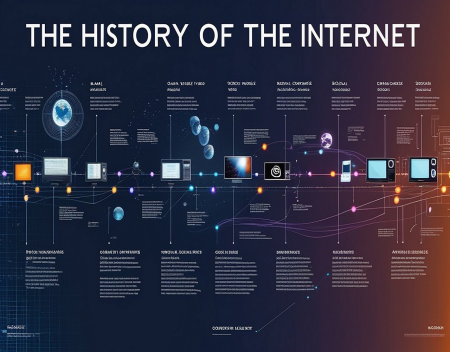
The History of the Intern