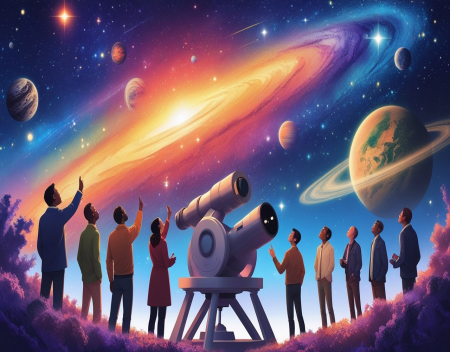
For most of human history, people looked at the night sky and wondered whether we were alone. Ancient cultures imagined star beings, celestial gods, or distant worlds filled with life, but science had little evidence to support those ideas. Today, astrobiology has changed the conversation from fantasy to serious investigation. Scientists now know that planets are common, organic molecules exist throughout the cosmos, and environments capable of supporting life may be far more widespread than anyone once believed. This growing body of evidence raises a powerful question that reaches beyond science into philosophy and psychology. What would happen if humanity suddenly learned that life is not rare but everywhere.
Astrobiology is the scientific study of life beyond Earth, including the search for microbial organisms, complex ecosystems, and potentially intelligent civilizations. Researchers examine extreme environments on our planet such as deep ocean vents, frozen Antarctic lakes, and acidic volcanic pools because these places resemble conditions found on other worlds. The discovery of extremophiles, organisms that thrive in environments once thought uninhabitable, has dramatically expanded our understanding of where life might exist. When scientists discover that life can survive in crushing pressure or freezing darkness, the idea that alien ecosystems may be common no longer feels impossible. Instead, it begins to feel statistically likely.
The concept of moral shock enters when people consider the emotional and ethical consequences of a universe filled with life. Moral shock occurs when new information forces individuals or societies to reconsider their deepest beliefs. Humanity has experienced this before. When Copernicus showed that Earth was not the center of the universe, people faced an existential shift. When Darwin introduced evolution, many struggled with the idea that humans were part of a natural continuum rather than separate creations. The discovery that life exists everywhere would likely trigger a similar transformation, forcing humanity to rethink its place in the cosmos.
One immediate impact would be the collapse of human exceptionalism, the long held belief that humanity is unique or central in creation. If microbial life were discovered on multiple planets or moons, it would suggest that life is a natural outcome of chemistry rather than a rare miracle. This realization could inspire humility, reminding people that Earth is one ecosystem among countless others. Some might find comfort in the idea that life is resilient and universal, while others could feel a loss of meaning if humanity no longer occupies a special cosmic role. Moral shock does not always lead to despair though. It can also lead to growth, encouraging societies to develop broader perspectives and new ethical frameworks.
Another profound shift could involve how humans treat life on Earth. If life is discovered everywhere, it may reinforce the idea that living systems are part of a larger cosmic web rather than isolated accidents. Environmental ethics could gain renewed urgency, with people viewing ecosystems as sacred expressions of a universal biological process. Conservation efforts might expand beyond protecting Earth’s biodiversity to preserving potential extraterrestrial ecosystems. The concept of planetary protection, already used in space missions to avoid contaminating other worlds, could become a central moral principle for future exploration.
Religious and philosophical traditions would also face major challenges and opportunities. Some belief systems might reinterpret sacred texts in light of cosmic life, embracing a universe filled with divine creativity. Others might struggle to reconcile long standing doctrines with a reality in which humanity is one species among many across the stars. Historically, religions have adapted to scientific discoveries, and many scholars believe that spiritual worldviews would evolve rather than collapse. Moral shock could lead to new forms of spirituality focused on cosmic unity, shared origins, and the interconnectedness of life across galaxies.
Social and political systems might change as well. If life exists everywhere, the idea of humanity as a single planetary civilization could become more meaningful. Nations that currently compete might feel pressure to cooperate in the face of a larger cosmic context. Space law, interplanetary diplomacy, and ethical guidelines for contact with alien ecosystems would become urgent topics. Education systems would likely evolve to include astrobiology as a core discipline, blending science with ethics and philosophy to prepare future generations for a universe that is far more populated than once imagined.
On an individual level, people might experience a mixture of wonder and anxiety. Some would feel inspired by the realization that the universe is alive with possibility. Others might struggle with existential questions about identity, purpose, and belonging. Moral shock is rarely comfortable, but it often sparks creativity and curiosity. Humanity might begin to see itself not as isolated observers but as participants in a vast biological story unfolding across cosmic time.
The idea that life could be everywhere is still unproven, but the growing discoveries in astrobiology make it a serious possibility worth considering. If humanity ever confirms that life exists on multiple worlds, the greatest impact may not be technological or scientific but moral and psychological. People would be forced to rethink what it means to be human, what responsibilities come with exploration, and how to define meaning in a living universe. Rather than diminishing humanity, such a discovery might expand our sense of belonging, reminding us that we are part of something much larger than ourselves.
Great experience with Computer Geek. They helped with my website needs and were professional, respon . . . [MORE].

Great, quick service when my laptop went into meltdown and also needed Windows 11 installed. Also ca . . . [MORE].
It was a great experience to working with you. thank you so much. . . . [MORE].
Thank you so much for great service and over all experience is good . highly recommended for all peo . . . [MORE].
We engaged The Computer Geeks in mid-2023 as they have a reputation for API integration within the T . . . [MORE].
The Browser Wars Revisite
The Rise and Fall of Flas
The History of the Intern