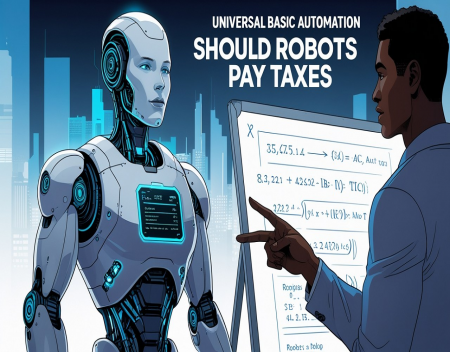
As automation accelerates and artificial intelligence systems replace human labor across industries, a provocative idea has entered public debate: should robots pay taxes? Often framed under the concept of “universal basic automation,” this question goes far beyond fiscal policy. It strikes at the core of how societies define work, value human contribution, and sustain social systems in an era where machines increasingly perform tasks once reserved for people. While the idea of taxing robots may sound absurd or symbolic at first, it reflects a growing concern about inequality, economic displacement, and the future of public welfare.
Automation has always reshaped labor markets, but today’s wave is different in scale and speed. Machines are no longer limited to repetitive physical tasks. AI systems now write reports, diagnose diseases, trade stocks, generate art, and manage logistics. Entire job categories—clerical work, basic accounting, customer service, even driving—are being automated. While new jobs may emerge, they often require specialized skills and employ fewer people. The result is a widening gap between productivity growth and wage growth, as companies benefit from automation while displaced workers struggle to adapt.
Tax systems, however, remain rooted in an older economic model where human labor is the primary source of income and taxation. Governments rely heavily on payroll taxes, income taxes, and consumption driven by wages. When machines replace workers, tax revenue declines even as corporate profits rise. This creates a paradox: automation increases efficiency and wealth, but undermines the very systems needed to redistribute that wealth and maintain social stability. The proposal to tax robots is, at its core, an attempt to resolve this contradiction.
Supporters of robot taxation argue that automation should contribute to society in the same way human labor does. If a machine replaces ten workers, the economic output remains, but the tax contributions from those wages disappear. A robot tax could help fund retraining programs, social safety nets, or even universal basic income, ensuring that automation benefits society as a whole rather than concentrating wealth among a few technology owners. From this perspective, taxing robots is not about punishing innovation, but about aligning technological progress with social responsibility.
Critics counter that robots do not earn income, consume goods, or possess agency, making the idea of taxing them conceptually flawed. Machines are tools, they argue, and taxing tools is inefficient and potentially harmful. Heavy taxation on automation could discourage innovation, slow productivity gains, and make businesses less competitive globally. In a world where companies can relocate or deploy automation in jurisdictions with lower taxes, a robot tax might simply push innovation elsewhere.
There is also the challenge of definition. What qualifies as a robot? Is it a physical machine on a factory floor, a software algorithm performing legal research, or an AI system scheduling hospital staff? Modern automation is often invisible, embedded in code rather than metal. Drawing clear legal boundaries would be extraordinarily difficult, and poorly defined rules could create loopholes or unintended consequences.
Some economists suggest reframing the question entirely. Instead of taxing robots directly, governments could tax the outcomes of automation more effectively. This could include higher corporate taxes on profits derived from automation, value-added taxes on increased productivity, or wealth taxes on those who disproportionately benefit from AI-driven economies. In this view, the robot tax debate is less about machines and more about updating tax structures for a post-labor-centric economy.
The ethical dimension is equally important. Work has long been more than a means of survival; it is tied to identity, dignity, and social participation. If automation leads to a future where fewer people are needed to work, society must decide how to distribute meaning, income, and opportunity. Universal basic automation raises the possibility that machines could generate enough wealth to support everyone, freeing humans from economic necessity. But without deliberate policy choices, that wealth may instead deepen inequality and social fragmentation.
Asking whether robots should pay taxes is ultimately a proxy for a larger question: who is responsible for the social consequences of technological progress? If automation is inevitable, then ignoring its impact is a choice in itself. The challenge is not to stop machines from working, but to ensure that when they do, the benefits are shared broadly rather than hoarded narrowly.
Whether or not robots ever “pay” taxes in a literal sense, societies will need new economic frameworks that recognize a simple reality: when machines do the work, humans still need to live. Universal basic automation is not just a fiscal debate—it is a test of whether modern economies can adapt their values as quickly as they adapt their technologies.
Great experience with Computer Geek. They helped with my website needs and were professional, respon . . . [MORE].

Great, quick service when my laptop went into meltdown and also needed Windows 11 installed. Also ca . . . [MORE].
It was a great experience to working with you. thank you so much. . . . [MORE].
Thank you so much for great service and over all experience is good . highly recommended for all peo . . . [MORE].
We engaged The Computer Geeks in mid-2023 as they have a reputation for API integration within the T . . . [MORE].
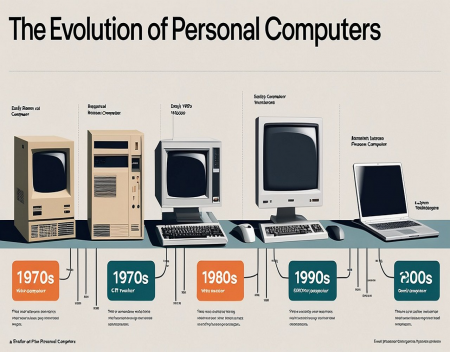
The Evolution of Personal

The Hidden Cost of Free A

The Psychology of Notific