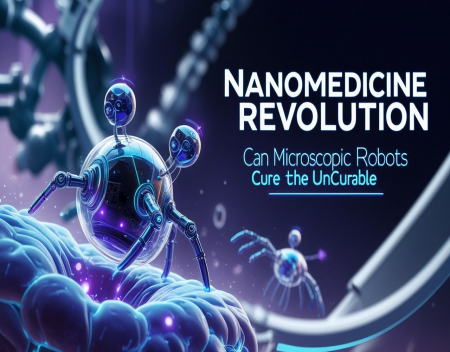
The idea of deploying fleets of microscopic robots inside the human body once sounded like science fiction, but nanomedicine is rapidly transforming from an ambitious theory into a tangible frontier in modern healthcare. As advances in materials science, biotechnology, and artificial intelligence converge, the promise of nanorobots capable of diagnosing diseases, delivering drugs, repairing tissue, and even performing microscopic surgeries is becoming increasingly realistic. The question is no longer whether this revolution will happen but how far it can go, and whether it may someday eliminate some of the illnesses we currently consider impossible to cure.
Nanomedicine operates on scales measured in billionths of a meter, allowing it to interact directly with cells and biomolecules. This nanoscale precision is what sets it apart from conventional therapies, which often rely on blunt methods like systemic drugs or invasive surgery. Nanorobots or nanoparticle systems can navigate through blood vessels, identify diseased cells, and release treatment exactly where it is needed. This level of accuracy reduces side effects, improves treatment outcomes, and opens doors to tackling diseases that currently evade effective intervention.
One of the most promising applications is targeted cancer therapy. Traditional chemotherapy floods the body with toxins that kill cancer cells but also injure healthy ones, leading to difficult side effects. Nanomedicine offers a different approach. By encapsulating anti-cancer drugs within nanoscale delivery systems, treatment can be directed specifically to tumor sites. Some experimental nanorobots are even being designed to identify cancer markers on their own, allowing them to seek and destroy malignant cells without harming surrounding tissue. This shift could redefine cancer treatment from a painful and exhausting ordeal into a more precise, manageable, and effective process.
Beyond cancer, nanomedicine shows potential for treating viral infections, neurodegenerative diseases, autoimmune disorders, and chronic conditions that have long confounded traditional medicine. Researchers are exploring nanorobots that can clear plaque buildup associated with Alzheimer’s, repair damaged neurons in spinal cord injuries, or remove arterial blockages without surgery. Nanobots could one day operate as cellular maintenance workers, constantly patrolling the body, diagnosing issues before symptoms appear, and intervening before disease takes hold. This moves healthcare toward a preventive model rather than a reactive one, fundamentally changing how society approaches illness.
Despite its immense promise, the nanomedicine revolution raises important challenges. Delivering nanorobots safely throughout the body remains technically complex, and ensuring that these devices can be eliminated or absorbed without causing long-term harm is essential. There are also ethical and regulatory questions about how such intimate technology should be monitored. If nanorobots could record internal biological data, who would own or control that information. If they can augment the body, where is the line between healing and enhancement. Society must grapple with these concerns as the technology advances.
Cost and accessibility are also significant barriers. Cutting-edge treatments often arrive first in wealthy nations and remain inaccessible to others for years. If nanomedicine becomes the gold standard for treating deadly diseases, unequal access could widen global health disparities. Ensuring that breakthroughs benefit the many rather than the few is a challenge that policymakers, scientists, and medical institutions will need to confront together.
Even with these uncertainties, the momentum behind nanomedicine continues to build. Each year brings new clinical trials, more sophisticated prototypes, and deeper understanding of how nanoscale interventions can reshape human health. While curing every disease remains beyond our immediate reach, the trajectory suggests that some illnesses once thought incurable may eventually become manageable or even reversible. The microscopic scale may hold the key to some of humanity’s largest medical challenges, marking the beginning of a future where the tiniest technologies bring the greatest hope.
Great experience with Computer Geek. They helped with my website needs and were professional, respon . . . [MORE].

Great, quick service when my laptop went into meltdown and also needed Windows 11 installed. Also ca . . . [MORE].
It was a great experience to working with you. thank you so much. . . . [MORE].
Thank you so much for great service and over all experience is good . highly recommended for all peo . . . [MORE].
We engaged The Computer Geeks in mid-2023 as they have a reputation for API integration within the T . . . [MORE].

How Technology Is Changin

What Comes After Silicon
The Future of Batteries