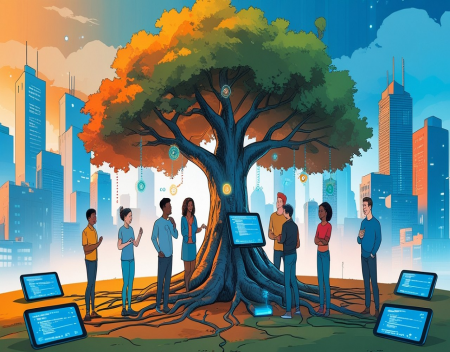
For much of the internet’s evolution, power has gradually concentrated in the hands of a few large platforms. Social networks, cloud providers, and app ecosystems have created centralized hubs where most digital activity takes place. In response to this concentration, a new movement has been gaining traction: decentralized platforms. Built on technologies like Blockchain and peer-to-peer networking, these platforms aim to redistribute control, giving users more ownership over their data, identity, and digital interactions.
At a basic level, decentralization means removing the need for a central authority. Instead of relying on a single company to host data or manage access, decentralized systems distribute these responsibilities across a network of participants. This can make platforms more resilient, as there is no single point of failure. It also aligns with the original vision of the World Wide Web, which emphasized openness and independence.
One of the main drivers behind the rise of decentralized platforms is the desire for greater control over personal data. In centralized systems, user data is often stored and managed by companies, which can use it for advertising, analytics, or other purposes. Decentralized platforms seek to return ownership of data to users, allowing them to decide how it is shared and monetized. This shift has the potential to change the economics of the internet, moving away from models where users are the product.
Another advantage is censorship resistance. Because decentralized platforms are not controlled by a single entity, it is more difficult to remove content or restrict access. This can support free expression, particularly in regions where information is tightly controlled. Users can interact and share content without relying on intermediaries that may impose restrictions or policies.
However, these same features also introduce significant risks. The lack of central control makes moderation more challenging. On traditional platforms, content can be reviewed and removed if it violates guidelines. In decentralized systems, enforcing rules is more complex, and harmful or illegal content may persist. This raises questions about responsibility and accountability. If no single entity controls the platform, who is responsible for what happens on it.
Security is another concern. While decentralization can reduce certain risks, it also introduces new ones. Users are often responsible for managing their own credentials, such as private keys. If these are lost or stolen, access to accounts or assets may be permanently compromised. Unlike centralized systems, there is often no recovery mechanism or customer support to assist in such situations.
Scalability and usability also present challenges. Decentralized platforms can be slower and more resource-intensive than centralized alternatives. Transactions on blockchain networks, for example, may take time to process and can involve fees. For everyday users, these complexities can be a barrier to adoption. While developers are working to improve performance and user experience, decentralized systems still have a long way to go before they match the convenience of established platforms.
There is also the issue of governance. In centralized platforms, decisions are made by company leadership. In decentralized systems, governance is often distributed among users or token holders. While this can be more democratic, it can also lead to conflicts and inefficiencies. Decision-making processes may be slower, and outcomes may not always reflect the broader community’s interests.
Economic factors play a role as well. Many decentralized platforms rely on tokens or cryptocurrencies to incentivize participation. While this can create new opportunities, it also introduces volatility and speculation. Users may be exposed to financial risks that are not present in traditional platforms. The line between utility and investment can become blurred, complicating the user experience.
Despite these challenges, the potential of decentralized platforms is significant. They offer an alternative model for how digital systems can be built and operated. By prioritizing user control, transparency, and resilience, they address some of the key concerns associated with centralized platforms. For developers and innovators, they provide a new framework for experimentation and growth.
The future of decentralized platforms will likely involve a balance between decentralization and practicality. Hybrid models may emerge, combining the benefits of distributed systems with the usability and support of centralized services. As technology evolves, solutions to current limitations may make decentralized platforms more accessible and reliable.
Ultimately, the rise of decentralized platforms reflects a broader shift in how people think about control and ownership in the digital world. It is a response to the concentration of power and a push toward more open and user-driven systems. At the same time, it highlights the complexities of building systems without central authority.
In the end, decentralization is not a perfect solution, but it is an important development. It challenges existing models and opens new possibilities, while also introducing risks that must be carefully managed. As the digital landscape continues to evolve, understanding both the benefits and the drawbacks of decentralized platforms will be essential for navigating the future of the internet.
Great experience with Computer Geek. They helped with my website needs and were professional, respon . . . [MORE].

Great, quick service when my laptop went into meltdown and also needed Windows 11 installed. Also ca . . . [MORE].
It was a great experience to working with you. thank you so much. . . . [MORE].
Thank you so much for great service and over all experience is good . highly recommended for all peo . . . [MORE].
We engaged The Computer Geeks in mid-2023 as they have a reputation for API integration within the T . . . [MORE].
The Future of Digital Pay

How Technology Is Changin

What Comes After Silicon