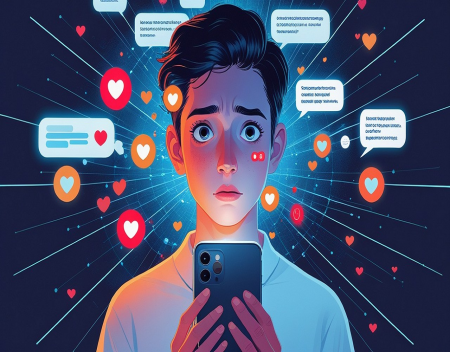
Every day, smartphones, computers, smartwatches, and other connected devices compete for our attention. A message arrives, an application displays a badge, or a notification sound interrupts whatever we are doing. Sometimes the alert contains something important, such as an urgent work message or a reminder about an appointment. Other times, it is simply an advertisement, a social media update, or a suggestion to return to an application.
Despite their small size, notifications can have a significant influence on our thoughts, emotions, and behaviour. They are designed not only to deliver information but also to encourage us to take action. Understanding the psychology behind notifications helps explain why so many people feel compelled to check their devices, even when they know there may be nothing important waiting for them.
Why Notifications Grab Our AttentionHuman attention is a limited resource. Our brains constantly process information from the surrounding environment, deciding which details deserve immediate attention and which can be ignored.
Notifications take advantage of this natural process. A sudden sound, vibration, flashing light, or unexpected message can interrupt our current activity because the brain is particularly sensitive to changes in its environment.
This response can be useful. An alert about a fire alarm, an incoming emergency call, or a security warning deserves immediate attention. However, the same attention-grabbing mechanisms are also used for less important events.
A social media notification may appear just as prominently as an important message from a family member. When devices repeatedly interrupt us, our brains must continually decide whether to respond or remain focused on the original task.
Over time, these interruptions can make it harder to concentrate, especially when notifications arrive frequently throughout the day.
The Power of UncertaintyOne reason notifications are so difficult to ignore is that we often do not know what they contain until we open them.
A notification might bring exciting news, an important message, a funny video, or something completely uninteresting. This uncertainty creates a reason to check.
Psychologists study similar patterns in situations involving unpredictable rewards. When a behaviour occasionally produces something rewarding, people may continue repeating it because they cannot predict exactly when the next reward will appear.
Checking a phone can work in a similar way. Most alerts may be unimportant, but an occasional message provides enough excitement, reassurance, or useful information to encourage the habit to continue.
This helps explain why some people check their phones even when they have not heard a notification. They may be anticipating a message, wondering whether someone has responded, or simply hoping that something new has appeared.
The result can become an automatic behaviour rather than a conscious decision.
Dopamine and the Desire to CheckDopamine is a chemical messenger involved in motivation, learning, movement, and the brain's response to rewards. It is often discussed in connection with digital habits because it plays a role in how people learn to repeat behaviours that may produce rewarding outcomes.
When a notification brings exciting news or social approval, the experience may reinforce the habit of checking. The next time the phone vibrates, the person may feel motivated to look at it because previous experiences have taught them that checking can be rewarding.
However, it is misleading to describe every notification as a direct dopamine hit or to assume that dopamine alone explains technology habits. Human behaviour involves many interacting processes, including attention, emotion, expectation, habit formation, and social needs.
The important point is that notifications can create a repeated cycle: an alert attracts attention, checking sometimes produces a reward, and that reward makes future checking more likely.
Fear of Missing OutAnother psychological factor is the fear of missing out, often called FOMO.
People naturally want to remain informed about what is happening within their social groups. We may worry that friends are making plans without us, colleagues are discussing an important project, or an opportunity is disappearing while we are offline.
Social media notifications can intensify these concerns by constantly suggesting that something new is happening elsewhere.
For example, someone might interrupt dinner to check a group chat because they are worried about missing a conversation. Another person might repeatedly refresh social media to see whether a post has received new comments or reactions.
The fear of missing out can make disconnecting feel uncomfortable, even when the person would benefit from taking a break.
Yet many notifications are not urgent. Learning to distinguish between genuinely important information and the pressure to remain constantly updated can reduce unnecessary checking.
Social Approval and Digital ValidationNotifications also influence how people perceive their relationships and social standing.
A message from a friend, a positive comment, or a new follower can create feelings of connection and approval. For many people, these interactions are enjoyable because social relationships are an important part of human life.
However, digital platforms can turn social approval into something that is measured through visible numbers, such as likes, shares, comments, and follower counts.
When people begin to associate these numbers with personal worth, notifications may influence their mood and self-esteem. A popular post might create excitement, while a lack of responses may lead to disappointment or insecurity.
This does not mean that everyone who uses social media becomes dependent on approval. People's experiences vary considerably. Nevertheless, notifications can make social feedback more immediate and more difficult to ignore.
Maintaining perspective is important. Online engagement is not a reliable measure of someone's value, the quality of their relationships, or how much other people care about them.
How Notifications Affect ConcentrationNotifications can interfere with concentration in more ways than simply taking up the few seconds needed to read a message.
When an interruption occurs during a demanding task, it may take time to remember where we were, reconstruct our train of thought, and return to the same level of focus.
Even seeing a phone light up can distract some people, particularly when they are already expecting a message. The interruption may occupy mental attention even if the notification is never opened.
Frequent interruptions can be especially frustrating when performing tasks that require sustained concentration, such as writing, programming, studying, or analyzing complex information.
The problem is not that every notification causes serious harm. Rather, repeated interruptions can accumulate, making it more difficult to complete demanding work efficiently.
One practical solution is to establish periods of uninterrupted work. Turning off nonessential alerts, placing the phone out of sight, and checking messages at planned intervals can help protect concentration.
Why Companies Use NotificationsBusinesses and application developers understand that notifications can encourage people to return to their products.
A shopping application might announce a sale. A streaming service might recommend a new show. A fitness application might remind someone to complete a workout, while a news application might send breaking-news alerts.
Some notifications provide genuine value by reminding users about tasks, highlighting relevant information, or helping them maintain useful routines.
Others primarily serve commercial objectives, encouraging additional purchases, more screen time, or increased engagement.
Notifications are particularly effective when they are personalized. An alert based on someone's interests or previous activity may seem more relevant than a generic message.
However, excessive notifications can have the opposite effect. Users may become irritated, disable alerts, ignore important messages, or uninstall the application entirely.
Businesses that respect people's attention are more likely to build lasting trust than those that treat every available moment as an opportunity to interrupt.
How to Take Back ControlThe goal should not be to eliminate every notification. Instead, it is to make sure notifications serve our needs rather than constantly directing our attention.
Several simple changes can help:
Disable unnecessary alerts. Keep notifications for important communications, security warnings, and useful reminders while turning off promotional messages and nonessential updates.
Use scheduled checking. Review email, social media, and other nonurgent applications at specific times instead of responding to every alert immediately.
Use Do Not Disturb. Silence interruptions during work, meals, conversations, and sleep, while allowing genuinely important calls or messages through when needed.
Remove visual distractions. Hide notification badges and previews that encourage repeated checking.
Keep your phone out of sight. During demanding tasks, placing a device in another room can reduce the temptation to look at it.
Review application permissions. Decide which applications are allowed to interrupt you and remove access where it is unnecessary.
Question the urgency. Before opening an alert, ask whether the information genuinely requires immediate attention.
These adjustments can help turn notification checking into a deliberate choice rather than an automatic reaction.
Final ThoughtsNotifications are much more than convenient digital messages. They interact with our natural sensitivity to new information, our desire for social connection, our expectations of rewards, and our tendency to develop habits.
When used appropriately, they help us stay informed, remember important tasks, and communicate efficiently. When poorly managed, they can fragment our attention, encourage unnecessary checking, and create pressure to remain constantly connected.
The solution is not to abandon technology but to understand how it influences our behaviour. By deciding which alerts deserve our attention and when we want to receive them, we can make our devices more useful and less distracting.
Ultimately, your attention is valuable, and not every notification deserves it. Learning to control when and how technology interrupts you is an important step toward a more focused, balanced, and productive digital life.
Great experience with Computer Geek. They helped with my website needs and were professional, respon . . . [MORE].

Great, quick service when my laptop went into meltdown and also needed Windows 11 installed. Also ca . . . [MORE].
It was a great experience to working with you. thank you so much. . . . [MORE].
Thank you so much for great service and over all experience is good . highly recommended for all peo . . . [MORE].
We engaged The Computer Geeks in mid-2023 as they have a reputation for API integration within the T . . . [MORE].
The Psychology of Notific
Why Subscription Services

The Future of Television